
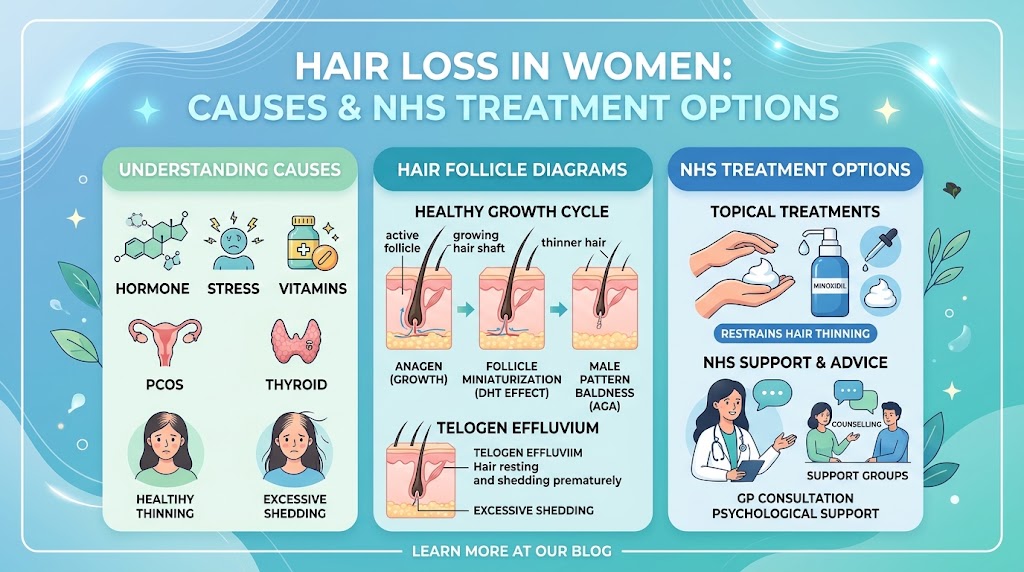
Hair loss in women can be worrying, particularly when your hair starts looking thinner, your parting becomes wider or more hair than usual appears in your brush or shower. Although some daily hair shedding is normal, persistent or sudden hair loss may be linked to hormonal changes, iron deficiency, stress, pregnancy, menopause or an underlying medical condition.
Hair loss in women is common, and treatment depends on identifying the cause. In the UK, your GP can assess your symptoms, review your medical history and arrange tests or specialist referral when appropriate. Some forms of hair loss improve naturally, while others may benefit from treatments such as minoxidil or specialist care.
This guide explains the main causes of hair loss in women, how to recognise different patterns, what NHS treatment options may be available and when to seek medical advice.
What Is Normal Hair Shedding in Women?
It is normal to lose around 50–100 hairs a day as part of the natural hair growth cycle. Most people do not notice this because new hair usually grows as older hairs fall out.
However, you may be experiencing excessive hair shedding if you notice:
- More hair than usual on your pillow, clothes or hairbrush.
- Large amounts of hair coming out when washing or brushing.
- A visibly wider parting or reduced hair volume.
- Thinning around the crown or top of the scalp.
- Smooth, round patches where hair has disappeared.
- Hair loss accompanied by scalp itching, pain, redness or scaling.
Hair loss can develop gradually or suddenly. The pattern, duration and other symptoms can help a GP determine the likely cause.
What Causes Hair Loss in Women?
Hair loss does not have one single cause. It can result from genetics, hormonal changes, illness, nutritional deficiencies, autoimmune conditions or damage caused by hairstyles and hair treatments.
1. Female Pattern Hair Loss
Female pattern hair loss, also called female pattern hair thinning or androgenetic alopecia, is a common cause of gradual hair thinning.
It can run in families and is associated with genetic and hormonal factors. Hair follicles gradually produce finer, shorter hairs, particularly around the top of the scalp.
Common signs include:
- A widening central parting.
- Thinning across the crown.
- Reduced overall hair density.
- Gradual changes over months or years.
The front hairline often remains relatively preserved, although individual patterns vary.
Female pattern hair loss can begin in adulthood and become more noticeable around or after menopause. It is usually progressive, but treatment may help slow the process and improve hair density in some women.
2. Hair Loss After Pregnancy
Postpartum hair loss is common after giving birth. During pregnancy, hormonal changes can keep more hairs in the growth phase. After delivery, more hairs may enter the shedding phase around the same time.
This type of temporary shedding is known as telogen effluvium.
It often becomes noticeable a few months after birth. Hair volume usually improves gradually as the normal growth cycle returns, although recovery varies.
If you have recently given birth, our guide to postpartum recovery during the first six weeks explains other changes your body may experience after delivery.
When to seek help: Speak to your GP if shedding is severe, continues without improvement, causes visible bald patches or occurs alongside fatigue, dizziness or other symptoms. Iron deficiency or thyroid problems may sometimes contribute to hair loss after pregnancy.
3. Menopause and Perimenopause
Hormonal changes during perimenopause and menopause may contribute to hair thinning in some women. You might notice that your hair feels finer, your parting becomes more visible or your ponytail appears smaller.
Age-related changes and female pattern hair loss may also occur during this period, so menopause is not necessarily the only explanation.
Other menopausal symptoms may include hot flushes, changes in periods, sleep problems and mood changes.
Read our guide to menopause symptoms in the UK to learn more about common symptoms and when to speak to a GP.
If hair loss begins around menopause, a clinician can assess whether it fits a typical pattern or whether another cause needs investigation.
4. Iron Deficiency and Nutritional Problems
Iron deficiency, particularly when it causes anaemia, can contribute to hair shedding. This may occur in women with heavy periods, during pregnancy or after childbirth, or when dietary intake is inadequate.
Other nutritional problems may also affect hair health, especially when food intake is restricted or a person has a condition that affects nutrient absorption.
Possible accompanying symptoms include:
- Unusual tiredness or weakness.
- Shortness of breath during activity.
- Dizziness or headaches.
- Pale skin.
- Changes in exercise tolerance.
These symptoms are not specific to iron deficiency, so testing may be needed to identify the cause.
Do not automatically start iron tablets or high-dose supplements for hair loss. Excess iron can be harmful, and supplements are unlikely to help if you do not have a relevant deficiency.
A GP may consider blood tests, including a full blood count or ferritin test, based on your symptoms and medical history.
5. Stress, Illness and Telogen Effluvium
Telogen effluvium is a type of temporary hair shedding that can occur after physical or emotional stress.
Potential triggers include:
- A significant illness or infection.
- Surgery or hospital admission.
- Childbirth.
- Rapid weight loss or a restrictive diet.
- Major emotional stress.
- Certain medicines or changes in health.
Hair shedding often begins several weeks to a few months after the triggering event. This delay can make it difficult to identify the cause.
In many cases, shedding improves once the trigger has resolved, although visible regrowth takes time. If the problem persists, a GP should assess whether another cause is contributing.
6. Polycystic Ovary Syndrome (PCOS)
Polycystic ovary syndrome can be associated with hormonal changes that contribute to thinning on the scalp. Some women also experience acne, irregular periods, difficulty conceiving or increased facial and body hair.
Hair thinning alone does not mean you have PCOS. However, if you notice several of these symptoms together, discuss them with your GP.
Our guide to PCOS symptoms and treatments explains how the condition is assessed and managed.
7. Thyroid Conditions
Both an underactive thyroid and an overactive thyroid can sometimes cause hair changes.
Other symptoms may include unexplained changes in weight, fatigue, sensitivity to temperature, altered bowel habits or changes in heart rate. Symptoms vary depending on the condition.
A GP may arrange thyroid function tests if your symptoms or medical history suggest a thyroid problem.
Treating an underlying thyroid condition may help improve associated hair loss, although regrowth is not always immediate.
8. Alopecia Areata
Alopecia areata is an autoimmune condition in which the immune system mistakenly attacks hair follicles.
It often causes sudden, smooth, round or oval bald patches on the scalp. It can also affect eyebrows, eyelashes and other body hair.
Some people experience regrowth, while others develop recurring episodes. The course is unpredictable and varies between individuals.
Seek medical advice if you develop sudden bald patches or lose eyebrow or eyelash hair. A clinician can assess the pattern and discuss whether treatment or dermatology referral is appropriate.
9. Tight Hairstyles and Hair Damage
Repeated pulling on the hair can cause traction alopecia. It may be associated with tight ponytails, braids, extensions or other hairstyles that place ongoing tension on the follicles.
Frequent bleaching, chemical straightening, high heat and rough brushing can also cause hair breakage. Breakage differs from hair shedding because the hair shaft may snap rather than fall out from the root.
To reduce the risk:
- Avoid hairstyles that cause pain or persistent tension.
- Limit excessive heat and harsh chemical treatments.
- Use a gentle brushing technique.
- Avoid repeatedly pulling or twisting the hair.
- Seek advice if thinning develops around the hairline or temples.
Early changes caused by traction may improve when the pulling stops, but prolonged damage can become permanent.
NHS Treatment Options for Hair Loss in Women
There is no single NHS treatment that works for every type of hair loss. Treatment depends on the diagnosis, the likely cause, the severity of symptoms and the potential benefits and risks of available options.
1. GP Assessment and Blood Tests
Your GP is usually the best starting point if you are concerned about hair loss.
The appointment may include questions about:
- When the hair loss began.
- Whether it is sudden, gradual or patchy.
- Recent pregnancy, illness, stress or weight changes.
- Menstrual patterns and menopausal symptoms.
- Your diet, medicines and family history.
- Scalp symptoms such as itching, pain or scaling.
Your GP may examine your scalp and arrange blood tests if indicated. These might include tests for anaemia, iron deficiency or thyroid problems, depending on your history and symptoms.
Not everyone needs the same tests. The aim is to identify treatable causes rather than order every available investigation.
2. Minoxidil for Female Pattern Hair Loss
Topical minoxidil is a treatment that may help some women with female pattern hair loss. It is applied directly to the scalp in a suitable solution or foam formulation.
It may help slow further thinning and improve hair density, but it does not work for everyone and is not a permanent cure.
Important points to understand:
- It may take at least six months to assess whether it is helping.
- Some people experience increased shedding during the early weeks.
- Scalp irritation or unwanted facial hair can occur.
- Benefits are generally maintained only while treatment continues.
- It is not suitable for everyone.
Pregnancy and breastfeeding: Minoxidil should generally be avoided if you are pregnant, trying to conceive or breastfeeding unless a qualified clinician advises otherwise after assessing your circumstances.
In the UK, topical minoxidil products are often purchased over the counter or privately. Prescription and NHS availability can vary, and it is not routinely funded by the NHS for female pattern hair loss.
Ask your pharmacist, GP or dermatologist whether it is suitable for you before starting treatment.
3. Treatment for Iron Deficiency or Other Underlying Conditions
If investigations identify a treatable cause, your GP may recommend addressing that condition.
Examples include:
- Iron treatment when iron deficiency is confirmed.
- Treatment for an identified thyroid disorder.
- Nutritional support when inadequate intake is contributing.
- Reviewing medicines that may be associated with hair loss.
- Advice about recovering after childbirth or a significant illness.
Correcting the underlying problem may reduce shedding, but regrowth can take several months because hair grows slowly.
Avoid taking high-dose biotin, iron or other supplements without a clear reason. Supplements can cause side effects, and some may interfere with laboratory tests or medicines.
4. Specialist Dermatology Treatment
A GP may refer you to a dermatologist if the diagnosis is unclear, hair loss is severe or persistent, scarring is suspected, or initial management has not helped.
A dermatologist may assess for conditions such as alopecia areata, inflammatory scalp disorders or scarring alopecia.
Depending on the diagnosis, treatment might include prescription medicines, corticosteroid injections for selected cases of alopecia areata, or other specialist therapies.
Not every treatment is available on the NHS, and eligibility depends on the condition and local clinical pathways.
5. Wigs and Hairpieces
Wigs, hairpieces and other forms of camouflage can help some women feel more comfortable while managing hair loss.
The NHS may provide wigs for certain eligible patients, although availability, eligibility and charges depend on the circumstances and applicable rules.
You can ask your GP or specialist team about support options if hair loss is affecting your quality of life.
6. Hair Transplants and Private Hair Clinics
Hair transplantation and some cosmetic hair-loss treatments are usually private options rather than routine NHS treatments for female pattern hair loss.
A transplant may not be suitable for every woman, particularly when hair loss is diffuse or progressive. The cause, stability of the condition, donor hair availability and expected outcome need careful assessment.
Be cautious about clinics that promise guaranteed regrowth or recommend expensive treatment before identifying the cause of your hair loss. The NHS advises seeing a GP before considering a commercial hair clinic.
How to Care for Thinning Hair at Home
Good hair care cannot cure every cause of hair loss, but it can reduce avoidable damage and help you manage symptoms while seeking appropriate treatment.
Choose a gentle hair-care routine
Use a shampoo that suits your scalp and condition your hair if needed. Avoid aggressive scrubbing, rough towel drying and excessive heat.
If your scalp is painful, inflamed or unusually flaky, ask a pharmacist or GP for advice rather than trying multiple medicated products without a diagnosis.
Avoid restrictive diets
Crash diets and rapid weight loss can trigger increased hair shedding. Aim for balanced meals that provide adequate energy, protein, iron and other essential nutrients.
If you are making dietary changes, our guide to how many calories you should eat to lose weight explains why individual needs matter. Avoid extreme calorie restriction, especially if you are already experiencing hair loss.
Be cautious with supplements
Hair supplements are not a guaranteed solution. They are most useful when they address a genuine nutritional deficiency or a specific clinical need.
Before taking a supplement, check whether it is appropriate for you, particularly if you take regular medication, are pregnant or are breastfeeding.
Keep track of changes
Consider taking a photograph of your parting or affected area every month in similar lighting. This may help you and your clinician assess whether the pattern is changing over time.
Avoid checking your hair repeatedly throughout the day, as this can increase anxiety without providing a reliable measure of progress.
When Should You See a GP About Hair Loss?
Book a GP appointment if:
- You are worried about your hair loss.
- Hair is falling out suddenly or in distinct patches.
- Your parting is widening or thinning is progressing.
- Your scalp is painful, inflamed, itchy or scaly.
- Hair loss occurs alongside fatigue, heavy periods or other new symptoms.
- You have irregular periods and new facial hair growth.
- Hair loss is affecting your emotional wellbeing.
Seek prompt medical assessment if you notice rapidly developing bald areas, scalp inflammation with broken hairs, or signs of possible scarring, such as shiny areas where normal follicle openings appear to be absent.
A GP can decide whether you need blood tests, treatment or referral to a dermatologist.
The Emotional Impact of Hair Loss in Women
Hair loss can affect confidence, body image and social wellbeing. Some women find it particularly difficult when changes happen suddenly or during pregnancy, after childbirth or around menopause.
You do not need to wait until hair loss becomes severe before discussing how it affects you. Tell your GP if it is causing persistent distress, affecting relationships or making everyday activities difficult.
Support from family, trusted friends or a relevant support organisation may also help. Treating the underlying condition and addressing emotional wellbeing can be important parts of care.
Frequently Asked Questions About Hair Loss in Women
What is the most common cause of hair loss in women?
Female pattern hair loss is a common cause of gradual thinning. Temporary shedding can also occur after childbirth, illness, stress or rapid weight loss. The most likely cause depends on the pattern, timing and other symptoms.
Can hair grow back after hair loss?
Yes, hair can grow back after many temporary causes, including postpartum shedding and some cases of telogen effluvium. Regrowth may take several months. Female pattern hair loss is often long-term, although treatment may help slow progression or improve density.
What blood tests might a GP do for hair loss?
Depending on your symptoms and medical history, a GP may consider a full blood count, ferritin or thyroid function tests. Other tests may be appropriate in selected cases. Not everyone with hair loss needs blood tests.
Can I get hair loss treatment on the NHS?
Yes, the NHS can assess hair loss and treat an underlying medical condition when identified. Some specialist treatments may be available for particular diagnoses. However, topical minoxidil for female pattern hair loss is generally not routinely funded by the NHS, and some cosmetic treatments require private payment.
Does menopause cause hair loss?
Hormonal changes during perimenopause and menopause may contribute to thinning. However, other causes, including female pattern hair loss, thyroid disorders and iron deficiency, may also be involved. A GP can assess persistent or concerning symptoms.
How long does postpartum hair loss last?
Postpartum shedding often becomes noticeable a few months after childbirth and gradually improves as the hair cycle returns to normal. Recovery varies, and visible regrowth can take time. Seek medical advice if shedding is severe, persistent or accompanied by other symptoms.
Does minoxidil work for women?
Topical minoxidil can help some women with female pattern hair loss. It usually requires several months of consistent use to assess benefit, and any improvement is generally maintained only while treatment continues. It is not suitable during pregnancy or when trying to conceive, and should generally be avoided during breastfeeding.
Can stress cause hair loss?
Yes. Significant physical or emotional stress can trigger telogen effluvium, a form of increased hair shedding. The shedding may begin weeks or months after the stressful event. If it continues or the cause is uncertain, seek medical assessment.
Should I take biotin for hair growth?
Biotin is not a guaranteed treatment for hair loss. Supplements are unlikely to help unless a relevant deficiency exists. High-dose biotin can also interfere with some laboratory tests, so tell your healthcare professional if you take it.
Final Thoughts: Finding the Right Hair Loss Treatment
Hair loss in women can be caused by female pattern hair thinning, pregnancy-related changes, menopause, iron deficiency, thyroid conditions, stress or other medical factors. Many causes can be managed, but treatment works best when it is matched to the underlying problem.
In the UK, your GP is a sensible first point of contact. They can assess the pattern of hair loss, arrange appropriate tests and discuss whether treatment or a dermatology referral is needed.
Your next step: If your hair is thinning, shedding excessively or developing bald patches, arrange a GP appointment rather than relying on unverified supplements or commercial hair-growth promises.
Medical disclaimer: This article is for general educational purposes only and does not replace individual medical advice, diagnosis or treatment. Hair-loss treatments have different risks and may not be suitable during pregnancy or breastfeeding. Consult a qualified healthcare professional before starting or changing treatment.