
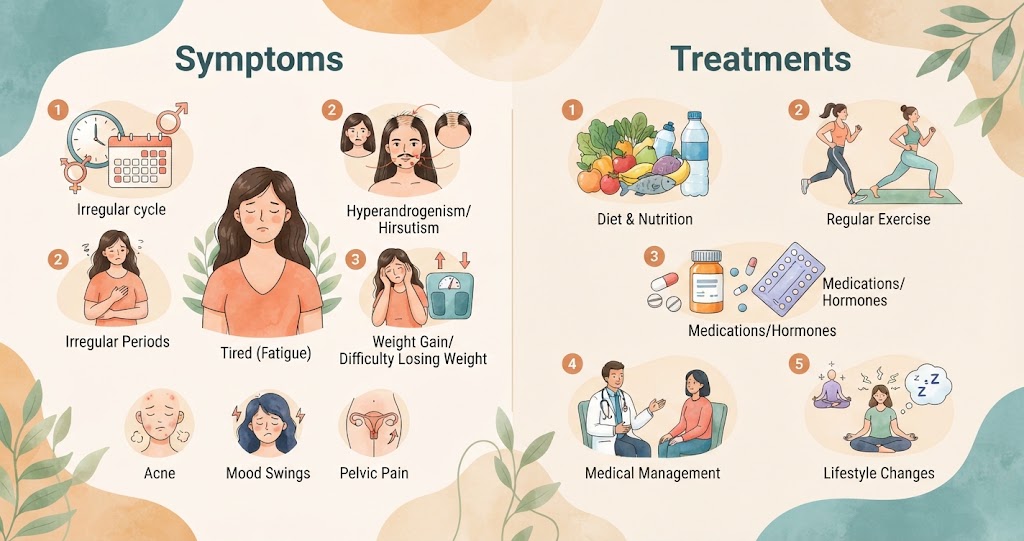
Polycystic ovary syndrome (PCOS) is a common hormonal condition that can affect periods, ovulation, fertility, skin, hair growth, weight and metabolic health. PCOS symptoms can vary significantly from one person to another, and having one symptom alone does not necessarily mean you have PCOS.
In the UK, people concerned about possible PCOS can usually start by speaking with a GP. Depending on symptoms and medical history, a healthcare professional may arrange blood tests, other investigations or specialist assessment.
This guide explains PCOS symptoms and treatments, how PCOS is diagnosed, the treatment options that may be considered, PCOS and fertility, weight management, mental health, and when to seek medical advice.
Important: This article is for general educational purposes and does not diagnose or treat PCOS. If you are concerned about symptoms, speak with a GP or qualified healthcare professional.
What Is PCOS?
PCOS stands for polycystic ovary syndrome. It is a hormonal and metabolic condition associated with irregular ovulation, increased androgen activity and, in some people, polycystic ovarian morphology.
PCOS can affect:
- Menstrual cycles
- Ovulation
- Fertility
- Skin and acne
- Facial and body hair
- Scalp hair
- Weight and metabolism
- Blood glucose regulation
- Psychological wellbeing
- Long-term reproductive health
Despite its name, you do not necessarily have ovarian cysts if you have PCOS.
The international evidence-based PCOS guideline describes PCOS as a complex condition involving reproductive, metabolic, dermatological and psychological features.
The NHS is also currently using the term polyendocrine metabolic ovarian syndrome (PMOS) and explains that it was previously called PCOS. However, PCOS remains the widely recognised term used in medical literature and by patients.
What Are the Symptoms of PCOS?
The most common PCOS symptoms include:
- Irregular or absent periods
- Difficulty becoming pregnant
- Excess facial or body hair
- Acne or oily skin
- Thinning scalp hair
- Weight gain or difficulty managing weight
- Metabolic or blood-sugar-related problems
- Anxiety, depression or other psychological symptoms
Not everyone with PCOS will experience all of these symptoms.
1. Irregular Periods
Irregular periods are one of the most recognised signs of PCOS.
You might experience:
- Periods that occur less frequently
- Long gaps between periods
- Unpredictable menstrual cycles
- Periods stopping altogether
- Difficulty predicting your next period
Irregular periods can have many causes, including pregnancy, stress, thyroid problems, changes in weight, hormonal contraception and other hormonal conditions.
If your periods remain irregular or have stopped, particularly if you also have acne, excess facial hair, weight changes or fertility problems, speak with your GP.
2. Excess Facial or Body Hair
PCOS can cause hirsutism, which means increased growth of coarse or dark hair.
This may occur on the:
- Chin
- Upper lip
- Jawline
- Chest
- Abdomen
- Back
This can happen because of increased androgen activity.
Not all unwanted hair growth is caused by PCOS, so a medical assessment may be appropriate if the change is new, excessive or accompanied by other symptoms.
3. Acne and Oily Skin
Hormonal changes associated with PCOS can contribute to:
- Persistent acne
- Adult acne
- Oily skin
- Breakouts around the jawline
- Recurrent spots
Acne by itself does not confirm PCOS.
However, persistent acne combined with irregular periods, excess facial hair or other hormonal symptoms may justify discussing PCOS with a GP.
4. Thinning Scalp Hair
Some people with PCOS develop female-pattern hair thinning.
Possible signs include:
- A wider hair parting
- Thinning around the crown
- Reduced hair density
- More visible scalp
Hair loss has many possible causes, so a healthcare professional may need to consider other hormonal, nutritional, genetic or medical explanations.
5. Weight Gain or Difficulty Losing Weight
PCOS can be associated with weight gain and difficulty managing weight, although PCOS can affect people of different body sizes.
Weight should not be used by itself to diagnose PCOS.
If you are unsure whether your weight falls within the range considered healthy, our guide to BMI and what the NHS says about being overweight in 2026 explains BMI and related NHS guidance.
If you are already working on weight management and have stopped seeing progress, you may also find our guide to understanding a weight-loss plateau useful.
6. Difficulty Becoming Pregnant
PCOS can affect ovulation, meaning an egg may not be released regularly.
Irregular ovulation can make becoming pregnant more difficult.
However, PCOS does not mean that pregnancy is impossible. Many people with PCOS become pregnant naturally or with appropriate fertility support.
If you are trying to conceive and have irregular periods, discussing your situation with a GP or fertility specialist can help determine whether further assessment is needed.
7. Mental Health Symptoms
PCOS can affect quality of life and may be associated with anxiety, depression and other psychological difficulties.
Mental health should therefore be considered as part of comprehensive PCOS care.
If you are experiencing persistent low mood, you can read our guide about whether therapy can help with depression.
If you are experiencing symptoms of both anxiety and depression, our guide to depression vs anxiety explains some of the differences.
What Causes PCOS?
There is no single known cause of PCOS.
Research suggests that genetic, hormonal and metabolic factors can interact.
PCOS is associated with:
- Increased androgen activity
- Ovulatory dysfunction
- Insulin resistance in some people
- Genetic factors
- Metabolic risk factors
The exact combination differs between individuals.
PCOS should therefore not be viewed as being caused by one particular food, lifestyle habit or behaviour.
How Is PCOS Diagnosed?
There is no single test that diagnoses PCOS in every adult.
A doctor will generally consider:
- Your symptoms
- Menstrual history
- Medical history
- Physical signs
- Hormone levels
- Other possible causes
- Ultrasound or AMH where appropriate
For adults, international guidelines generally use combinations of hyperandrogenism, ovulatory dysfunction and polycystic ovarian morphology, with AMH potentially being used as an alternative to ultrasound in appropriate circumstances.
Other conditions that can cause similar symptoms may need to be excluded before a PCOS diagnosis is made.
What Tests Might Be Used for PCOS?
Depending on your symptoms, your GP or specialist may consider:
- Hormone blood tests
- Thyroid function tests
- Prolactin testing where appropriate
- Blood glucose assessment
- Cholesterol or lipid testing
- Pregnancy testing where relevant
- Ultrasound examination
- Other tests to rule out alternative conditions
The exact tests depend on your circumstances.
Do You Need an Ultrasound to Diagnose PCOS?
Not necessarily.
An ultrasound may be useful in some adults, but it is not automatically required for everyone.
Current international guidance allows appropriate use of AMH as an alternative to ultrasound for identifying polycystic ovarian morphology in adults.
Diagnosis should always be based on the complete clinical picture.
PCOS Treatment: What Are the Options?
There is currently no single treatment that permanently cures PCOS.
Instead, treatment focuses on managing specific symptoms and reducing relevant long-term health risks.
PCOS treatment may include:
- Lifestyle support
- Period management
- Hormonal contraception
- Metformin
- Acne treatment
- Treatment for excess hair
- Fertility treatment
- Weight-management support
- Psychological support
- Regular health monitoring
The appropriate approach depends on your symptoms, age, health, medications and whether you are trying to become pregnant.
1. Lifestyle Changes for PCOS
Lifestyle management can be an important part of PCOS care.
It may include:
- Regular physical activity
- A balanced diet
- Adequate sleep
- Sustainable weight management where appropriate
- Reducing prolonged periods of inactivity
- Supporting cardiovascular and metabolic health
Lifestyle management should not be viewed simply as a weight-loss programme.
People with PCOS can have different health goals, and treatment should be individualised.
Can Losing Weight Help PCOS?
For people who are overweight, weight management may improve certain PCOS-related health outcomes.
However, PCOS can occur at different body weights, and weight loss should not be treated as the only measure of successful PCOS management.
If you are specifically researching weight-loss injections, our guide to Wegovy vs Mounjaro explains how these medicines differ.
You can also read about whether semaglutide is available through the NHS in 2026.
These medicines should not automatically be considered PCOS treatments, and suitability for any prescription medicine needs to be assessed by a healthcare professional.
2. The Combined Pill for PCOS
The combined contraceptive pill may be used to manage certain PCOS symptoms.
It may help with:
- Irregular periods
- Period-related symptoms
- Acne
- Some androgen-related symptoms
However, the combined pill is not suitable for everyone.
Your GP, pharmacist or another qualified healthcare professional can assess your medical history and determine whether it is appropriate.
3. Progestogen Treatment for Irregular Periods
When periods are very infrequent or absent, healthcare professionals may recommend progestogen treatment in some circumstances.
This can help protect the lining of the womb.
Long periods without ovulation can increase the risk of endometrial hyperplasia. PCOS is also associated with an increased risk of endometrial cancer, although the absolute risk remains low.
This is one reason why persistent absent or very infrequent periods should be discussed with a healthcare professional.
4. Metformin for PCOS
Metformin is primarily used to treat type 2 diabetes but may also be prescribed for some people with PCOS.
It can be particularly relevant where metabolic problems or insulin-related issues are present.
Depending on the individual, metformin may help with aspects of metabolic health and may improve menstrual or ovulatory function in some people.
Possible side effects include:
- Nausea
- Diarrhoea
- Stomach discomfort
- Bloating
Metformin is a prescription medicine and should only be taken under appropriate medical guidance.
5. Treatment for Excess Facial or Body Hair
There are several approaches for managing unwanted facial or body hair.
These may include:
- Shaving
- Waxing
- Threading
- Depilatory products
- Laser hair reduction
- Electrolysis
- Prescription medicines
Some prescription treatments work by reducing androgen effects or slowing hair growth.
Certain medicines are not suitable during pregnancy, so tell your healthcare professional if you are trying to conceive or could become pregnant.
6. Acne Treatment for PCOS
PCOS-related acne can usually be approached using standard acne treatments.
Depending on the severity, treatment may involve:
- Topical treatments
- Prescription medicines
- Hormonal treatment
- Dermatology referral
If acne is severe, painful, persistent or causing scarring, speak with a GP or dermatologist.
7. PCOS Fertility Treatment
One of the main ways PCOS can affect fertility is by causing irregular or absent ovulation.
If you have PCOS and are having difficulty becoming pregnant, your healthcare professional may assess:
- Ovulation
- Menstrual history
- Age
- Duration of trying to conceive
- Other fertility factors
- Your partner’s fertility where applicable
Fertility medicines may be used to stimulate ovulation.
Fertility treatment should be individually assessed rather than assuming that everyone with PCOS requires the same medication.
PCOS and Diabetes: Is There a Connection?
PCOS is associated with increased metabolic risk, including problems with glucose regulation.
This does not mean everyone with PCOS will develop diabetes.
However, blood glucose and metabolic health can be important parts of long-term PCOS care.
If you want to understand what a normal blood sugar level is, see our related HealthCresto guide.
You can also read our diabetes diet plan and guide to foods to eat and avoid for broader information about nutrition and blood glucose management.
These resources provide general health information and are not substitutes for an individual PCOS treatment plan.
PCOS and Weight-Loss Medicines
Weight management may be relevant to PCOS care for some people.
However, medicines developed for diabetes or weight management should not automatically be considered treatments for PCOS itself.
GLP-1 receptor agonists and other weight-management medicines may be prescribed in specific circumstances, depending on eligibility and individual health factors.
If you are researching weight-loss injections, you can read:
- Wegovy vs Mounjaro: Which Weight Loss Jab Is Right for You?
- Can You Get Semaglutide on the NHS in 2026?
- Ozempic UK: How It Works, Cost and NHS Eligibility in 2026
- How to Get Weight Loss Injections on the NHS
Always speak with a qualified healthcare professional before starting prescription weight-management medication.
PCOS and Mental Health
PCOS can affect emotional wellbeing and quality of life.
Some people with PCOS experience:
- Anxiety
- Depression
- Stress
- Body-image concerns
- Reduced quality of life
- Emotional distress related to fertility or physical symptoms
If you are experiencing persistent depression symptoms, our guide on whether therapy can help depression explains how talking therapies may support some people.
If you need professional support, read our guide about how to get a mental health diagnosis on the NHS in 2026.
For information about accessing psychological therapy, you can also read how to get CBT on the NHS without a long waiting list.
PCOS and Low Libido
Some people with PCOS may experience changes in sexual wellbeing or libido.
However, low libido can have many possible causes, including:
- Stress
- Anxiety
- Depression
- Relationship difficulties
- Medication
- Hormonal changes
- Fatigue
- Pain
- Menopause or perimenopause
- Other medical conditions
For broader information, read our guide to low libido in women in the UK.
PCOS and Menopause
PCOS and menopause are different conditions, although some symptoms can overlap.
Both may involve changes in:
- Periods
- Hormones
- Weight
- Mood
- Skin
- Hair
If you are approaching midlife and experiencing changes in your menstrual cycle, do not automatically assume that PCOS is responsible.
Our guide explains what age menopause starts in the UK.
You can also read our guide to menopause symptoms in the UK to learn more about common symptoms.
When Should You See a GP About PCOS Symptoms?
Speak with a GP if you have:
- Persistently irregular periods
- Periods that have stopped
- Excess facial or body hair
- Persistent adult acne
- Scalp hair thinning
- Difficulty becoming pregnant
- Significant unexplained weight changes
- Several symptoms that could indicate a hormonal condition
A GP can assess your symptoms and determine whether further investigation is appropriate.
You should also seek medical advice if your symptoms suddenly change, become severe or significantly affect your daily life.
Can PCOS Symptoms Be Managed Without Medication?
Sometimes.
Lifestyle measures can form an important part of PCOS management, particularly for metabolic health and overall wellbeing.
Useful approaches can include:
Regular physical activity
Choose activities that are realistic and sustainable for you.
Balanced nutrition
Aim for a varied diet containing vegetables, fruit, fibre-rich carbohydrates, protein sources and healthy fats.
Sleep
Maintaining a regular sleep routine can support general health, energy and wellbeing.
Stress management
Managing long-term stress may help improve overall quality of life.
Regular medical monitoring
PCOS management is not just about periods, acne or hair growth. Appropriate monitoring can help identify metabolic and reproductive concerns.
PCOS Symptoms in Teenagers
PCOS diagnosis can be more complicated during adolescence because puberty itself can cause:
- Irregular periods
- Acne
- Hormonal changes
- Changes in body hair
Healthcare professionals therefore use age-appropriate diagnostic criteria.
If a teenager has persistent menstrual problems, significant excess hair growth or other concerning symptoms, medical assessment is appropriate.
PCOS During Pregnancy
People with PCOS can become pregnant.
However, PCOS can be associated with an increased risk of certain pregnancy complications.
If you have PCOS and become pregnant, tell your GP, midwife or maternity team so your pregnancy care can take your medical history into account.
Do not stop or start prescription medicines during pregnancy without discussing them with your healthcare professional.
PCOS Long-Term Health Risks
PCOS is more than a condition affecting periods.
Depending on the individual, PCOS may be associated with increased risk of:
- Metabolic problems
- Type 2 diabetes
- Cardiovascular risk factors
- Sleep apnoea
- Psychological symptoms
- Endometrial problems
This is why long-term PCOS management should consider your overall health rather than focusing only on menstrual symptoms or fertility.
Frequently Asked Questions About PCOS Symptoms and Treatments
What are the symptoms of PCOS?
Common PCOS symptoms include irregular periods, excess facial or body hair, acne, scalp hair thinning, difficulty becoming pregnant and weight-management difficulties. Symptoms vary considerably between individuals.
What is the best treatment for PCOS?
There is no single treatment that is best for everyone. Treatment depends on your symptoms, health, reproductive plans and individual circumstances.
Can PCOS be cured?
There is currently no permanent cure for PCOS, but symptoms can often be managed through lifestyle measures, medicines and appropriate medical care.
Can PCOS cause weight gain?
PCOS can be associated with weight gain and difficulty managing weight, but not everyone with PCOS gains weight. PCOS can affect people across different body sizes.
Can PCOS cause infertility?
PCOS can make conception more difficult because ovulation may occur irregularly. However, many people with PCOS become pregnant naturally or with appropriate fertility treatment.
Is metformin good for PCOS?
Metformin may be prescribed for some people with PCOS, particularly where metabolic concerns are relevant. It is not suitable for everyone and should be used under medical supervision.
Can you have PCOS with regular periods?
Yes. PCOS symptoms and diagnostic features vary between individuals. Regular periods do not necessarily exclude PCOS if other diagnostic features are present.
Do you need an ultrasound to diagnose PCOS?
Not necessarily. In adults, PCOS diagnosis can involve clinical or biochemical hyperandrogenism, ovulatory dysfunction and ovarian morphology or AMH, depending on the circumstances.
Can PCOS be treated on the NHS?
Yes. People with suspected or diagnosed PCOS can seek assessment and treatment through NHS services. The exact investigations and treatment depend on individual circumstances.
When should I see a doctor about irregular periods?
Speak with a GP if your periods are persistently irregular or absent, particularly if you also have excess facial hair, acne, weight changes or difficulty becoming pregnant.
Can PCOS cause acne?
Yes. Hormonal changes associated with PCOS can contribute to acne and oily skin, although acne alone does not mean that you have PCOS.
Can PCOS cause facial hair?
Yes. Increased androgen activity can cause hirsutism, resulting in increased coarse or dark hair growth on the face or body.
Key Takeaways: PCOS Symptoms and Treatments
PCOS is a complex hormonal and metabolic condition that can affect periods, ovulation, fertility, skin, hair, weight and psychological wellbeing.
The most common symptoms include:
- Irregular or absent periods
- Excess facial or body hair
- Acne
- Scalp hair thinning
- Difficulty becoming pregnant
- Weight-management difficulties
There is no single treatment for everyone.
Depending on your symptoms and circumstances, PCOS treatment may include lifestyle support, hormonal contraception, progestogen treatment, metformin, acne treatment, treatment for excess hair, fertility treatment and appropriate health monitoring.
If you think you may have PCOS, speak with a GP rather than trying to diagnose yourself based on symptoms alone.
Medical Disclaimer
This article is intended for general educational purposes and is not a substitute for personalised medical advice, diagnosis or treatment.
Prescription medicines should only be taken under the guidance of an appropriately qualified healthcare professional. If you experience severe or concerning symptoms, seek appropriate medical assistance.