

Vaginal dryness after menopause is a common problem caused by declining oestrogen levels. It can lead to vaginal irritation, itching, soreness, discomfort during sex and sometimes urinary symptoms. Although it is more common after menopause, it is not something you simply have to live with.
In the UK, the NHS offers several treatment options, including vaginal oestrogen creams, pessaries, tablets and rings, as well as non-hormonal vaginal moisturisers and lubricants. NICE recommends offering vaginal oestrogen for menopause-related vaginal and urinary symptoms, with treatment chosen according to individual needs.
This guide explains why vaginal dryness happens after menopause, how to recognise the symptoms, which NHS treatments are available in 2026 and when to speak to your GP.
Medical information reviewed against NHS and NICE guidance available in November 2026. This article is for general information and does not replace individual medical advice.
Quick Answer: What Is the Best NHS Treatment for Vaginal Dryness After Menopause?
Vaginal oestrogen is a commonly recommended NHS treatment for vaginal dryness caused by menopause. It is available in different forms, including creams, gels, tablets, pessaries and vaginal rings.
Other options include:
- Vaginal moisturisers: Help maintain moisture and relieve ongoing dryness.
- Water-based lubricants: Reduce friction and discomfort during sexual activity.
- Vaginal oestrogen: Restores local oestrogen levels and helps improve vaginal tissue health.
- Other prescription treatments: Vaginal prasterone or oral ospemifene may be considered in selected circumstances.
The most suitable treatment depends on your symptoms, medical history and personal preferences. NICE+2

Suggested featured image alt text: Woman experiencing menopause, representing vaginal health and wellbeing after menopause.
1. What Causes Vaginal Dryness After Menopause?
The main cause of vaginal dryness after menopause is a reduction in oestrogen production.
Oestrogen helps maintain the thickness, elasticity and natural moisture of vaginal tissues. It also supports healthy vaginal acidity and protects against irritation.
During perimenopause and menopause, oestrogen levels decline. As a result, vaginal tissues can become thinner, drier and less elastic.
This condition is often part of genitourinary syndrome of menopause (GSM), previously known as vaginal atrophy.
GSM can affect the vagina, vulva, bladder and urethra. Symptoms may continue or develop years after your final menstrual period.
Other factors that can contribute
Although menopause is the most common cause in postmenopausal women, other factors may make vaginal dryness worse.
- Breast cancer treatments: Chemotherapy and certain hormone-blocking medicines can reduce oestrogen activity.
- Breastfeeding: Hormonal changes after childbirth can temporarily cause vaginal dryness.
- Certain medications: Some medicines, including certain hormonal treatments, may contribute to dryness.
- Smoking: Smoking can affect blood circulation and may worsen vaginal health.
- Underlying conditions: Diabetes and Sjögren’s syndrome can sometimes contribute to vaginal dryness.
Understanding the underlying cause helps your GP recommend the most appropriate treatment.
2. Common Symptoms of Vaginal Dryness After Menopause
Vaginal dryness can cause more than occasional discomfort. For some women, symptoms affect everyday activities, relationships and sexual wellbeing.
Common symptoms include:
| Symptom | What you may experience |
|---|---|
| Vaginal dryness | Reduced natural moisture and uncomfortable dryness |
| Itching | Persistent irritation around the vagina or vulva |
| Burning sensation | Stinging or burning, sometimes when passing urine |
| Pain during sex | Discomfort or pain during penetration |
| Vaginal soreness | Tenderness, irritation or sensitive tissues |
| Urinary symptoms | Frequent urination, urgency or recurrent UTIs |
| Light spotting | Minor bleeding or spotting, which needs assessment after menopause |
Not everyone experiences all these symptoms. Some women mainly notice discomfort during sex, while others experience persistent irritation or urinary problems.
Important: Any vaginal bleeding after menopause, including spotting or bleeding after sex, should be assessed by a healthcare professional. Do not automatically assume it is caused by vaginal dryness. NHS+1
3. NHS Treatments for Vaginal Dryness After Menopause
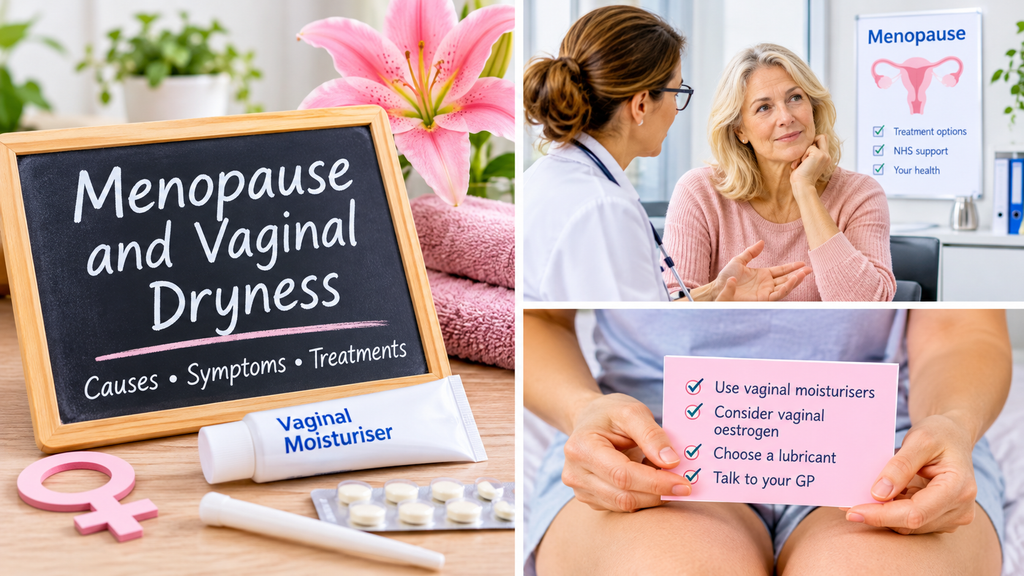
The NHS offers several treatment options depending on the severity of your symptoms, medical history and preferences.
NICE guidance recommends vaginal oestrogen for people experiencing menopause-related genitourinary symptoms. Non-hormonal moisturisers and lubricants are also recommended alternatives or additional treatments.
Here are the main options.
3.1 Vaginal Oestrogen Cream

Common NHS treatment
Vaginal oestrogen cream is a local hormone treatment that helps restore moisture and improve vaginal tissue health.
It is inserted into the vagina using an applicator, following the prescribed instructions.
Potential benefits include:
- Reducing vaginal dryness and irritation.
- Improving vaginal elasticity.
- Reducing discomfort during sexual activity.
- Helping relieve some urinary symptoms associated with menopause.
Your GP may prescribe a vaginal oestrogen cream depending on your symptoms and medical history.
3.2 Vaginal Oestrogen Tablets and Pessaries
Vaginal oestrogen is also available as small tablets or pessaries inserted into the vagina.
These treatments deliver a low dose of oestrogen directly to vaginal tissues.
They can help improve:
- Vaginal dryness.
- Irritation and soreness.
- Pain during sex.
- Menopause-related vaginal discomfort.
The choice between cream, tablet, pessary, gel or ring should be discussed with your healthcare professional.
3.3 Vaginal Oestrogen Rings
A vaginal oestrogen ring is a flexible device placed inside the vagina.
It gradually releases a small amount of oestrogen over time. Depending on the prescribed product, it is generally replaced every three months.
This option may suit women who prefer not to apply creams or use tablets regularly.
3.4 Vaginal Moisturisers
Non-hormonal vaginal moisturisers help maintain moisture and reduce persistent dryness.
Unlike lubricants, which are mainly used during sexual activity, moisturisers are designed for regular use.
They can be particularly helpful for women who:
- Prefer non-hormonal treatment.
- Cannot use vaginal oestrogen.
- Have mild or moderate dryness.
- Want additional relief alongside prescribed treatment.
Choose products specifically designed for vaginal use rather than ordinary body lotions or moisturisers.
3.5 Water-Based Lubricants
Water-based lubricants can reduce friction during sexual activity and make sex more comfortable.
They provide temporary relief but do not treat the underlying hormonal changes responsible for menopause-related vaginal dryness.
If you use condoms, avoid oil-based lubricants because they can damage latex condoms.
3.6 Vaginal Prasterone
Vaginal prasterone is a prescription treatment that may be considered when vaginal oestrogen or non-hormonal treatments have not worked or are not tolerated.
It is administered as a vaginal pessary and works locally to help improve menopause-related vaginal symptoms.
A specialist or GP can discuss whether it is suitable.
3.7 Ospemifene
Ospemifene is an oral prescription medicine that may be considered when locally applied vaginal treatments are impractical.
It is not usually the first treatment option for vaginal dryness. A healthcare professional will assess whether it is appropriate for your circumstances.
These additional prescription options are included in NICE menopause guidance. NICE+1
4. Is Vaginal Oestrogen Safe After Menopause?
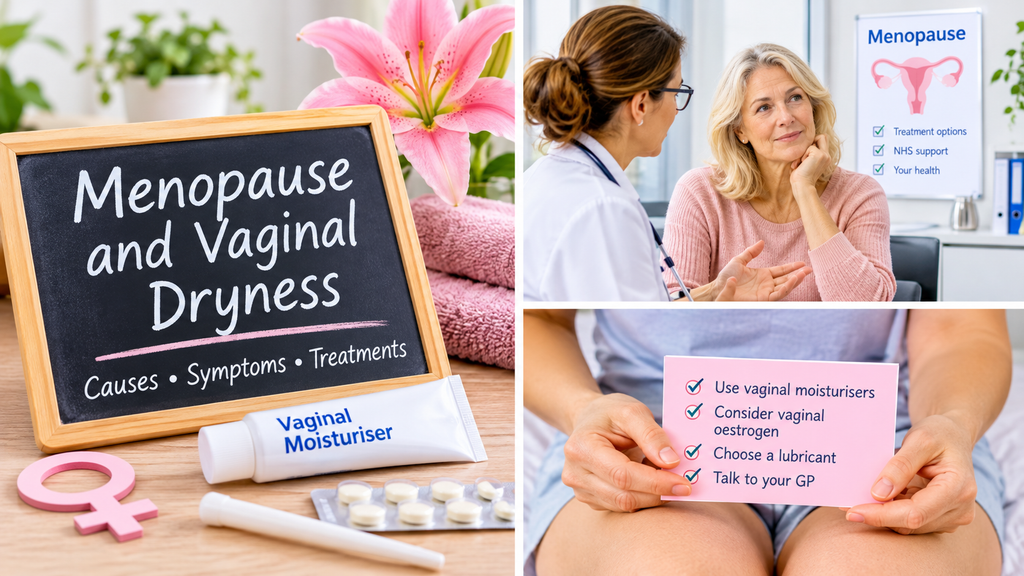
For many women, low-dose vaginal oestrogen is considered a suitable and effective treatment.
Unlike systemic HRT, which delivers hormones throughout the body, vaginal oestrogen works mainly on the vaginal tissues. Only a minimal amount is absorbed into the bloodstream compared with systemic HRT.
According to NHS guidance:
- Serious side effects are very rare.
- It can be used to treat vaginal dryness and irritation.
- It does not usually require additional progestogen to protect the womb.
- It can take up to three months to work fully.
Some women experience temporary side effects, including vaginal discomfort, abdominal pain or headaches.
However, vaginal oestrogen is not automatically suitable for everyone.
What if you have had breast cancer?
If you have a personal history of breast cancer, NICE recommends trying non-hormonal moisturisers and lubricants first.
If symptoms continue despite these treatments, vaginal oestrogen may be considered after an individual discussion about potential benefits and risks.
Women currently taking aromatase inhibitors should discuss treatment options with their breast cancer specialist.
Do not start vaginal hormone treatment without discussing your medical history with an appropriate healthcare professional. NHS+1
5. Can Vaginal Dryness After Menopause Be Treated Without Hormones?
Yes. Several non-hormonal treatments can help relieve vaginal dryness.
These options may be particularly useful if you prefer to avoid hormonal treatment or have a medical reason to discuss alternatives.
Recommended approaches include:
- Use vaginal moisturisers regularly according to product instructions.
- Apply water-based lubricant before sexual activity.
- Avoid perfumed soaps, intimate washes and vaginal douches.
- Wash the external genital area gently with water or an unperfumed product.
- Avoid ordinary body creams inside the vagina.
- Speak to a pharmacist about suitable non-hormonal products.
If symptoms continue despite these measures, arrange a GP appointment to discuss other treatments.
Non-hormonal products can relieve symptoms, but they may not address the underlying hormonal changes. NHS+1
6. How to Get NHS Treatment for Vaginal Dryness
If vaginal dryness is affecting your comfort, sex life or everyday activities, you can speak to your GP.
You do not need to wait until symptoms become severe.
Step 1: Book a GP appointment
Explain your symptoms, when they started and whether they are getting worse.
Your GP may ask about:
- Your age and menopause history.
- Vaginal dryness, itching or irritation.
- Pain during sexual activity.
- Urinary symptoms or recurrent infections.
- Current medications.
- Previous breast cancer or other relevant medical conditions.
Step 2: Discuss the possible cause
If your symptoms are consistent with menopause-related vaginal changes, your GP may be able to recommend treatment based on your symptoms and medical history.
An examination or additional tests may be needed if there are unusual symptoms, bleeding, discharge or uncertainty about the diagnosis.
Step 3: Discuss NHS treatment options
Depending on your circumstances, your GP may recommend:
- Vaginal oestrogen cream.
- Vaginal oestrogen tablets or pessaries.
- Vaginal oestrogen rings.
- Non-hormonal vaginal moisturisers.
- Water-based lubricants.
- Other prescription treatments where appropriate.
Step 4: Review your symptoms
Treatment may take several weeks to show noticeable improvement.
NHS guidance indicates that vaginal oestrogen can take up to three months to work fully.
Your healthcare professional should review your treatment and help you decide whether to continue, change or adjust it.
Can you get vaginal oestrogen on the NHS?
Yes. Vaginal oestrogen can be prescribed through the NHS when clinically appropriate. Some vaginal oestrogen products are also available from pharmacies without a prescription. Prescription and NHS exemption arrangements may affect what you pay.
For more information about menopause-related NHS support, read our guide to menopause symptoms in the UK.
7. When Should You See a GP About Vaginal Dryness?
Although vaginal dryness is common after menopause, certain symptoms should not be ignored.
Contact your GP if:
- Vaginal dryness lasts for several weeks despite self-care.
- Symptoms interfere with everyday activities.
- Sex becomes painful or uncomfortable.
- You experience unusual vaginal discharge.
- You develop persistent itching, burning or soreness.
- You experience urinary problems or repeated UTIs.
Important medical warning
Any bleeding after menopause needs medical assessment. This includes bleeding after sex, spotting or pink or brown discharge. It does not necessarily mean cancer, but it should be investigated promptly.
If you have severe pain, fever or feel seriously unwell alongside vaginal or urinary symptoms, seek urgent medical advice.
The NHS recommends seeing a GP if vaginal dryness persists, affects daily life or is accompanied by unusual discharge or postmenopausal bleeding. NHS
8. Does Vaginal Dryness After Menopause Go Away on Its Own?
Vaginal dryness caused by declining oestrogen levels does not always disappear without treatment.
Unlike hot flushes, which may become less frequent over time, vaginal and urinary symptoms associated with menopause can persist for years.
However, effective treatments are available.
Vaginal oestrogen can provide longer-term relief while moisturisers and lubricants help manage discomfort.
It is important to remember that symptoms may return if vaginal oestrogen is stopped. Treatment can often be restarted following discussion with your healthcare professional. NICE+1
9. Related Menopause and Women’s Health Guides
Understanding other menopause-related changes can help you make informed decisions about your health.
Explore these related HealthCresto guides:
- Menopause Symptoms in the UK: Signs, Stages and Treatment Options
- Perimenopause Symptoms in the UK: Early Signs and What to Expect
- HRT Shortages in the UK: Availability and Alternatives
- Low Libido in Women: Causes and Treatment Options
- Contraception Options in the UK: Pros and Cons Compared
- Cervical Screening in the UK: What to Expect
These guides provide further information about hormonal changes, women’s health and available NHS services.
10.Frequently Asked Questions (FAQs)
1. What is the best treatment for vaginal dryness after menopause?
Low-dose vaginal oestrogen is a commonly recommended treatment. It helps restore vaginal tissue health and relieve dryness, irritation and discomfort. Non-hormonal moisturisers and lubricants are alternatives.
2. Can I get vaginal dryness treatment on the NHS?
Yes. Your GP can prescribe vaginal oestrogen cream, tablets, pessaries or rings when appropriate. Non-hormonal treatments are also available from pharmacies.
3. How long does vaginal oestrogen take to work?
Vaginal oestrogen can take up to three months to work fully. Some women notice improvements earlier, depending on their symptoms and treatment.
4. Is vaginal dryness permanent after menopause?
It can persist for years because oestrogen levels remain lower after menopause. However, treatments can significantly improve symptoms and quality of life.
5. Can vaginal dryness cause pain during sex?
Yes. Reduced natural lubrication and thinner vaginal tissues can cause friction, soreness and pain during penetration. Vaginal moisturisers, lubricants and vaginal oestrogen may help.
6. Is vaginal oestrogen safe for women with a history of breast cancer?
It requires an individual assessment. NICE recommends non-hormonal treatments first. If symptoms continue, vaginal oestrogen may be considered following a discussion of benefits and risks with the relevant healthcare professionals.
7. Can I use vaginal moisturiser every day?
Some vaginal moisturisers are suitable for regular use, but frequency depends on the product. Follow the manufacturer’s instructions or ask a pharmacist.
8. Should I worry about bleeding after menopause?
Yes. Any vaginal bleeding after menopause, even light spotting, should be assessed by a healthcare professional. Although there are several possible causes, it should never be ignored.
11. Conclusion
Vaginal dryness after menopause is common, but it should not be dismissed as an unavoidable part of ageing.
Declining oestrogen levels can cause vaginal tissues to become thinner, less elastic and drier, leading to irritation, discomfort during sex and urinary symptoms.
The good news is that NHS treatment options are available. Vaginal oestrogen is a recommended treatment for menopause-related vaginal symptoms, while non-hormonal moisturisers and lubricants can provide additional relief or alternatives.
If symptoms persist, speak to your GP to find a treatment that suits your medical history and individual needs. Remember that any bleeding after menopause requires medical assessment.