
Table of Contents
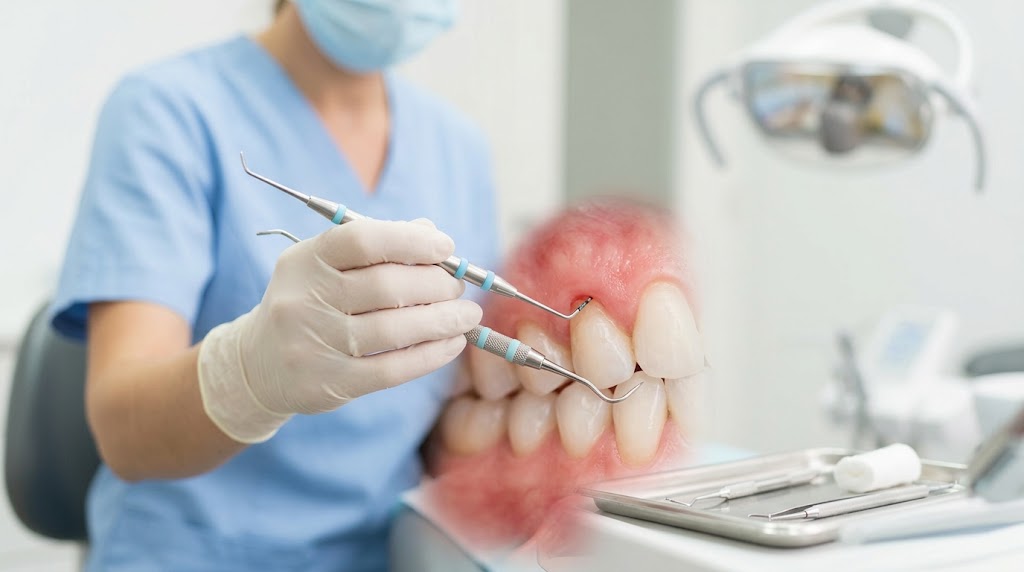
ToggleGum disease is one of the most common oral health problems in the UK. In its early stage, it may cause red, swollen or bleeding gums. If it progresses, it can develop into periodontitis, a more serious form of gum disease that can damage the tissues and bone supporting your teeth.
The good news is that periodontitis can be managed with professional dental treatment and good daily oral hygiene. Treatment aims to control infection and inflammation, reduce gum pockets, prevent further bone loss and help you keep your natural teeth for as long as possible.
If you are looking for periodontitis treatment in the UK, one of the biggest questions is whether to use an NHS dentist or pay privately. The answer depends on the severity of your gum disease, the treatment you need, NHS availability and whether you qualify for free NHS dental care.
This guide explains NHS vs private gum disease treatment, 2026 costs, treatment options, recovery times and what to expect at each stage.
Quick answer: In England, clinically necessary gum disease treatment can be available through the NHS. From 1 April 2026, NHS dental charges are £27.90 for Band 1, £76.60 for Band 2 and £332.10 for Band 3. Simple gum treatment such as clinically necessary scaling can fall under Band 1, while extensive management of gum disease can fall under Band 2. Complex periodontal cases may also be managed through new NHS Complex Care Pathways introduced in June 2026.
Periodontitis is an advanced form of gum disease that affects the tissues supporting your teeth.
It usually develops when plaque builds up around the teeth and causes inflammation of the gums. If plaque is not effectively removed, it can harden into tartar or calculus, which cannot be removed by ordinary brushing.
Over time, inflammation can affect the structures supporting the teeth.
Possible consequences of advanced periodontal disease include:
Deep gum pockets
Gum recession
Bleeding gums
Persistent bad breath
Loose teeth
Tooth loss
Loss of supporting bone
Difficulty chewing
The NHS explains that gum disease is caused by plaque building up on teeth and that more serious disease may require deep cleaning under the gums, antibiotics, tooth removal or gum surgery.
Understanding the difference between gingivitis and periodontitis is important.
Gingivitis is inflammation of the gums. Typical symptoms include:
Red gums
Swollen gums
Bleeding when brushing
Tender gums
Bad breath
At this stage, the tissues supporting the teeth have not necessarily suffered the irreversible damage associated with periodontitis.
Improving plaque removal and receiving professional dental care can help control gingivitis.
Periodontitis is more advanced.
The inflammation can affect the tissues and bone that hold teeth in place. Without appropriate treatment, teeth can become loose and may eventually need to be removed.
This is why persistent bleeding gums should not simply be dismissed as normal.
Periodontitis can sometimes progress without severe pain, so you should not rely on pain alone as a warning sign.
Potential symptoms include:
Gums that bleed regularly
Red or swollen gums
Gum recession
Persistent bad breath
Pus around the gums
Teeth becoming loose
Teeth appearing longer because gums have receded
New gaps developing between teeth
Changes in how your teeth fit together when biting
Sensitivity around the gum line
Discomfort when chewing
If you notice persistent gum bleeding or other changes, arrange a dental assessment.
The main underlying problem is persistent plaque accumulation.
Plaque is a sticky film containing bacteria that forms on teeth. If it is not removed effectively, it can contribute to inflammation of the gums.
NICE recommends effective daily plaque removal and daily cleaning between the teeth as important measures for preventing periodontal disease.
Other factors can increase the likelihood or severity of gum disease.
Smoking is an important risk factor for gum disease and can also make periodontal treatment more difficult.
The NHS recommends stopping smoking as part of gum disease management.
People with diabetes have an increased risk of periodontitis.
NICE recommends that adults with type 2 diabetes are advised about their higher risk of periodontitis and receive regular oral health reviews. Managing periodontitis can also help improve blood glucose control.
Inadequate brushing and failure to clean between teeth can allow plaque to remain around the gum line.
Some people are more susceptible to periodontal disease than others. Your dentist can assess your individual risk and recommend an appropriate maintenance programme.
A dentist or dental professional will assess your teeth and gums before recommending treatment.
The assessment may include:
Looking for gum inflammation
Checking for bleeding
Measuring gum pockets
Assessing gum recession
Checking whether teeth are loose
Examining plaque and tartar levels
Assessing your bite
Taking dental X-rays when clinically necessary
Assessing bone support
The exact tests depend on your symptoms and the suspected severity of disease.
Treatment depends on how advanced the disease is.
A typical treatment plan may include:
Improving daily plaque removal
Professional removal of plaque and calculus
Scaling and root surface debridement/deep cleaning
Smoking cessation support
Management of contributing health conditions
Periodontal reassessment
Further periodontal treatment if required
Referral to a specialist for complex cases
Surgery in selected advanced cases
Extraction of teeth that cannot be saved
The NHS states that serious gum disease may require deep cleaning under the gums, antibiotics, tooth extraction or gum surgery.
Scaling is the professional removal of hardened deposits such as calculus from the teeth.
Depending on the extent of disease, treatment may be carried out by a dentist, dental hygienist or dental therapist.
For straightforward gum disease, clinically necessary scaling can be included within NHS treatment. The NHS currently states that clinically necessary scaling is usually included in Band 1, while extensive treatment or complex gum problems may be charged as Band 2.
When periodontal pockets are deeper, simply cleaning the visible tooth surfaces may not be sufficient.
A dental professional may need to clean below the gum line.
This can involve removing calculus and bacterial deposits from affected root surfaces.
The treatment may be performed over multiple appointments, particularly when several areas of the mouth require treatment.
The purpose is to reduce inflammation and make it easier for you to maintain effective plaque control at home.
Antibiotics are not automatically required for every case of gum disease.
Your dentist will decide whether medication is appropriate based on your clinical condition.
Treatment usually focuses on controlling plaque, removing deposits and addressing risk factors rather than relying on antibiotics alone.
If antibiotics are recommended, take them exactly as prescribed.
Most people with gum disease do not automatically need gum surgery.
Surgery may be considered for selected cases where non-surgical treatment has not adequately controlled disease or where there are specific periodontal problems requiring specialist management.
The NHS lists gum surgery among possible treatments for serious gum disease.
A periodontist may be involved when advanced or complex periodontal treatment is required.
One of the biggest decisions for UK patients is whether to seek treatment through an NHS dentist or privately.
NHS treatment can provide clinically necessary periodontal care.
The cost depends on the treatment required and the applicable NHS charging band.
In England, from 1 April 2026, the NHS dental charges are:
| NHS dental band | 2026 charge in England |
|---|---|
| Band 1 | £27.90 |
| Band 2 | £76.60 |
| Band 3 | £332.10 |
| Unscheduled care | £27.90 |
The NHS says Band 1 can include simple management of gum disease, such as clinically necessary scaling. Extensive management of gum disease can fall under Band 2.
Private dental treatment does not use the NHS Band 1, Band 2 and Band 3 charging system.
Instead, the dentist or periodontal specialist sets their own fees.
Private costs can vary considerably depending on:
The dentist
Location
Severity of periodontitis
Number of teeth affected
Number of treatment sessions
Whether a hygienist is involved
Whether a periodontist is required
Whether surgery is needed
Whether X-rays or other investigations are required
Whether sedation is used
A private periodontal consultation may therefore cost substantially more than an NHS dental appointment, particularly if specialist treatment is required.
For accurate pricing, ask the dental practice for a written treatment plan and itemised estimate before treatment begins.
There is no universal answer.
Your condition can be managed within NHS primary dental care
You can access an NHS dentist
Cost is an important consideration
You are eligible for NHS treatment
You do not require highly specialised periodontal treatment
You cannot find an NHS dentist accepting patients
You want more appointment flexibility
You want access to a periodontal specialist
You require complex treatment
You want additional treatment options that are not routinely available through NHS dentistry
You prefer a particular dental practice
The key question should not simply be “Is private treatment better?”
Instead, ask:
“What treatment does my periodontal condition actually require, and where can I receive it safely and appropriately?”
For patients paying NHS charges in England, the current charges from 1 April 2026 are:
Band 1: £27.90
Band 2: £76.60
Band 3: £332.10
Band 1 includes examination, assessment and advice and can include clinically necessary scaling or simple management of gum disease.
Band 2 includes Band 1 treatment plus additional treatments. The NHS specifically states that extensive management of gum disease can fall within Band 2.
Band 3 covers certain more extensive dental treatments involving laboratory work, such as dentures, crowns and bridges.
Your dentist should explain which NHS band applies to the treatment you need.
A significant development in NHS dentistry is the introduction of Complex Care Pathways from 23 June 2026.
NHS England says these pathways are designed for patients with significant dental decay and/or unstable, more severe periodontitis.
For certain eligible patients with severe or unstable periodontal disease, the pathways can provide a structured period of care rather than treating individual problems in isolation.
NHS England describes three Complex Care Pathways, including pathways specifically covering unstable periodontal disease and Stage III periodontitis. Eligibility criteria include clinical findings such as periodontal pocket depth and disease affecting more than 30% of teeth.
This is important because it means some patients with significant periodontal disease may have access to a more structured NHS treatment approach.
However, eligibility is determined by the dental team based on the relevant NHS criteria.
Some people are entitled to free NHS dental treatment in England.
The NHS states that free treatment may be available to certain groups, including:
Children under 18
People under 19 in full-time education
People who are pregnant or have had a baby within the previous 12 months
Some people receiving qualifying benefits
Other exemptions and help with dental costs may also apply.
Always check the latest NHS eligibility rules before assuming you qualify.
Recovery depends on the treatment you receive and how advanced your gum disease is.
After scaling or professional periodontal cleaning, you may temporarily experience:
Tender gums
Mild bleeding
Increased tooth sensitivity
Sensitivity to hot or cold foods
A feeling that teeth are more exposed
These symptoms may settle as the gums become healthier.
Deep periodontal cleaning may cause more temporary sensitivity or gum tenderness.
Your dental professional should explain what to expect and how to care for your mouth after treatment.
Recovery from periodontal surgery varies significantly depending on the procedure.
You may experience:
Swelling
Tenderness
Mild bleeding
Temporary sensitivity
Dietary restrictions
A need to avoid brushing directly over the treated area initially
Follow the post-operative instructions provided by your dental team.
There is no single treatment timeline.
Simple gum disease management may require relatively few appointments.
More advanced periodontitis can require a longer treatment journey involving:
Initial assessment
Oral hygiene instruction
Professional cleaning
Deep periodontal treatment
Healing period
Reassessment
Additional treatment if necessary
Long-term maintenance
The treatment duration depends on the number of teeth affected, periodontal pocket depths, inflammation, smoking status, oral hygiene and other health factors.
NHS England’s new Complex Care Pathways introduced in 2026 can run for 6 or 12 months, depending on the pathway and eligibility.
Periodontitis is generally considered a chronic condition that can be controlled and managed, rather than something that can simply be cured with one cleaning.
Treatment can reduce inflammation and help stabilise periodontal disease.
However, maintaining the result requires ongoing oral hygiene and professional dental care.
This is why periodontal treatment does not end when the last deep-cleaning appointment finishes.
Your dental team may recommend:
Regular dental reviews
Professional periodontal maintenance
Daily interdental cleaning
Twice-daily brushing
Smoking cessation
Managing diabetes where applicable
Monitoring gum pockets
Prompt treatment of recurrent inflammation
NICE recommends that dental review intervals should be personalised according to disease levels and individual risk.
Daily plaque removal is central to controlling gum disease.
The NHS recommends brushing teeth with fluoride toothpaste at least twice daily.
Pay particular attention to the gum line.
Use an appropriate method such as:
Interdental brushes
Dental floss where suitable
Other interdental cleaning aids recommended by your dental team
NICE emphasises daily interdental plaque control as part of periodontal disease prevention.
If you smoke, quitting can improve your oral health and is an important part of gum disease management.
If you have diabetes, maintaining good blood glucose management and receiving regular oral health reviews is important because diabetes increases the risk of periodontitis.
For broader information about diabetes and diet, see our guide: Diabetes Diet Plan: Foods to Eat and Avoid.
Untreated advanced periodontitis can damage the structures that support teeth.
As the supporting tissues and bone become damaged, teeth can become loose.
In severe cases, a tooth may not be possible to save and extraction may be recommended.
This is one reason early diagnosis and long-term periodontal maintenance matter.
It depends on why the tooth is loose and how much supporting tissue has been lost.
If inflammation is controlled, a tooth may feel more stable in some circumstances.
However, severe bone loss cannot simply be reversed by brushing or a routine scale and polish.
Your dentist or periodontist needs to assess the tooth and surrounding bone before determining whether it can be stabilised.
Gum disease is primarily an oral health condition, but it is associated with broader health considerations.
For example, NICE specifically recognises the relationship between periodontitis and diabetes. Adults with type 1 and type 2 diabetes are at increased risk of periodontitis, and effective management of periodontal disease may help with blood glucose control.
This does not mean that gum disease automatically causes other diseases.
Instead, it highlights why oral health should be considered as part of overall healthcare.
Before starting treatment, consider asking:
How advanced is my gum disease?
How deep are my periodontal pockets?
Is the disease localised or widespread?
Have I experienced bone loss?
Do I need X-rays?
Can my condition be treated through the NHS?
Is scaling sufficient?
Do I need deep periodontal cleaning?
Will I need several appointments?
Do I need to see a periodontist?
Could surgery be necessary?
Which NHS band applies?
Is the treatment clinically necessary under the NHS?
What will private treatment cost?
Is the quoted price for the whole treatment or each appointment?
Are follow-up appointments included?
Will maintenance treatment cost extra?
How long should my gums take to settle?
Should I expect sensitivity?
When can I brush normally?
When should I return for reassessment?
How frequently will I need maintenance appointments?
Getting clear answers can make it easier to compare NHS and private options.
| Factor | NHS | Private |
|---|---|---|
| Pricing | Fixed NHS bands in England | Practice-specific |
| Simple gum treatment | Can be included when clinically necessary | Separate private fee |
| Extensive gum treatment | Can fall under Band 2 | Private fee |
| Complex periodontal cases | Some eligible cases may enter Complex Care Pathways | Specialist treatment available depending on practice |
| Specialist access | May require referral | Can often be accessed directly |
| Appointment availability | Depends on NHS capacity | Often more flexible |
| Treatment choice | Based on NHS clinical rules | Broader range may be available |
| Maintenance | Based on clinical need | Practice-specific fees |
| Best for | Clinically necessary NHS care at regulated charges | Patients seeking additional choice or specialist access |
The table is a general comparison rather than a guarantee of what an individual dental practice will offer.
There is no single national private price for periodontitis treatment.
A private dentist may charge separately for:
Consultation
Periodontal assessment
X-rays
Hygienist appointments
Deep cleaning
Periodontal therapy
Specialist periodontal consultation
Periodontal surgery
Follow-up appointments
Maintenance visits
Prices can vary significantly between practices and regions.
For this reason, avoid choosing a treatment solely from an online headline price.
Instead, ask for a written, itemised treatment plan that explains exactly what is included.
If you are comparing private dental care, our related guide Reliable Private Dentist in Croydon may also be useful.
Yes. Clinically necessary treatment for gum disease can be available through NHS dentistry in England.
The NHS states that gum disease treatment may include professional cleaning, deep cleaning, antibiotics, tooth removal or gum surgery depending on severity.
However, access depends on finding an NHS dental provider and the treatment being clinically necessary under NHS arrangements.
If you do not currently have an NHS dentist, you can use the NHS dental service information to look for available providers.
Our guide How to Find an NHS Dentist in 2026 explains the process in more detail.
Periodontitis itself is usually not an emergency, but some symptoms require urgent dental assessment.
Seek urgent dental advice if you develop:
Severe dental pain
Significant facial swelling
Swelling that is spreading
Difficulty breathing or swallowing
Severe infection
Uncontrolled bleeding
A dental abscess
For urgent dental problems, read our guide to Emergency Dentist UK.
If swelling affects breathing or swallowing, seek emergency medical help immediately.
The best treatment depends on severity. It usually involves improving plaque control, professional removal of plaque and calculus, treatment below the gum line when necessary and long-term maintenance. Advanced cases may require specialist treatment or surgery.
Yes. Clinically necessary gum disease treatment can be provided through NHS dentistry in England. Simple clinically necessary scaling can be included in Band 1, while extensive gum disease management can fall under Band 2.
From 1 April 2026, NHS dental charges in England are £27.90 for Band 1, £76.60 for Band 2 and £332.10 for Band 3. The applicable band depends on the treatment required.
Some people qualify for free NHS dental treatment, including certain children, pregnant women and people receiving qualifying benefits. Eligibility depends on your circumstances.
Not necessarily. NHS and private dentists can both provide appropriate periodontal care. Private treatment may offer greater choice, flexibility or direct access to specialists, but it can cost considerably more.
Treatment may take several appointments. Mild cases may be managed relatively quickly, while advanced disease can require months of treatment and maintenance. NHS Complex Care Pathways introduced in 2026 can run for six or twelve months for eligible patients.
The inflammation and infection can often be controlled, but advanced periodontal tissue and bone loss may not simply grow back. The goal of treatment is to stabilise disease, protect remaining support and prevent further deterioration.
Good oral hygiene is essential, but established periodontitis usually requires professional dental assessment and treatment. Brushing and interdental cleaning alone cannot remove hardened calculus below the gum line.
There is no single interval for everyone. NICE recommends that dental review intervals are tailored to individual disease levels and risk.
Smoking is an important risk factor for gum disease. The NHS recommends stopping smoking as part of gum disease management.
Yes. NICE states that adults with both type 1 and type 2 diabetes have a higher risk of periodontitis. Managing periodontal disease can also help improve blood glucose control.
For many people in England, NHS treatment can be the most affordable option for clinically necessary gum disease treatment. From April 2026, NHS charges range from £27.90 for Band 1 to £332.10 for Band 3, depending on the treatment required. Extensive management of gum disease can fall under Band 2 at £76.60.
Private periodontal treatment can be useful when you need greater appointment flexibility, want direct access to specialist care or require treatment options outside standard NHS arrangements. However, private prices vary considerably, so always request a detailed treatment plan and cost estimate.
For patients with more severe or unstable periodontal disease, the introduction of NHS Complex Care Pathways in June 2026 is another important development. Eligible patients may receive structured six- or twelve-month care depending on their clinical circumstances.
Most importantly, do not wait until your teeth become loose before seeking help. Bleeding gums, persistent swelling, gum recession or ongoing bad breath can be signs that you need a dental assessment.
Good daily plaque removal, professional dental care, smoking cessation and appropriate long-term maintenance can all play an important role in controlling gum disease and protecting your natural teeth.
This article provides general health information and is not a substitute for an examination by a dentist, dental hygienist, dental therapist, periodontist or other qualified healthcare professional. NHS charges, eligibility rules and treatment pathways can change. The NHS prices quoted above apply to England from 1 April 2026; Scotland, Wales and Northern Ireland have different dental charging arrangements. Always confirm current costs and eligibility with the relevant NHS service or dental practice.
We use cookies to improve your experience on our site. By using our site, you consent to cookies.
Manage your cookie preferences below:
Essential cookies enable basic functions and are necessary for the proper function of the website.
These cookies are needed for adding comments on this website.
Google Tag Manager simplifies the management of marketing tags on your website without code changes.
Statistics cookies collect information anonymously. This information helps us understand how visitors use our website.
Google Analytics is a powerful tool that tracks and analyzes website traffic for informed marketing decisions.
Service URL: policies.google.com (opens in a new window)