
Acne is often associated with teenage years, but adult acne can affect people in their 20s, 30s, 40s and beyond. It may appear for the first time in adulthood or continue after adolescence, causing spots, blackheads, whiteheads, painful lumps and sometimes permanent scarring.
Adult acne is common and treatable. In the UK, treatment options range from pharmacy products and prescription creams to oral medicines and specialist dermatology care. The best approach depends on the type of acne, its severity, your medical history and whether hormonal changes or other factors may be contributing.
This guide explains why acne develops in adults, how to recognise possible triggers, which treatments are available through the NHS and what you can do to care for your skin.
What Is Adult Acne?
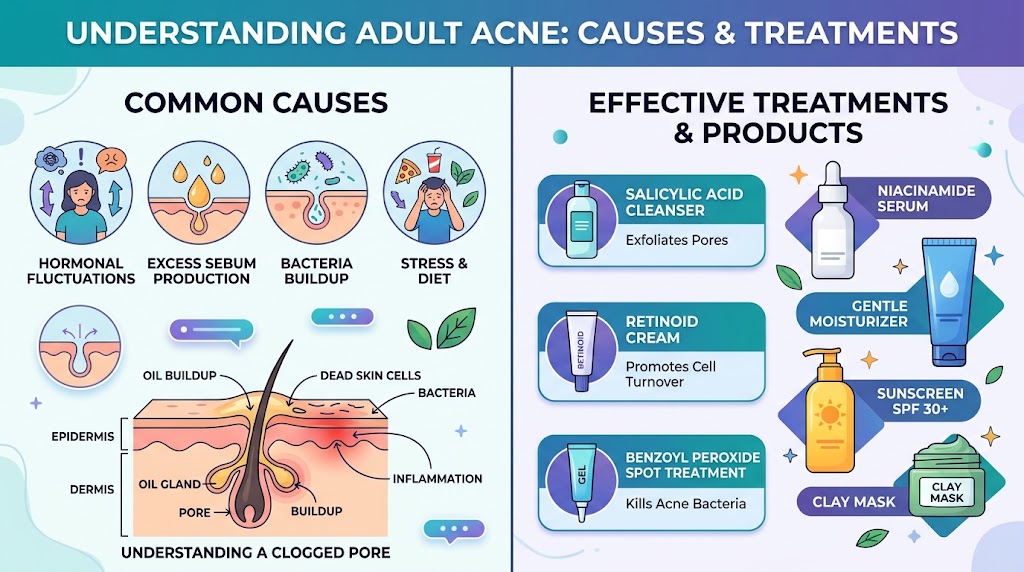
Adult acne is acne vulgaris that occurs or persists during adulthood. It develops when hair follicles become blocked with oil and dead skin cells. Inflammation and changes in the skin’s natural bacteria can contribute to spots and more painful lesions.
Adult acne commonly affects the:
- Face, particularly the cheeks, chin and jawline
- Forehead and temples
- Chest and upper back
- Shoulders
Some adults mainly experience blackheads and whiteheads, while others develop inflamed spots, pus-filled lesions or deep, painful nodules.
Acne is not caused simply by having dirty skin. Washing too often, scrubbing aggressively or using harsh products can irritate the skin and make symptoms worse.
If you have another chronic skin condition, such as psoriasis, it is useful to understand that the causes and treatments differ. Read our guide to psoriasis treatment in the UK for more information.
Why Does Acne Happen in Adults?
Adult acne usually develops through a combination of factors rather than one single cause. These may include hormonal changes, excess oil production, blocked pores, inflammation, genetics and certain medicines or skincare products.
1. Hormonal changes
Hormones can influence how much oil your skin produces. Changes around the menstrual cycle, pregnancy, the postnatal period and perimenopause may affect acne in some women.
Hormonal acne is often described as appearing around the chin and jawline, although its location alone cannot confirm that hormones are responsible.
If breakouts occur alongside irregular periods, excess facial hair or scalp hair thinning, speak to your GP. These symptoms can sometimes be associated with polycystic ovary syndrome (PCOS).
Our guide to PCOS symptoms and treatments explains the condition and when to seek medical advice.
2. Stress and disrupted sleep
Stress does not explain every case of acne, but it may worsen symptoms for some people. Stress can influence inflammatory processes and everyday habits, including sleep, skincare routines and picking at spots.
If acne is affecting your emotional wellbeing, it is worth discussing this with a healthcare professional rather than assuming you must simply manage stress better.
3. Genetics
You may be more likely to develop acne if close family members have experienced it. Genetics can influence skin characteristics, oil production and susceptibility to inflammation.
However, a family history does not mean that acne is inevitable or that treatment will not work.
4. Skincare, makeup and hair products
Some oily or pore-blocking products can contribute to breakouts in susceptible people. Hair oils, heavy cosmetics and products that are difficult to remove may be relevant, particularly if spots develop where these products touch the skin.
Look for products labelled non-comedogenic, meaning they are formulated to be less likely to block pores. This does not guarantee that a product will suit everyone, so introduce new products gradually.
5. Medicines and underlying conditions
Certain medicines can cause acne-like eruptions or aggravate existing acne. Do not stop a prescribed medicine yourself if you suspect it is contributing to your symptoms. Ask your GP or pharmacist to review it.
Acne-like bumps can also have other causes, including rosacea, folliculitis and some forms of dermatitis. A clinician can help distinguish between them if the diagnosis is uncertain.
6. Diet and lifestyle
Research into diet and acne is still developing. Some studies suggest that a high-glycaemic diet may be associated with acne in some people, but diet is not the sole cause and responses vary.
There is not enough evidence to recommend that every adult with acne avoid dairy, chocolate or particular food groups.
A balanced diet, regular sleep and sustainable lifestyle habits support general health. Avoid restrictive diets or expensive supplements marketed as acne cures without reliable evidence.
How to Recognise Adult Acne
Adult acne can present in different ways. Identifying the type of lesion can help a clinician decide which treatment may be appropriate.
| Type of acne | What it looks or feels like |
|---|---|
| Blackheads | Small, dark-looking blocked pores |
| Whiteheads | Small, closed bumps beneath the skin surface |
| Papules | Inflamed red or discoloured raised spots |
| Pustules | Inflamed spots containing visible pus |
| Nodules | Deep, firm and often painful lumps |
| Cyst-like lesions | Deep, inflamed lesions that may be painful and scar |
The colour of acne lesions can vary with skin tone. Inflammation may appear red on lighter skin and darker brown, purple or greyish on darker skin.
Seek medical advice if you develop painful nodules, persistent acne, scarring or symptoms that are not improving with appropriate treatment.
Best Adult Acne Treatments Available in the UK
There is no single treatment that works for everyone. The NHS and NICE recommend choosing treatment according to acne severity, potential side effects, medical history and personal preferences.
1. Benzoyl peroxide
Benzoyl peroxide is a topical treatment available from pharmacies and through prescriptions, depending on the product. It helps reduce acne-causing bacteria and can improve inflamed spots.
It may cause dryness, redness, stinging or peeling. It can also bleach towels, bedding, hair and clothing.
Start with the product instructions and ask a pharmacist if you are unsure whether it is suitable for your skin. Do not combine several irritating acne products without professional advice.
2. Topical retinoids
Topical retinoids, such as adapalene, help prevent blocked pores and are commonly used in acne treatment plans. They may be combined with other medicines for better control.
Irritation, dryness and peeling can occur, especially at the start of treatment. A clinician may recommend gradually introducing treatment to improve tolerance.
Important: Topical retinoids should not be used during pregnancy or when planning a pregnancy. Ask a GP or pharmacist about suitable alternatives if you are pregnant, trying to conceive or breastfeeding.
3. Azelaic acid
Azelaic acid can help treat acne by affecting blocked pores and inflammation. It may also help with some dark marks left after spots heal.
It can cause mild irritation or a stinging sensation. Ask a pharmacist or GP which formulation is appropriate for your skin and circumstances.
4. Prescription antibiotic treatment
For moderate to severe inflammatory acne, a GP may prescribe an oral antibiotic such as doxycycline or lymecycline, usually alongside an appropriate topical treatment.
Antibiotics are not a suitable long-term solution on their own. NICE recommends reviewing treatment and limiting antibiotic use to reduce the risk of antimicrobial resistance.
Oral tetracyclines, including doxycycline and lymecycline, are not suitable during pregnancy or when planning a pregnancy. A healthcare professional can advise on safer options.
5. Hormonal treatment for selected women
For some women, acne treatment may include a combined oral contraceptive pill or other specialist-directed hormonal treatment. The choice depends on individual circumstances, medical history and contraceptive needs.
Hormonal treatment is not appropriate for everyone and may have risks or contraindications. Discuss the options with your GP rather than starting or changing hormonal medication without advice.
Persistent acne alongside irregular periods, excess facial hair or other possible hormonal symptoms may warrant assessment for an underlying condition such as PCOS.
6. Isotretinoin for severe acne
Oral isotretinoin is a specialist medicine that may be considered for severe acne, acne that causes scarring or significant psychological distress, or acne that has not responded adequately to appropriate standard treatments.
It can be highly effective, but it carries important risks and requires specialist supervision. Side effects can include dry skin and lips, and patients need monitoring according to current prescribing requirements.
Isotretinoin can cause severe birth defects. People who can become pregnant must follow strict pregnancy-prevention and monitoring requirements. Never use isotretinoin obtained without a legitimate prescription or specialist oversight.
A dermatologist will assess whether the potential benefits outweigh the risks and explain the required precautions.
How Long Does Adult Acne Treatment Take to Work?
Acne treatments usually take time. You may not see a clear improvement immediately, and irritation during the early stages does not necessarily mean a treatment has failed.
NICE recommends reviewing first-line treatment after approximately 12 weeks to assess improvement and side effects.
Some products may begin to show benefits earlier, but meaningful improvement often takes several weeks. Continue treatment as directed unless you experience a concerning reaction or your clinician advises otherwise.
If acne is worsening, causing scars or not responding to treatment, arrange a review rather than repeatedly switching products.
A Simple Adult Acne Skincare Routine
A consistent routine can support medical treatment and help reduce irritation. You do not need a large collection of products.
Morning routine
- Wash your face gently with a mild cleanser.
- Apply prescribed acne treatment if directed for morning use.
- Use a lightweight, non-comedogenic moisturiser.
- Apply broad-spectrum sun protection, ideally SPF 30 or higher.
Evening routine
- Remove makeup and sunscreen gently.
- Cleanse without scrubbing or using abrasive brushes.
- Apply your prescribed treatment as directed.
- Use moisturiser to reduce dryness and support the skin barrier.
Avoid introducing several active ingredients at once. Products containing acids, retinoids and benzoyl peroxide can irritate the skin, particularly when combined without a clear plan.
Do not squeeze spots. Picking can increase inflammation and the risk of scarring or persistent dark marks.
Can Adult Acne Leave Scars or Dark Marks?
Yes. Severe inflammation, deep nodules and repeated picking can increase the risk of permanent acne scars. Acne can also leave post-inflammatory hyperpigmentation, which appears as darker marks after a spot heals.
To reduce the risk of scarring:
- Seek medical advice early if acne is deep or painful.
- Follow your treatment plan consistently.
- Avoid squeezing, scratching or picking lesions.
- Ask about treatment options if new scars are developing.
If scars are already present, a dermatologist can assess suitable treatments after active acne is controlled. Options depend on the type of scar, skin tone, medical history and the procedure’s potential risks.
If you notice a changing mole or a skin lesion that does not behave like your usual acne, do not assume it is a spot. Read our guide on how to check moles for melanoma at home and seek medical advice for concerning changes.
When Should You See a GP About Adult Acne?
Consider booking a GP appointment if:
- Your acne is moderate, severe or widespread.
- You have deep, painful nodules or cyst-like lesions.
- Acne is leaving scars or persistent marks.
- Pharmacy treatments have not helped.
- Breakouts began suddenly or are accompanied by other unusual symptoms.
- Acne is affecting your confidence, relationships or mental wellbeing.
- You suspect a medicine or hormonal condition is contributing.
A GP can assess your symptoms, discuss prescription treatment and refer you to a dermatologist when appropriate.
In the UK, NHS dermatology referral criteria and waiting times vary. If acne is severe or worsening while you wait, contact your GP for a review.
Adult Acne and Mental Health
Acne can affect more than the skin. Visible breakouts may contribute to embarrassment, low confidence, anxiety or social withdrawal. These feelings are valid, and acne should not be dismissed as a minor cosmetic concern.
If acne is affecting your daily life, tell your GP or dermatologist. Treating the skin and addressing emotional wellbeing can both be important parts of care.
You can explore our guide to social anxiety versus shyness for general information about social anxiety. Acne does not automatically cause an anxiety disorder, but professional support may help if distress becomes persistent.
Frequently Asked Questions About Acne in Adults
Why am I getting acne in my 30s or 40s?
Adult acne can be associated with hormonal changes, genetics, blocked pores, skincare products, stress and certain medicines. New acne can also resemble other skin conditions, so seek an assessment if the cause is unclear or symptoms are persistent.
How do I get rid of adult acne quickly?
There is no reliable overnight cure. Treatments such as benzoyl peroxide or prescription medicines may help, but improvement generally takes several weeks. NICE recommends reviewing first-line treatment at around 12 weeks.
Is adult acne caused by hormones?
Hormones can contribute to adult acne, particularly around menstrual cycles, pregnancy and menopause. However, not all adult acne is hormonal, and its location alone cannot establish the cause.
What is the best treatment for adult acne in the UK?
The best treatment depends on severity and personal circumstances. Options include benzoyl peroxide, topical retinoids, azelaic acid, combination treatments, oral antibiotics, selected hormonal treatments and specialist isotretinoin treatment for eligible patients.
Can stress make adult acne worse?
Stress may aggravate acne in some people, but it is not the only cause. A consistent skincare routine, appropriate medical treatment and support for ongoing stress may help overall wellbeing.
Should I moisturise if I have acne-prone skin?
Yes. A suitable non-comedogenic moisturiser can help reduce dryness and irritation, particularly when using acne medicines. Choose products that suit your skin and avoid heavy products that appear to worsen breakouts.
Can adult acne be a sign of PCOS?
Acne can occur in people with polycystic ovary syndrome (PCOS), especially when accompanied by irregular periods, excess facial hair or scalp hair thinning. These symptoms do not prove that you have PCOS, so discuss them with your GP.
When should I ask for a dermatologist referral?
Ask your GP about referral if acne is severe, causing scarring, not responding to appropriate treatment or significantly affecting your mental wellbeing. Your GP can assess whether specialist care is appropriate.
Final Thoughts: Treating Adult Acne Effectively
Adult acne is common, and it can affect people well beyond their teenage years. Hormonal changes, genetics, blocked pores, certain medicines and skincare habits can all play a role.
The most effective approach combines a gentle, consistent skincare routine with treatment suited to your symptoms. Pharmacy products may help mild acne, while persistent or severe cases may need prescription medicines or specialist dermatology care.
If acne is painful, leaving scars or affecting your confidence, speak to your GP rather than waiting for it to disappear on its own.
Your next step: Review your current skincare products, avoid picking spots and arrange a GP or pharmacist consultation if your acne is persistent or worsening.
Medical disclaimer: This article is for general educational purposes only and does not replace professional medical advice, diagnosis or treatment. Medicines have different risks and may not be suitable during pregnancy or breastfeeding. Consult a qualified healthcare professional before starting, stopping or changing treatment.