
Table of Contents
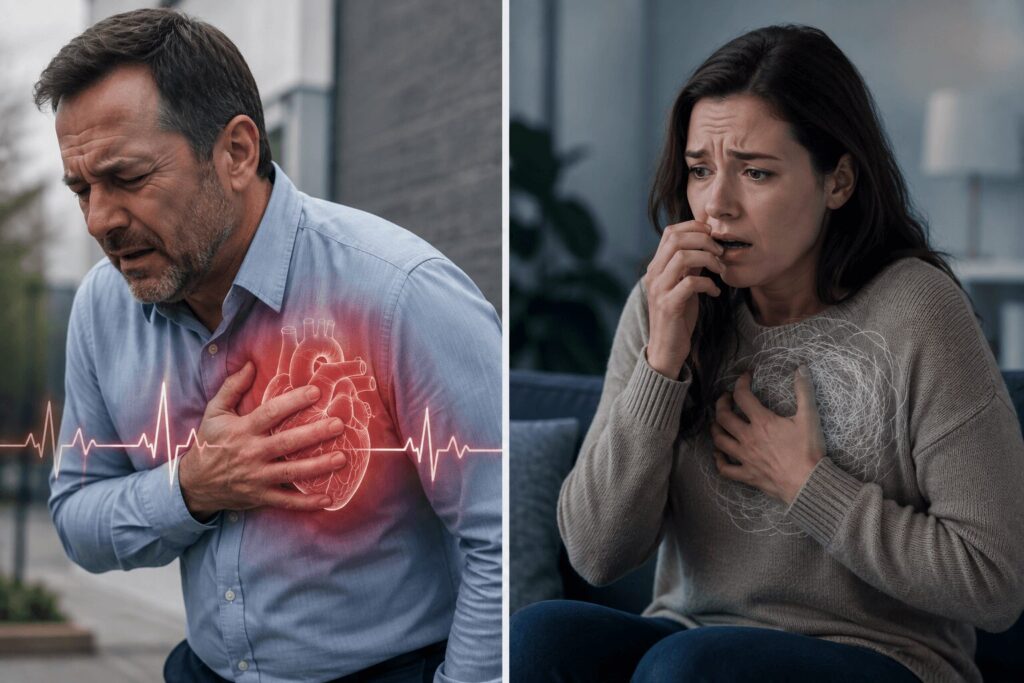
ToggleA sudden racing heartbeat, chest pain, sweating, dizziness or difficulty breathing can be frightening. These symptoms can happen during a panic attack, but some of them can also occur during a heart attack. Because the symptoms can overlap, it is not always possible to tell the difference based on how you feel alone.
A heart attack is a medical emergency that requires immediate treatment. The NHS advises calling 999 if you have sudden chest pain that does not go away, particularly when it feels like squeezing or pressure, spreads to the arms, neck or jaw, or occurs with sweating, nausea, light-headedness or shortness of breath.
Panic attacks can also cause intense chest pain, a racing heart, breathlessness, dizziness, sweating, nausea and a fear of dying. The NHS says most panic attacks last around 5 to 20 minutes, although some can last longer.
This guide explains panic attacks vs heart attacks, the symptoms they can share, signs that may suggest one or the other, what to do during chest pain and when to call 999.
The most important distinction is that a panic attack is an episode of intense anxiety and physical symptoms, whereas a heart attack occurs when blood flow to the heart becomes blocked and can damage heart muscle.
However, symptoms alone cannot reliably rule out a heart attack.
| Feature | Panic attack | Heart attack |
|---|---|---|
| Main cause | Sudden intense anxiety or fear | Blocked blood flow to the heart |
| Chest symptoms | Pain, tightness or discomfort can occur | Pressure, squeezing, tightness, burning or discomfort |
| Heart rate | Often racing or pounding | May be fast, slow or irregular |
| Breathing | Shortness of breath or rapid breathing | Shortness of breath is common |
| Sweating | Common | Common |
| Nausea | Can occur | Can occur |
| Dizziness | Common | Can occur |
| Fear of dying | Common | May occur |
| Pain spreading to arm, jaw, neck or back | Less typical | Important warning sign |
| Typical duration | Often 5–20 minutes | Can persist or worsen and requires urgent assessment |
| Emergency? | Usually not medically dangerous by itself | Yes |
This table is only a general comparison. Do not use it to diagnose yourself. A heart attack can sometimes feel like indigestion, anxiety or a panic attack, and symptoms can vary considerably between people.
A panic attack is a sudden episode of intense anxiety or fear accompanied by physical and psychological symptoms.
The NHS describes panic attacks as a rush of intense mental and physical symptoms that can happen quickly, sometimes without an obvious trigger.
During an attack, your body’s natural fight-or-flight response can become activated. Stress hormones can increase your heart rate and breathing, producing physical sensations that can themselves feel frightening.
A panic attack may cause:
Racing or pounding heartbeat
Chest pain or tightness
Shortness of breath
Breathing very quickly
Sweating
Trembling or shaking
Dizziness
Feeling faint
Nausea
Chills or hot flushes
Tingling or pins and needles
Feeling that you are losing control
A choking sensation
A feeling of impending danger
Fear of dying
Feeling detached from your surroundings or body
The NHS lists chest pain, shortness of breath, racing heartbeat, sweating, nausea, dizziness, trembling and fear of dying among possible panic attack symptoms.
If you regularly experience panic attacks, our guide on how to stop a panic attack provides further information about managing an episode.
A heart attack happens when blood flow to the heart is blocked.
Because the heart muscle needs a continuous supply of oxygen-rich blood, a blockage can cause damage to the heart. A heart attack can be life-threatening and needs emergency treatment in hospital.
A heart attack can happen while someone is physically active, but it can also occur while they are resting.
According to the NHS, possible symptoms include:
Chest pain or discomfort
A crushing, squeezing or tight sensation in the chest
Pain spreading to one or both arms
Pain spreading to the neck or jaw
Pain spreading to the back or stomach
Shortness of breath
Sweating
Nausea or vomiting
A feeling similar to indigestion
Feeling light-headed
Pale, blue or grey skin in some cases
Not everyone experiences every symptom, and symptoms can be different from person to person.
The biggest challenge is that both conditions can produce similar physical sensations.
Chest pain can occur during both panic attacks and heart attacks.
During a panic attack, chest pain may occur alongside intense fear, rapid breathing, a racing heart and other anxiety symptoms. NHS guidance also lists anxiety, depression and panic attacks as possible causes of chest pain.
Heart attack pain may feel like:
Pressure
Tightness
Squeezing
Crushing discomfort
Burning or indigestion-like discomfort
The pain may spread from the chest to the arm, neck, jaw, stomach or back.
Because there is overlap, you should not assume chest pain is anxiety simply because you have experienced panic attacks before.
A racing or pounding heartbeat is common during panic attacks.
Anxiety activates the body’s stress response, which can increase heart rate.
Heart problems can also cause changes in heartbeat, including a sensation of racing, fluttering or irregular beats.
If chest pain occurs alongside an unusual heartbeat, NHS guidance recommends urgent medical advice.
Breathlessness can happen during a panic attack, particularly when someone begins breathing rapidly.
It can also be a symptom of a heart attack.
Severe difficulty breathing, particularly when accompanied by chest pain or other emergency symptoms, should not be assumed to be anxiety. The NHS advises calling 999 when someone has severe difficulty breathing, including gasping, choking or being unable to speak normally.
If you have an existing respiratory condition, it is also important to consider other possible causes. HealthCresto provides information about inhaler technique and asthma action plans.
Sweating can occur with panic attacks because of the body’s stress response.
However, sweating is also a recognised symptom of heart attack.
Sweating alongside persistent chest pressure, spreading pain, nausea or breathlessness should be treated seriously.
Panic attacks can cause dizziness and light-headedness.
Heart attacks can also cause light-headedness or fainting.
Therefore, dizziness by itself does not tell you whether the cause is panic or a heart problem.
Nausea can occur during panic attacks, but it is also a recognised heart attack symptom.
If nausea occurs together with chest pain, sweating, shortness of breath or pain spreading to other areas of the body, seek urgent medical help.
Panic attacks can appear suddenly.
Some occur when a person is already feeling anxious, while others seem to happen without an obvious reason.
The NHS says panic attacks can occur quickly and without an apparent cause.
You may suddenly notice:
Your heart begins racing.
Your breathing becomes faster.
You start sweating or shaking.
You feel dizzy or light-headed.
Chest discomfort develops.
You become frightened by the physical sensations.
You fear losing control or dying.
The symptoms gradually settle.
Most panic attacks last around 5 to 20 minutes, although some can last longer.
Heart attack symptoms can vary, but chest discomfort is a major warning sign.
The NHS describes heart attack chest pain as potentially feeling like:
Tightness
Pressure
Squeezing
Crushing pain
Burning or indigestion-like discomfort
The pain may spread to the arms, neck, jaw, back or stomach.
Other symptoms can include breathlessness, nausea, vomiting, sweating and light-headedness.
Importantly, you do not have to experience dramatic or unbearable pain to have a heart attack.
Some heart attacks can present differently, and NHS guidance warns that symptoms vary from person to person.
Yes.
Chest pain is a recognised symptom of panic attacks.
Rapid breathing, muscle tension and the body’s stress response can contribute to uncomfortable physical sensations.
However, having anxiety does not protect you from heart disease.
If you experience new, unexplained or persistent chest pain, you should not automatically attribute it to panic.
Yes.
This is one of the most important reasons to take sudden chest symptoms seriously.
NHS England notes that a heart attack can include an overwhelming feeling of anxiety that may resemble a panic attack.
A person having a heart attack may therefore feel:
Frightened
Anxious
Sweaty
Breathless
Dizzy
Sick
Aware of their heartbeat
These symptoms can look similar to panic.
If you are unsure whether your symptoms are caused by panic or a heart problem, do not try to make the distinction yourself during an acute episode.
Call 999 immediately if you have symptoms that could indicate a heart attack.
The NHS advises calling 999 for sudden chest pain or discomfort that does not go away, especially if it feels like squeezing or pressure or spreads to the arms, neck or jaw.
Other reasons to call 999 include:
Severe difficulty breathing
Chest pain with sweating
Chest pain with nausea or vomiting
Chest pain with significant light-headedness
Pain spreading to the arms, neck or jaw
Someone becoming unconscious or not responding normally
Sudden chest discomfort that does not settle
Do not drive yourself to A&E. NHS guidance specifically advises against driving yourself when a heart attack is suspected.
If you think you or someone else may be having a heart attack:
Call 999 immediately.
Follow the instructions given by the emergency call handler.
Sit and rest in a comfortable position while waiting.
Do not drive yourself to hospital.
If appropriate, follow NHS guidance about taking aspirin while waiting for help.
The NHS currently advises that someone who may be having a heart attack can take a 300mg aspirin if they have one, provided they are not allergic to aspirin.
If you are uncertain whether the symptoms are serious enough to call 999, NHS guidance states that 111 can help assess symptoms, but suspected heart attack symptoms require emergency assessment.
If a heart attack has been ruled out and you recognise your symptoms as panic, there are techniques that may help.
The NHS recommends:
Staying where you are if possible
Breathing slowly and deeply
Reminding yourself that the attack will pass
Focusing on something peaceful
Remembering that a panic attack itself is not life-threatening
Our guide on how to stop a panic attack provides more information.
However, these techniques should not be used to delay emergency care when you have new or unexplained chest pain.
Yes.
Anxiety and panic can produce physical symptoms including chest pain, a faster or more noticeable heartbeat, breathlessness, sweating and dizziness.
Anxiety can activate the body’s stress response, releasing hormones such as adrenaline and cortisol. This can increase heart rate and breathing and create noticeable physical sensations.
If anxiety is regularly affecting your daily life, it may be worth speaking with a GP or accessing NHS Talking Therapies.
You can also read our guide to anxiety vs stress to understand how persistent anxiety differs from ordinary stress.
A panic attack and anxiety are related but not identical.
Anxiety usually describes a state of worry, fear or nervousness that can build over time.
A panic attack is a sudden episode of intense anxiety or fear accompanied by physical symptoms.
The NHS describes panic as the most severe form of anxiety and notes that panic attacks can occur suddenly.
If panic attacks occur regularly and lead to ongoing fear of having another attack, this can be associated with panic disorder.
Panic disorder is an anxiety disorder involving recurring panic attacks.
According to NHS guidance, a person may be diagnosed with panic disorder when they experience regular, unexpected panic attacks followed by at least a month of ongoing concern or worry about having further attacks.
Panic disorder can affect everyday life.
Someone may begin avoiding:
Public transport
Shops
Busy places
Work situations
Social activities
Travelling
Being alone
This can sometimes contribute to other anxiety problems, including agoraphobia.
Yes.
Panic disorder is treatable.
NHS treatment options include talking therapies and medicines, depending on symptoms and individual circumstances. CBT is one of the main psychological treatments.
For some people, medication such as an SSRI may be considered.
If you are experiencing depression or anxiety alongside panic attacks, treatment may address more than one condition.
Our Depression vs Anxiety UK guide explains the differences and overlap between these conditions.
Antidepressants can be used to treat panic disorder in some circumstances.
The NHS states that SSRIs may be prescribed for panic disorder and that antidepressants can take several weeks to begin working fully.
If you are prescribed an antidepressant, follow your clinician’s instructions and do not stop it suddenly without medical advice.
For additional information, read how long antidepressants take to work.
Heart attack risk varies between individuals.
Risk factors for coronary heart disease include:
Smoking
High blood pressure
Diabetes
High cholesterol
Obesity
Family history of coronary heart disease
Increasing age
NHS guidance also identifies high blood pressure and diabetes among factors associated with coronary heart disease risk.
If you have known risk factors, new chest pain should be taken particularly seriously.
HealthCresto also covers related health topics such as normal blood sugar levels and diabetes diet and foods to eat or avoid.
Yes.
Although chest pain remains a major heart attack symptom, symptoms can vary between individuals.
Women may experience symptoms such as nausea, breathlessness, unusual tiredness or discomfort in other areas of the body, sometimes without the classic picture people expect.
NHS England stresses that heart attack symptoms can vary from person to person and may include anxiety, dizziness, sweating, nausea, breathlessness and pain in the arms, jaw, neck, back or stomach.
This is another reason not to dismiss concerning symptoms as anxiety.
Heart attacks are generally more common in older adults, but age does not completely rule out serious heart problems.
Younger people can also experience heart conditions and other medical causes of chest pain.
Similarly, panic attacks can occur at different ages.
Therefore, age alone should not be used to decide that chest pain is “just anxiety”.
If symptoms are new, severe or concerning, seek appropriate medical advice.
Hormonal changes around perimenopause and menopause can contribute to symptoms such as anxiety, sleep problems, palpitations and changes in emotional wellbeing.
These symptoms can sometimes feel alarming and may be mistaken for other conditions.
Our guides on menopause symptoms in the UK and what age menopause starts in the UK provide more information.
However, menopause should not automatically be assumed to explain new chest pain, especially when symptoms could indicate a heart problem.
Repeated chest pain should be medically assessed, even if previous episodes were attributed to anxiety.
The NHS advises contacting a GP when chest pain comes and goes or goes away quickly but you remain concerned.
Possible causes of recurrent chest pain include:
Anxiety or panic attacks
Indigestion
Muscle strain
Chest infection
Asthma or other respiratory conditions
Angina
Heart problems
Other medical conditions
Do not rely on internet symptom comparisons to determine the cause.
Searching for “panic attack or heart attack” during a frightening episode is understandable.
However, online symptom lists cannot perform the tests needed to diagnose a heart attack.
Healthcare professionals may need to assess:
Your symptoms
Medical history
Heart rate
Blood pressure
Oxygen levels
Heart rhythm
ECG results
Blood tests
Other investigations where appropriate
A panic attack can feel extremely intense without being physically dangerous, while a heart attack can sometimes initially feel less dramatic than people expect.
That is why new or unexplained chest pain should be taken seriously.
You cannot always tell reliably from symptoms alone. Both can cause chest pain, racing heartbeat, sweating, nausea, dizziness and breathlessness. Heart attack warning signs include persistent or squeezing chest pain and pain spreading to the arms, neck or jaw. If you suspect a heart attack, call 999.
Yes. Panic attacks can cause chest pain, a racing heartbeat, breathlessness, sweating, nausea, dizziness and a fear of dying.
Yes. A heart attack can cause anxiety or an overwhelming feeling of unease, as well as physical symptoms that resemble panic.
The NHS says most panic attacks last between 5 and 20 minutes, although some can last longer.
No. Heart attack symptoms vary between people. Some may experience pressure, squeezing, tightness or indigestion-like discomfort rather than dramatic pain.
Yes. Anxiety activates the body’s stress response and can cause a faster or more noticeable heartbeat.
Call 999 if you have sudden chest pain or discomfort that does not go away, particularly if it feels like squeezing or pressure, spreads to your arms, neck or jaw, or occurs with sweating, nausea, light-headedness or shortness of breath.
A panic attack itself is not considered life-threatening, although it can produce intense physical symptoms.
If you have a known heart condition or new chest symptoms, speak with a healthcare professional rather than assuming the symptoms are panic.
Do not assume it is anxiety if the chest pain is new, unexplained, severe or persistent. Follow NHS emergency guidance and seek medical assessment when appropriate.
Yes. Panic disorder is treatable. NHS treatment can include CBT and, in appropriate cases, medication.
Yes. Depending on your circumstances, you may be able to access NHS Talking Therapies or receive support through your GP. NHS guidance confirms that talking therapies can be accessed directly for anxiety and depression in many areas.
Understanding the difference between panic attacks vs heart attacks can help you recognise when to seek help, but there is an important limitation: you cannot safely rule out a heart attack based on symptoms alone.
Panic attacks can produce frightening symptoms including chest pain, racing heartbeat, breathlessness, sweating, nausea, dizziness and an intense fear of dying.
Heart attacks can produce some of the same symptoms, but persistent chest pressure, squeezing or discomfort—particularly when it spreads to the arm, neck or jaw or occurs with sweating, nausea or breathlessness—requires emergency medical attention.
If you think you may be having a heart attack, call 999 immediately rather than waiting to see whether the symptoms disappear.
For recurring panic attacks or anxiety, speak with a GP or consider appropriate NHS talking therapy. You can also explore HealthCresto’s mental health guides for related information.
Medical disclaimer: This article is for general health information and does not replace professional medical assessment, diagnosis or treatment. Chest pain and other potentially serious symptoms should be assessed by an appropriate healthcare professional. NHS guidance and services can change, so always follow current NHS advice.
We use cookies to improve your experience on our site. By using our site, you consent to cookies.
Manage your cookie preferences below:
Essential cookies enable basic functions and are necessary for the proper function of the website.
These cookies are needed for adding comments on this website.
Google Tag Manager simplifies the management of marketing tags on your website without code changes.
Statistics cookies collect information anonymously. This information helps us understand how visitors use our website.
Google Analytics is a powerful tool that tracks and analyzes website traffic for informed marketing decisions.
Service URL: policies.google.com (opens in a new window)