
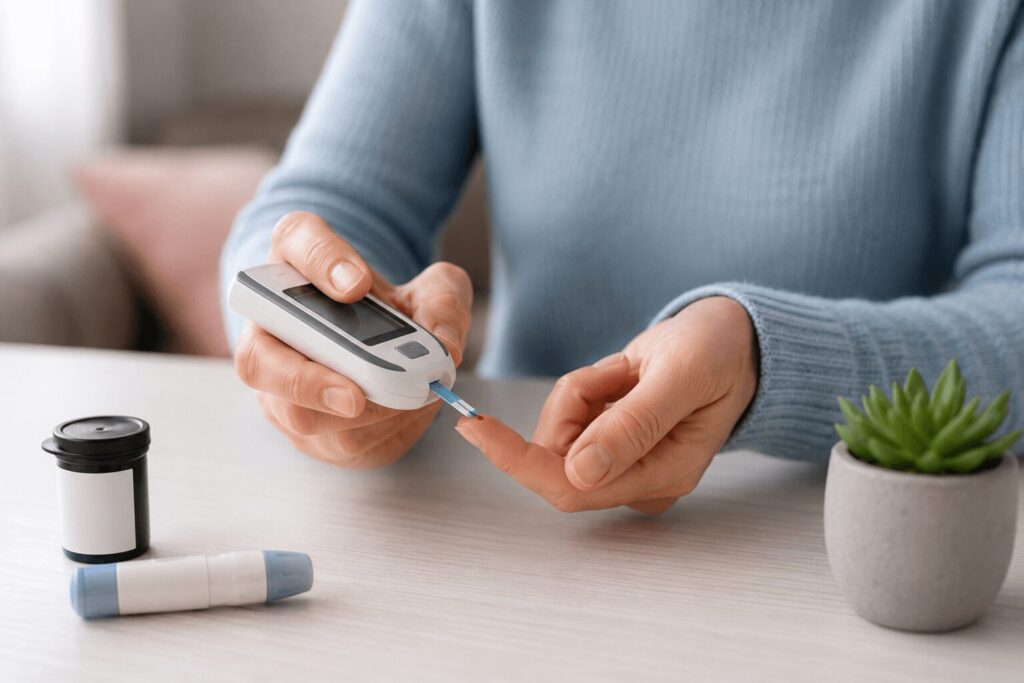
Understanding what counts as a “normal” blood sugar level can feel confusing, especially with different units, testing methods, and target ranges. Whether you’ve just had a blood test, are managing a health condition, or simply want to understand your results, this guide breaks down UK blood sugar ranges in plain English.
If you’re checking your levels because you’ve noticed symptoms like excessive thirst or fatigue, read our guide on type 2 diabetes early warning signs to understand what those symptoms might indicate.
How Blood Sugar Is Measured in the UK
In the UK, blood sugar (glucose) is measured in millimoles per litre (mmol/L). There are several types of tests used:
- Fasting blood glucose — taken after at least 8 hours without food
- Random blood glucose — taken at any time of day
- Post-meal (postprandial) glucose — taken roughly 2 hours after eating
- HbA1c — reflects average blood sugar over the past 2–3 months, measured in mmol/mol
Normal Blood Sugar Ranges (Non-Diabetic Adults)
| Test Type | Normal Range |
|---|---|
| Fasting blood glucose | 4.0 – 5.4 mmol/L |
| 2 hours after eating | Below 7.8 mmol/L |
| Random blood glucose | Below 7.8 mmol/L |
| HbA1c | Below 42 mmol/mol (6.0%) |
Prediabetes Ranges
Prediabetes (also called “non-diabetic hyperglycaemia”) means blood sugar is higher than normal but not yet high enough for a type 2 diabetes diagnosis.
| Test Type | Prediabetes Range |
|---|---|
| Fasting blood glucose | 5.5 – 6.9 mmol/L |
| HbA1c | 42 – 47 mmol/mol (6.0–6.4%) |
Prediabetes is an important warning stage — lifestyle changes at this point can often prevent progression to full type 2 diabetes. For a full list of symptoms to watch for, see our guide on type 2 diabetes early warning signs.
Diabetic Blood Sugar Ranges
| Test Type | Diabetic Range |
|---|---|
| Fasting blood glucose | 7.0 mmol/L or above |
| 2 hours after eating | 11.1 mmol/L or above |
| HbA1c | 48 mmol/mol (6.5%) or above |
If you already have a diabetes diagnosis, your GP or diabetes nurse will usually set personalised target ranges based on your age, other health conditions, and treatment plan — these may differ slightly from the general ranges above.
What Causes Blood Sugar to Rise or Fall?
Causes of High Blood Sugar (Hyperglycaemia)
- Eating large amounts of refined carbohydrates or sugar
- Insufficient insulin production or insulin resistance
- Stress or illness
- Certain medications, including steroids
- Lack of physical activity
Causes of Low Blood Sugar (Hypoglycaemia)
- Skipping meals
- Excessive alcohol consumption
- Too much diabetes medication or insulin
- Intense or prolonged exercise without adequate food intake
Hormonal changes can also affect blood sugar regulation — some women notice fluctuations during perimenopause and menopause. Our guide on menopause symptoms in the UK explains these hormonal shifts in more detail.
Symptoms of High and Low Blood Sugar
High blood sugar symptoms:
- Increased thirst and urination
- Fatigue
- Blurred vision
- Headaches
Low blood sugar symptoms:
- Shakiness or trembling
- Sweating
- Dizziness
- Confusion or irritability
- Rapid heartbeat
If blood sugar drops very low (below 4.0 mmol/L) or someone loses consciousness, this is a medical emergency and requires immediate attention.
How Often Should You Check Your Blood Sugar?
This depends on your individual situation:
- No diabetes diagnosis: Testing isn’t routinely needed unless your GP recommends it based on risk factors or an NHS Health Check
- Prediabetes: Usually monitored annually or as advised by your GP
- Type 2 diabetes (diet/tablet-controlled): Often checked periodically, guided by your care team
- Type 2 diabetes (insulin-treated) or Type 1: Regular self-monitoring, often multiple times daily
Frequently Asked Questions
What is a normal blood sugar level for an adult in the UK? A normal fasting blood sugar level is between 4.0 and 5.4 mmol/L, and below 7.8 mmol/L two hours after eating.
What HbA1c level indicates diabetes? An HbA1c of 48 mmol/mol (6.5%) or above indicates diabetes, while 42–47 mmol/mol indicates prediabetes.
Can blood sugar levels be normal but still show prediabetes on HbA1c? Yes, HbA1c reflects a 2–3 month average, so it can sometimes differ from a single fasting glucose reading taken on a different day.
What should I do if my blood sugar is consistently high? Book a GP appointment for further testing and personalised advice — don’t rely solely on general ranges for self-diagnosis.
Does stress affect blood sugar levels? Yes, stress hormones like cortisol can temporarily raise blood sugar levels, even without eating.
Key Takeaways
- Normal fasting blood sugar is 4.0–5.4 mmol/L; normal HbA1c is below 42 mmol/mol
- Prediabetes and diabetes have distinct, higher threshold ranges
- Hormonal changes, stress, diet, and activity levels all influence blood sugar
- Regular monitoring is especially important for those with risk factors for type 2 diabetes