

vitiligo causes and treatment is a long-term skin condition that causes patches of skin to lose their natural colour. It can affect people of any skin tone and may appear on the face, hands, arms, feet or other parts of the body. Although vitiligo is not contagious or usually physically harmful, changes in appearance can sometimes affect confidence and emotional wellbeing.
What causes vitiligo? Vitiligo develops when melanocytes, the cells responsible for producing the skin pigment melanin, stop functioning or are destroyed. In many cases, this is linked to an autoimmune process in which the body’s immune system mistakenly targets these pigment-producing cells.
There is currently no guaranteed cure for vitiligo, but treatments may help restore some skin colour or make the patches less noticeable. Understanding the condition, getting an accurate diagnosis and protecting affected skin can help people manage it more confidently.
This guide explains vitiligo symptoms, possible causes, diagnosis through the NHS, available treatment options and practical advice for living with the condition in the UK.
What is vitiligo?
Vitiligo is a condition in which areas of skin lose pigment and develop pale or white patches. The affected areas may be small and localised or spread across several parts of the body.
Melanin is the pigment that gives skin, hair and eyes their colour. When melanocytes are lost or stop producing enough melanin, the affected skin becomes lighter than the surrounding area.
Vitiligo may develop gradually or progress more quickly. Some people experience long periods without noticeable changes, while others develop new patches over time.
It can affect people of all ethnic backgrounds. The contrast between affected and unaffected skin is often more visible on darker skin tones, although vitiligo can occur in anyone.
Vitiligo itself is not an infection, does not spread through physical contact and is not caused by poor hygiene.
What are the main vitiligo causes and treatment?
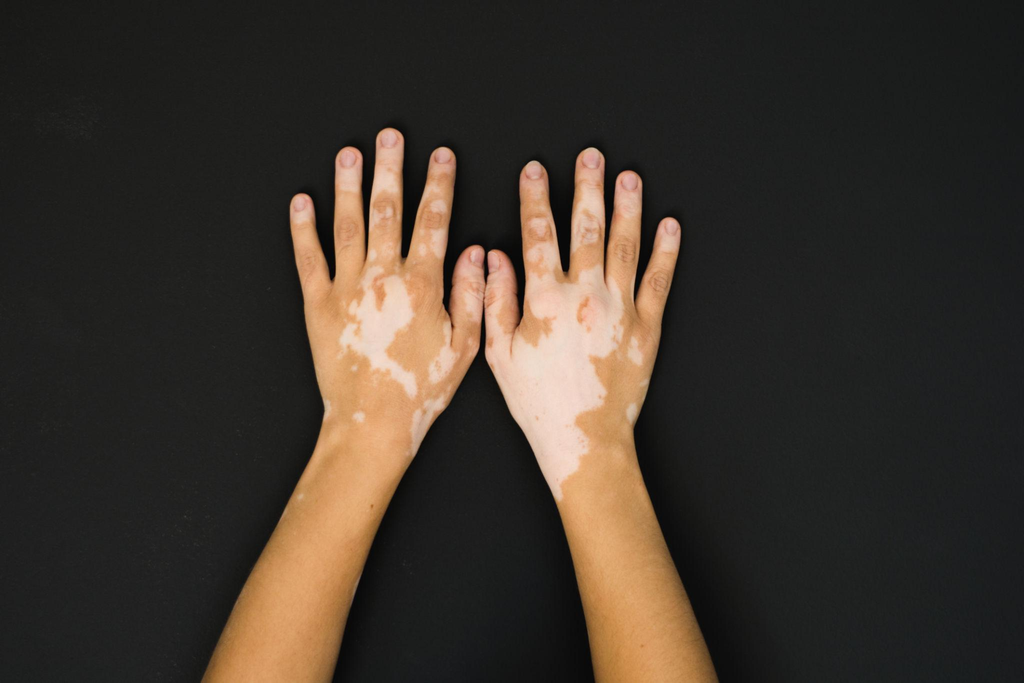
The most recognisable symptom of vitiligo is the appearance of pale or white patches on the skin. These patches can develop anywhere, although certain areas are affected more frequently.
Common signs include:
- White or pale skin patches: These may appear on the face, hands, wrists, elbows, knees, feet or around body openings.
- Changes around the eyes and mouth: Vitiligo commonly affects areas around the lips, eyes and nose.
- Loss of skin colour around injuries: Some people develop patches at sites of cuts, friction or other skin trauma.
- Premature whitening of hair: Hair on the scalp, eyebrows, eyelashes or beard may turn white or grey in affected areas.
- Changes in body hair colour: Hair growing within a vitiligo patch may lose its pigment.
- Symmetrical patches: In some forms, similar areas on both sides of the body are affected.
Vitiligo patches are usually smooth and do not normally cause pain. Some people experience itching, particularly when patches are developing, but persistent irritation, scaling or inflammation may indicate another skin condition.
Vitiligo can resemble other causes of skin colour changes. If you notice unexplained pale patches, arrange an assessment with your GP rather than relying on appearance alone.
For more information about identifying concerning skin changes, read HealthCresto’s guide on how to check for skin cancer.
What causes vitiligo?
The exact cause of vitiligo is not fully understood. However, research suggests that immune system activity, genetic susceptibility and other biological factors can contribute to its development.
1. Autoimmune activity
Vitiligo is commonly associated with an autoimmune process. The immune system mistakenly attacks melanocytes, reducing the skin’s ability to produce pigment.
Some people with vitiligo also have other autoimmune conditions, including autoimmune thyroid disease. However, having vitiligo does not automatically mean that you have another autoimmune disorder.
2. Genetic factors
Vitiligo can run in families, suggesting that inherited factors may influence susceptibility. However, it does not follow a simple inheritance pattern, and many people with vitiligo have no family history of the condition.
Having a close relative with vitiligo may increase your likelihood of developing it, but it does not mean you will necessarily develop the condition.
3. Skin injury and physical stress
In some people, new patches appear after skin trauma, including cuts, burns or repeated friction. This phenomenon is known as the Koebner phenomenon.
Not everyone with vitiligo experiences this, and ordinary skin injuries do not inevitably cause the condition.
4. Oxidative stress and biological factors
Researchers are investigating how oxidative stress and other processes within pigment-producing cells may contribute to melanocyte damage. These mechanisms may interact with immune activity and genetic susceptibility.
The precise combination of factors differs between individuals.
5. Emotional stress
Some people report that vitiligo develops or worsens during stressful periods. However, stress is not an established sole cause of vitiligo, and the condition is not a sign that someone has failed to manage their emotions.
Stress management can still be helpful for general wellbeing, especially when visible skin changes affect confidence.
Important: Vitiligo is not caused by poor hygiene, and it cannot be caught from another person.
Types of vitiligo
Vitiligo is commonly classified according to the distribution of patches across the body.
1. Non-segmental vitiligo
This is the most common form. White patches often develop on both sides of the body, sometimes affecting the hands, face, knees or elbows. The distribution may be symmetrical, and new patches can appear over time.
2. Segmental vitiligo
This type usually affects one area or one side of the body. It may progress relatively quickly at first and then become stable. It often begins at a younger age than non-segmental vitiligo.
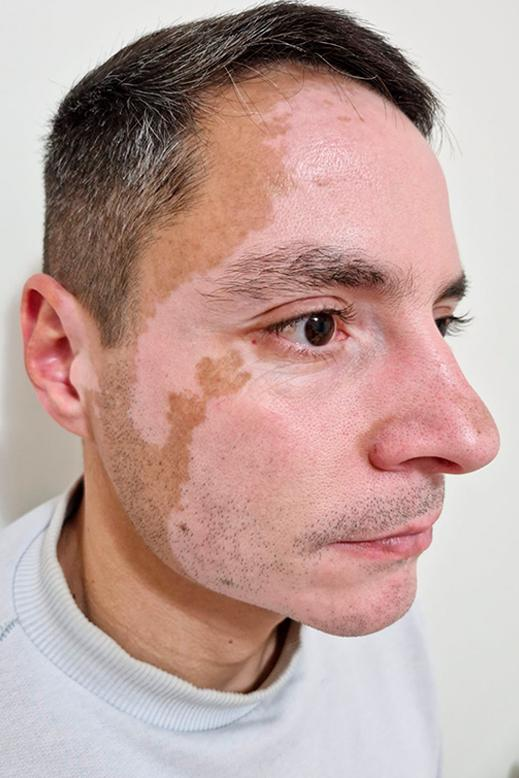
3. Localised or limited vitiligo
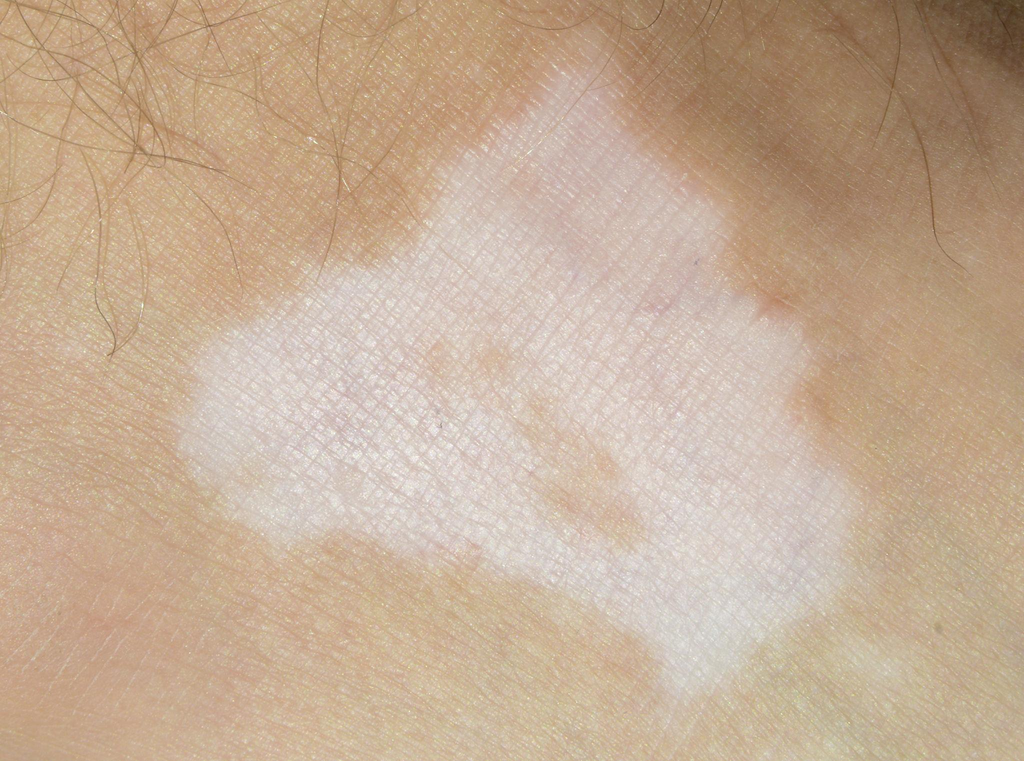
Some people develop patches in only a few areas. The extent and progression vary, and a clinician can assess the pattern to determine the most appropriate management.
The exact classification can help a dermatologist assess how the condition is progressing and discuss suitable treatments.
How is vitiligo diagnosed in the UK?
Vitiligo is usually diagnosed through a clinical examination by a GP or dermatologist. A clinician will assess the appearance, distribution and history of the affected skin.
What happens during an assessment?
Your GP may:
- Ask when the patches first appeared and whether they have changed.
- Examine the affected skin and check for pigment loss elsewhere.
- Ask about family history and any associated symptoms.
- Review your medical history and any medicines you take.
- Arrange further tests or a dermatology referral if necessary.
Can a Wood’s lamp help diagnose vitiligo?
A Wood’s lamp is a special ultraviolet light used in some dermatology assessments. It can make areas of lost pigment easier to identify, particularly when the contrast is difficult to see under ordinary lighting.
It is an assessment tool rather than a standalone confirmation of every case.
Are blood tests needed?
Not everyone needs blood tests. A clinician may recommend them if your symptoms or medical history suggest an associated condition, such as thyroid disease.
A skin biopsy is rarely needed when the appearance is typical, although further investigation may be considered if the diagnosis is uncertain.
When should you contact your GP?
Arrange a GP appointment if you develop unexplained white patches, particularly if they are spreading or you are unsure what is causing them.
A new, changing or unusual skin lesion should not automatically be assumed to be vitiligo. Your clinician can assess whether another diagnosis needs to be considered.
If you need guidance on accessing NHS services, see how to register with a GP in the UK.
Is there a treatment for vitiligo?
There is no guaranteed cure for vitiligo, but several treatments may help restore pigment in some areas, reduce contrast or slow the development of new patches.
Treatment choice depends on the type of vitiligo, the areas affected, how quickly it is changing, your age, medical history and personal preferences.
| Treatment option | How it may help | Important considerations |
|---|---|---|
| Topical corticosteroids | May help restore pigment in some patches and reduce disease activity | Should be prescribed and monitored appropriately because prolonged use can thin the skin |
| Topical calcineurin inhibitors | May be considered for delicate areas, such as the face | Suitability depends on the individual and prescribing guidance |
| Narrowband UVB phototherapy | Uses controlled ultraviolet light to treat more extensive vitiligo | Requires repeated supervised sessions and may not work for everyone |
| Excimer light or laser | Targets selected areas of affected skin | Availability and suitability vary |
| Camouflage products | Can help reduce the visible contrast between patches | They do not restore pigment but may improve confidence |
| Depigmentation treatment | May be considered in carefully selected cases with extensive vitiligo | Specialist treatment that permanently lightens remaining pigmented skin and carries important risks |
NHS treatment and dermatology referrals
Your GP may manage straightforward cases or refer you to a dermatologist if the diagnosis is uncertain, the condition is progressing, or specialist treatment is being considered.
Access to phototherapy and other treatments depends on local NHS services, clinical suitability and waiting times. Not every treatment is available in every area.
Do not use tanning beds or attempt unsupervised ultraviolet treatment to restore pigment. Unregulated treatments can cause burns and increase skin damage.
Can vitiligo pigment return naturally?
Some areas may regain pigment without treatment, but this is unpredictable. Pigment restoration can be partial, and it may not last. Areas around hair follicles sometimes respond differently from areas with little remaining pigment.
Treatment results vary, and improvements can take months. A dermatologist can explain realistic expectations before treatment begins.
Living with vitiligo: practical everyday advice
Vitiligo affects more than skin pigmentation. For some people, visible changes can influence clothing choices, social activities, relationships and self-confidence. Practical strategies can help you manage the physical and emotional effects.
1. Protect your skin from the sun
Areas affected by vitiligo contain less melanin and can burn more easily. Sun protection is therefore particularly important.
- Use a broad-spectrum sunscreen with SPF 30 or higher, ideally SPF 50 when prolonged exposure is expected.
- Choose a product that protects against both UVA and UVB radiation.
- Reapply sunscreen regularly, especially after swimming, sweating or towel-drying.
- Wear protective clothing, a wide-brimmed hat and sunglasses where appropriate.
- Seek shade during the strongest sunlight.
Avoid deliberately tanning unaffected skin to make the patches less noticeable. Tanning increases the contrast between pigmented and depigmented areas and can damage the skin.
For additional skincare guidance, read how to whiten teeth safely only if you are interested in dental care; for skin-specific concerns, HealthCresto’s guide to rosacea causes and treatment in the UK provides further information about another condition that can affect facial skin.
2. Keep your skin comfortable
Vitiligo does not usually require a complicated skincare routine. Use a gentle cleanser and moisturiser if your skin feels dry.
If you have itching, redness or scaling, speak to a clinician because these symptoms may indicate irritation or another skin condition that needs treatment.
Avoid harsh products that irritate the skin, particularly on areas already affected by pigmentation changes.
3. Consider cosmetic camouflage
Skin camouflage creams, tinted moisturisers and body makeup can help even out the appearance of skin tone temporarily.
Choose products that suit your skin and do not cause irritation. Test new products on a small area first, and remove them gently.
Some people prefer to use camouflage for special occasions, while others do not wish to conceal their patches at all. Both choices are valid.
4. Support your emotional wellbeing
Visible skin differences can sometimes lead to unwanted questions, stigma or anxiety. It is normal to have mixed feelings about a long-term skin condition.
You may find it helpful to:
- Talk openly with trusted friends or family.
- Connect with reputable vitiligo support organisations.
- Set boundaries when people ask personal questions about your appearance.
- Speak to your GP if low mood or anxiety starts affecting everyday life.
- Consider counselling if appearance-related distress becomes difficult to manage.
If stress is affecting your overall wellbeing, HealthCresto’s guide on how stress affects the body may provide useful additional context.
5. Understand that vitiligo is not contagious
Vitiligo cannot spread from person to person through touch, sharing clothing, swimming pools or ordinary social contact.
You do not need to isolate yourself or avoid normal activities because of the condition.
6. Find a support community
Sharing experiences with people who understand vitiligo may help reduce feelings of isolation. Reputable patient organisations, dermatology services and moderated support groups can provide education and practical advice.
Choose sources that rely on medical evidence rather than promising miracle cures or guaranteed pigment restoration.
Does vitiligo affect mental health?
Vitiligo can affect psychological wellbeing, particularly when patches are visible or other people respond negatively to them. Some individuals experience embarrassment, social anxiety, reduced confidence or symptoms of depression.
The emotional impact varies considerably. Some people feel little distress, while others find the condition difficult to navigate.
There is no single correct way to feel about vitiligo, and seeking support does not mean you are failing to accept yourself.
If emotional symptoms become persistent, speak to your GP. You can also explore HealthCresto’s resources on free mental health support in the UK.
Can vitiligo be prevented?
There is currently no proven way to prevent vitiligo from developing. Because its causes are not fully understood, avoiding a particular food, skincare product or activity cannot guarantee prevention.
However, protecting your skin from sunburn, avoiding unnecessary skin irritation and following medical advice can support general skin health.
If you already have vitiligo, regular sun protection and appropriate clinical follow-up may help you manage the condition safely.
When should you seek medical advice?
Contact your GP if:
- You notice new white patches and do not know the cause.
- Existing patches are spreading or changing noticeably.
- You develop symptoms that suggest another skin condition.
- You are considering prescription treatment or phototherapy.
- The condition is affecting your confidence, relationships or mental health.
Seek urgent medical advice if a skin change is accompanied by concerning symptoms that need prompt assessment. Vitiligo itself is not generally a medical emergency, but not every white or pale skin patch is vitiligo.
If you are uncertain about which NHS service to use, HealthCresto explains the differences between NHS 111, A&E and GP services.
Frequently asked questions about vitiligo
1. What is the main cause of vitiligo?
Vitiligo is commonly linked to an autoimmune process in which the immune system attacks melanocytes, the cells that produce skin pigment. Genetic susceptibility and other biological factors may also contribute, although the exact cause is not fully understood.
2. Is vitiligo a serious medical condition?
Vitiligo is not usually physically dangerous or contagious. However, affected skin is more vulnerable to sunburn, and the condition can affect emotional wellbeing. A clinician can also check whether further assessment is needed.
3. Can vitiligo be cured permanently?
There is currently no guaranteed permanent cure. Some treatments can restore pigment in certain areas, but responses vary and pigmentation may be lost again. A dermatologist can explain available options and their limitations.
4. Does vitiligo spread to other people?
No. Vitiligo is not contagious. It cannot be transmitted through touching, sharing towels, using swimming pools or being close to someone who has it.
5. Can stress cause vitiligo?
Stress is not established as the sole cause of vitiligo. Some people report that symptoms develop or worsen during stressful periods, but the relationship is complex. Managing stress may support general wellbeing without guaranteeing control of the condition.
6. Is vitiligo linked to thyroid disease?
Yes. Vitiligo is associated with an increased likelihood of certain autoimmune conditions, including autoimmune thyroid disease. However, not everyone with vitiligo develops thyroid problems. Your clinician can decide whether testing is appropriate.
7. Can people with vitiligo go in the sun?
Yes, but sun protection is important because affected skin can burn more easily. Use broad-spectrum sunscreen, wear protective clothing and avoid sunbeds or deliberate tanning.
8. Does vitiligo affect life expectancy?
Vitiligo itself is not generally considered a life-shortening condition. However, associated autoimmune conditions may require assessment when symptoms or medical history suggest them.
9. Is vitiligo more common in people with darker skin?
Vitiligo can affect every skin tone and ethnic background. The contrast between depigmented patches and surrounding skin may be more noticeable on darker skin, but that does not mean the condition only affects particular groups.
10. Which NHS doctor treats vitiligo?
Your GP is usually the first point of contact. Depending on your symptoms, the GP may diagnose and manage the condition or refer you to a dermatologist for specialist assessment and treatment.
Conclusion
Vitiligo is a long-term skin condition that changes pigmentation but does not define a person’s health, identity or quality of life. Although its exact causes remain uncertain, diagnosis is often straightforward, and several treatment and camouflage options may help people manage visible changes.
If you notice unexplained white patches, consult your GP for an assessment. Protect affected skin from the sun, seek reliable medical advice and access emotional support if the condition affects your confidence.
With appropriate information and individualised care, many people with vitiligo continue to lead active, fulfilling lives.