
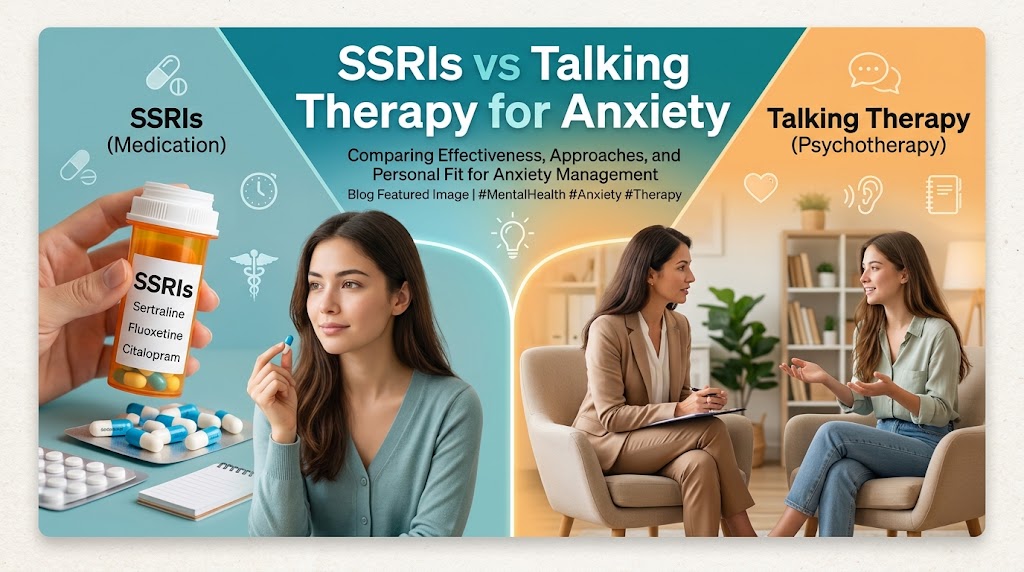
Anxiety can affect your thoughts, sleep, relationships, work and everyday activities. If you are struggling with persistent anxiety, two commonly recommended treatment options in the UK are selective serotonin reuptake inhibitors (SSRIs) and talking therapies, particularly cognitive behavioural therapy (CBT).
But which works better for anxiety: antidepressant medication or talking therapy?
The answer depends on your symptoms, personal preferences, medical history and the type of anxiety you are experiencing. SSRIs can help reduce persistent anxiety symptoms, while talking therapies can help you understand and change the thoughts and behaviours that maintain anxiety. For some people, combining medication with therapy may provide additional benefits.
In this Health Cresto guide, we explain the differences between SSRIs and talking therapy, how effective each option can be, what the NHS offers, potential side effects, waiting times and how to access appropriate anxiety treatment in the UK.
Quick Answer: Are SSRIs or Talking Therapy Better for Anxiety?
Neither treatment is universally better for everyone. Both SSRIs and evidence-based talking therapies can be effective for anxiety disorders.
- SSRIs: Prescription medicines that can reduce persistent anxiety symptoms over time.
- Talking therapy: Treatments such as CBT that help people manage anxious thoughts, avoidance behaviours and unhelpful responses to anxiety.
- Combined treatment: Medication and therapy may be used together when symptoms are severe, persistent or difficult to manage with one treatment alone.
For many anxiety disorders, CBT is a first-line psychological treatment. SSRIs are also an established treatment option, particularly when anxiety significantly affects daily life or someone prefers medication.
A GP or qualified mental health professional can help you decide which approach is suitable for your circumstances.
What Are SSRIs?
SSRIs stands for selective serotonin reuptake inhibitors. They are a group of prescription antidepressant medicines used to treat several mental health conditions, including depression and certain anxiety disorders.
Despite their name, SSRIs are not prescribed only for depression. They can also help people experiencing generalised anxiety disorder (GAD), panic disorder, social anxiety disorder and other conditions, depending on the medicine and individual circumstances.
How Do SSRIs Work for Anxiety?
SSRIs affect serotonin signalling in the brain by reducing the reabsorption of serotonin into nerve cells. Serotonin is involved in regulating mood and other functions.
The precise relationship between serotonin and anxiety is complex. SSRIs do not simply correct a proven chemical imbalance. Instead, research shows that these medicines can reduce symptoms for some people with anxiety disorders.
Potential improvements may include:
- Less frequent or intense worrying.
- Fewer panic symptoms.
- Reduced fear in social situations.
- Better sleep when anxiety has been disrupting rest.
- Improved ability to work, study and manage everyday responsibilities.
SSRIs usually need to be taken regularly as prescribed. They are not immediate-relief medicines for a sudden panic attack.
Which SSRIs Are Used for Anxiety in the UK?
The most appropriate medicine depends on the anxiety disorder, existing health conditions, other medicines and potential side effects.
Common examples include:
- Sertraline: Used for several anxiety-related conditions and frequently prescribed for anxiety disorders.
- Escitalopram: Used for conditions including generalised anxiety disorder.
- Paroxetine: An option for certain anxiety disorders, although its side-effect and withdrawal profile requires consideration.
- Citalopram: Primarily used for depression in the UK, but it may be considered in selected circumstances by a prescriber.
Not every SSRI is licensed for every anxiety disorder. The medicine selected should follow relevant prescribing guidance and take your individual circumstances into account.
Never start, stop or change the dose of an SSRI without discussing it with your prescriber.
What Is Talking Therapy for Anxiety?
Talking therapy involves working with a trained therapist to understand emotional difficulties, recognise unhelpful patterns and develop practical ways to manage symptoms.
Several psychological therapies can help with anxiety, but cognitive behavioural therapy is one of the most extensively researched options.
How Does CBT Help Anxiety?
Cognitive behavioural therapy explores the relationship between thoughts, feelings, physical sensations and behaviour.
For example, someone with social anxiety might think, “Everyone will judge me if I speak.” This thought can trigger a racing heart, fear and an urge to avoid social situations.
CBT helps the person examine that prediction, develop more balanced interpretations and gradually face situations they have been avoiding when appropriate.
CBT for anxiety may involve:
- Identifying anxious thinking patterns.
- Learning practical coping strategies.
- Gradually facing feared situations.
- Reducing avoidance and safety behaviours.
- Developing skills to manage future anxiety.
- Practising techniques between sessions.
The treatment is structured and usually time-limited, although the number of sessions varies according to the condition and treatment plan.
Read our guide on how to get CBT on the NHS without a long waiting list to understand the routes available for accessing psychological treatment in England.
Are There Other Types of Talking Therapy?
Yes. Other approaches may be suitable depending on the problem being treated.
These include counselling, applied relaxation and other condition-specific psychological therapies. For anxiety associated with trauma, a specialist treatment may be more appropriate than a general anxiety programme.
For example, our guide to EMDR therapy and how it works for trauma explains a psychological treatment that may be recommended for certain trauma-related conditions.
Not every therapy works in the same way, and evidence varies by diagnosis. A suitable treatment should be matched to your symptoms and clinical needs.
SSRIs vs Talking Therapy: Key Differences
The main difference is that SSRIs use medication to help reduce symptoms, whereas talking therapies teach psychological skills and address patterns that can contribute to anxiety.
| Feature | SSRIs | Talking therapy, particularly CBT |
|---|---|---|
| Treatment type | Prescription medication | Structured psychological treatment |
| Main purpose | Reduce anxiety symptoms | Change unhelpful thinking and behaviour patterns |
| Time to benefit | Often several weeks | Improvement may develop over several sessions |
| Side effects | Possible physical and psychological effects | Usually no medication-related side effects |
| Practical commitment | Regular medication and follow-up | Appointments, practice and active participation |
| After treatment | Some people need continued medication or a gradual taper | Skills may remain useful after therapy ends |
| NHS access | Usually through a GP or specialist prescriber | Often through NHS Talking Therapies in England or local services |
| Best choice | Depends on symptoms and personal circumstances | Depends on symptoms, preferences and treatment suitability |
Neither option guarantees complete recovery. Both may require review, adjustments and ongoing support.
Which Works Faster for Anxiety: SSRIs or CBT?
Neither treatment produces the same results for everyone, and there is no universal timetable.
How Long Do SSRIs Take to Work?
Some people notice early changes within the first couple of weeks, but meaningful improvement in anxiety often takes several weeks. The full benefit may take longer.
During the early stages, some people experience temporary increases in anxiety, restlessness or sleep disturbance. These effects should be discussed with the prescriber, particularly if symptoms become severe.
Our detailed guide explains how long antidepressants take to work, including why response times vary.
How Long Does Talking Therapy Take to Work?
Some people begin to find practical coping strategies useful during their first few sessions. Others need more time to understand their anxiety and practise new behaviours.
The duration depends on the type of anxiety, treatment approach, symptom severity and individual progress. A structured CBT course may involve a limited number of sessions, while some people benefit from longer treatment.
Therapy also requires practice outside appointments. Applying techniques to everyday situations can be an important part of progress.
Which Treatment Provides Longer-Lasting Results?
Talking therapy can help people develop skills they continue using after formal sessions end. These skills may help them recognise early warning signs and respond differently to anxious thoughts.
SSRIs can also provide sustained benefits while they are effective and taken as prescribed. However, symptoms may return after stopping, and discontinuation can cause withdrawal symptoms if the medicine is reduced too quickly.
Some people remain well after completing treatment, while others require further support. Long-term outcomes depend on the condition, individual response and wider circumstances.
Are SSRIs More Effective Than CBT for Anxiety?
Research supports both medication and psychological treatment for several anxiety disorders. However, comparing them directly is difficult because studies may involve different diagnoses, symptom severity, treatment lengths and outcome measures.
CBT is a well-established treatment for generalised anxiety disorder, panic disorder and social anxiety disorder. SSRIs are also effective for several of these conditions and may be appropriate when symptoms are persistent or significantly affect functioning.
There is no reliable basis for claiming that SSRIs always work better than therapy or that therapy always works better than medication.
The most useful question is which treatment offers the best balance of effectiveness, tolerability, accessibility and personal preference for your specific situation.
What If You Have Generalised Anxiety Disorder?
Generalised anxiety disorder involves excessive, persistent worry about different aspects of life, often accompanied by restlessness, muscle tension, difficulty concentrating or sleep problems.
Both CBT and medication may be appropriate, depending on the impact of symptoms and the person’s preferences.
For less severe symptoms, psychological approaches and guided self-help may be considered. When anxiety causes substantial impairment or does not improve with initial treatment, a clinician may discuss more intensive therapy or medication.
Learn more about the early signs of anxiety and when persistent symptoms may need professional support.
What If You Have Social Anxiety?
Social anxiety disorder involves an intense fear of being judged, embarrassed or negatively evaluated by other people.
Individual CBT specifically designed for social anxiety is an important treatment option. An SSRI may also be considered, particularly if the person prefers medication or cannot access or does not wish to undertake psychological treatment.
Ordinary shyness is not necessarily a mental health disorder. The distinction often depends on the intensity of fear, avoidance and impact on everyday life.
Our article on social anxiety vs shyness explains the differences in greater detail.
What If You Experience Panic Attacks?
Panic attacks can cause a racing heartbeat, sweating, trembling, breathlessness, dizziness and a sudden feeling of danger.
CBT can help people understand panic symptoms, reduce fear of bodily sensations and change avoidance patterns. SSRIs may be considered for panic disorder when symptoms are recurrent or significantly disruptive.
A first episode of chest pain, severe breathlessness or unfamiliar symptoms should not automatically be assumed to be anxiety. Seek urgent medical assessment when symptoms could indicate a physical emergency.
Read our comparison of panic attacks vs heart attacks to understand why distinguishing between them matters.
SSRIs Side Effects vs Talking Therapy Risks
Both treatments have potential disadvantages, but their risks are different.
Common Side Effects of SSRIs
Possible side effects include:
- Nausea or digestive discomfort.
- Headaches.
- Sleep changes.
- Initial restlessness or increased anxiety.
- Sexual difficulties.
- Changes in appetite.
- Sweating or fatigue.
Many early side effects improve as the body adjusts, although some can persist. Different SSRIs have different side-effect profiles, so a prescriber may consider an alternative if problems continue.
Some people experience increased agitation or worsening mental health symptoms after starting an antidepressant or changing a dose. Contact your prescriber promptly if this occurs.
Seek urgent help if you develop severe symptoms, thoughts of suicide or an immediate risk of harming yourself. Call 999 or attend A&E if there is an immediate danger.
What Are the Risks of Talking Therapy?
Talking therapy generally avoids medication-related side effects, but it is not always easy.
Discussing difficult experiences may temporarily increase distress. Facing feared situations as part of CBT can also feel uncomfortable at first.
A trained therapist should explain the treatment, agree on suitable goals and adjust the pace when necessary. You should be able to discuss concerns about the therapeutic relationship or approach.
Can You Stop SSRIs Once You Feel Better?
Do not stop an SSRI suddenly without medical advice. Abrupt discontinuation can cause symptoms such as dizziness, sleep disturbances, nausea, unusual sensory sensations and irritability.
A prescriber can help plan a gradual reduction tailored to the medicine, dose, treatment duration and your response. Some people need a slower taper than others.
Feeling better does not necessarily mean that treatment should end immediately. Decisions about duration should be made with your healthcare professional.
Can You Take SSRIs and Attend Talking Therapy at the Same Time?
Yes. In some circumstances, medication and talking therapy can be combined.
Combined treatment may be considered when anxiety is severe, persistent, associated with significant functional impairment or not adequately improving with one approach.
For example, an SSRI may reduce the intensity of symptoms enough to help someone participate more effectively in CBT. Therapy can then provide skills for managing worry, challenging unhelpful predictions and reducing avoidance.
However, combined treatment is not automatically necessary. Some people improve with CBT alone, while others benefit from medication as their main treatment.
A GP or mental health specialist can discuss the potential advantages, limitations and practical requirements of each option.
How to Get SSRIs for Anxiety on the NHS
In the UK, a GP is a common starting point for assessing anxiety and discussing medication.
Step 1: Book an Appointment With Your GP
Explain what you have been experiencing, how long it has lasted and how it affects your daily life.
It may help to describe:
- How frequently you feel anxious.
- Whether you experience panic attacks.
- Whether anxiety affects sleep, work or relationships.
- Any physical symptoms.
- Previous treatments and whether they helped.
- Other medicines or health conditions.
Your GP may assess your symptoms, consider possible physical causes and discuss suitable treatment options.
Step 2: Discuss Medication and Other Treatments
If medication is appropriate, your GP or another qualified prescriber may discuss an SSRI, potential side effects, expected benefits and follow-up arrangements.
You can also discuss talking therapy, guided self-help and other available support.
Medication selection depends on your diagnosis, medical history, other medicines and personal preferences.
Step 3: Attend Follow-Up Reviews
Follow-up appointments help assess whether the treatment is working and whether side effects are manageable.
Contact your prescriber if anxiety worsens, you experience concerning side effects or you have questions about your medicine. Do not change the dose independently.
Step 4: Understand Your NHS Treatment Options
In England, NHS Talking Therapies services offer assessment and evidence-based treatment for common mental health conditions, including anxiety and depression. Eligible people can often self-refer without seeing a GP first, although local arrangements may vary.
Scotland, Wales and Northern Ireland have different mental health service pathways.
Our guide to getting a mental health diagnosis on the NHS explains how assessment can help you access suitable support.
How Long Are NHS Waiting Times for Anxiety Treatment?
NHS waiting times vary by location, service demand, clinical need and the type of treatment required.
Some people may access guided self-help or digital support sooner than individual therapy. Others may wait longer for a specialist assessment or a particular treatment.
There is no single waiting time that applies across the whole UK.
If you are waiting for treatment, ask your GP or local mental health service about interim support. You may also be able to access NHS-approved resources or guided self-help while waiting.
Health Cresto’s guide to how long it takes to get NHS therapy provides further information about the factors affecting access.
Are Free Anxiety Apps a Good Alternative to SSRIs or CBT?
Anxiety apps can provide useful support, particularly for people who want to practise relaxation, monitor symptoms or learn basic coping strategies.
Some digital tools offer guided exercises based on CBT principles. Others focus on mindfulness, breathing exercises or sleep.
However, an app is not necessarily equivalent to a course of therapist-led CBT or a clinical assessment. It should not replace appropriate treatment when symptoms are severe or significantly affect daily functioning.
Choose reputable tools, check privacy arrangements and look for NHS recommendations where available.
Explore our guide to the best free anxiety apps available through the NHS App Library for further information.
SSRIs vs Talking Therapy: Which Should You Choose?
Your treatment choice should reflect the type and severity of anxiety, your previous experiences, the risks and benefits of each option, and what you feel comfortable undertaking.
Talking Therapy May Be a Suitable Starting Point If:
- You want to learn practical techniques for managing anxiety.
- You prefer not to take medication.
- You are willing to attend sessions and practise skills between appointments.
- Your anxiety is linked to identifiable patterns of thinking or avoidance.
- You can access a suitable evidence-based therapy.
SSRIs May Be Worth Discussing If:
- Anxiety is persistent and significantly affects everyday life.
- You prefer medication or cannot access an appropriate therapy.
- Previous psychological treatment has not provided sufficient improvement.
- A clinician believes medication is appropriate for your diagnosis and circumstances.
Combined Treatment May Be Worth Considering If:
- Symptoms remain difficult to manage with one treatment.
- Anxiety substantially interferes with work, relationships or daily activities.
- You and your clinician agree that medication and therapy could complement each other.
These are general considerations, not strict rules. A person with severe anxiety may benefit from therapy, medication or both, depending on their clinical assessment and preferences.
Frequently Asked Questions
Are SSRIs better than talking therapy for anxiety?
No single treatment is best for everyone. SSRIs can reduce anxiety symptoms, while CBT and other evidence-based therapies help people change unhelpful thought and behaviour patterns. The most appropriate option depends on the anxiety disorder, symptom severity, personal preferences and clinical circumstances.
Can anxiety be treated without antidepressants?
Yes. Evidence-based talking therapies, guided self-help and other psychological approaches can help many people with anxiety. The right treatment depends on the condition and its impact on everyday life. Medication may still be appropriate for some people.
How quickly do SSRIs work for anxiety?
SSRIs often take several weeks to provide meaningful improvement. Some people notice changes earlier, while others need longer or require a treatment review. Follow your prescriber’s advice and report concerning side effects.
How many CBT sessions are needed for anxiety?
The number varies according to the anxiety disorder, treatment approach and individual needs. Some structured CBT programmes involve a limited course of sessions, while others require more extensive treatment. Your therapist should discuss the expected duration with you.
Can I get CBT for anxiety free on the NHS?
In England, eligible adults can access NHS Talking Therapies for common mental health conditions, including anxiety. Self-referral is available in many areas. Access arrangements differ across Scotland, Wales and Northern Ireland.
Do SSRIs change your personality?
SSRIs are intended to treat symptoms rather than change someone’s identity. However, people can experience emotional changes or unwanted effects, including feeling emotionally numb. Discuss any change that concerns you with your prescriber.
Are SSRIs addictive?
SSRIs are not considered addictive in the same way as substances that produce cravings and compulsive use. However, stopping them can cause discontinuation symptoms, particularly if the dose is reduced too quickly. A supervised taper can help manage this risk.
Can anxiety return after stopping SSRIs?
Yes. Some people experience a return of anxiety symptoms after stopping medication, while others remain well. Withdrawal symptoms can also occur and may sometimes resemble anxiety. A clinician can help distinguish between these possibilities and plan treatment safely.
Is CBT more effective than medication for social anxiety?
Individual CBT specifically designed for social anxiety is an established treatment. SSRIs can also help some people. The choice depends on treatment availability, preferences, symptom severity and clinical advice.
What should I do if my anxiety is getting worse?
Contact your GP or mental health professional if symptoms are worsening, treatment is not helping or medication is causing concerning effects. If you feel unable to keep yourself safe, seek urgent help. In the UK, call 999 or attend A&E if there is immediate danger.
Final Thoughts: SSRIs vs Talking Therapy for Anxiety in the UK
SSRIs and talking therapy are both evidence-based options for treating anxiety, but they work in different ways.
Medication can help reduce persistent symptoms, while CBT can teach practical skills for managing anxious thoughts, physical sensations and avoidance. Some people benefit from one approach, while others may need a combination.
If anxiety is affecting your sleep, work, relationships or ability to enjoy everyday life, speak to your GP or an appropriate mental health professional. You do not need to wait until symptoms become overwhelming to seek support.
Health Cresto aims to make UK health information easier to understand so you can have informed conversations with healthcare professionals and explore the treatment options available to you.
Medical disclaimer: This article is for general educational purposes and does not replace personalised medical advice, diagnosis or treatment. Do not start, stop or change prescribed medication without consulting a qualified healthcare professional.