
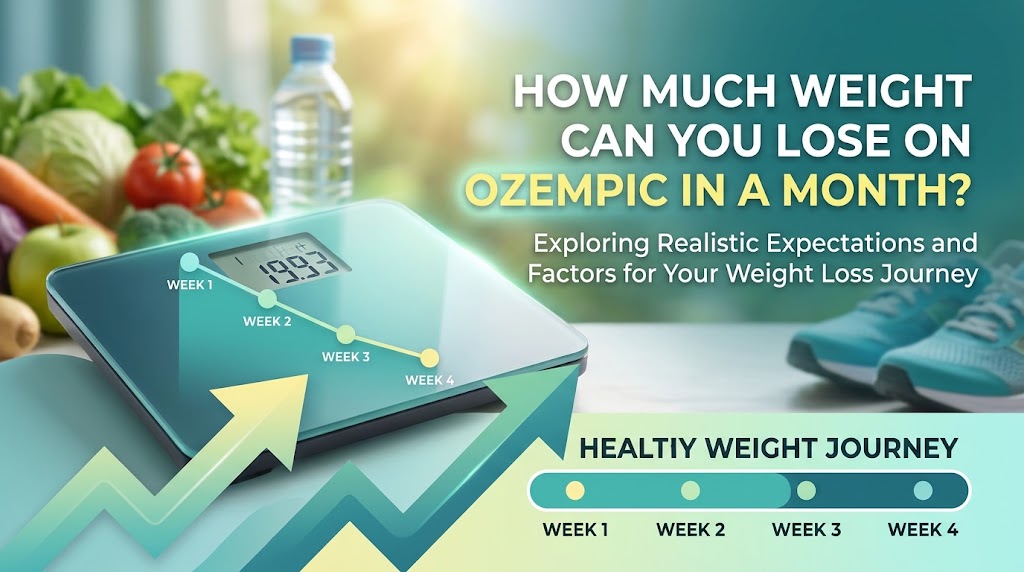
How much weight can you lose on Ozempic in a month? The answer depends on your starting weight, prescribed dose, appetite changes, diet, physical activity and individual response to treatment. Some people notice changes in their appetite during the first four weeks, while others see little change on the scales.
Ozempic contains semaglutide, a medicine primarily used to manage type 2 diabetes. Although weight loss can occur during treatment, Ozempic is not the same as Wegovy, the semaglutide brand licensed for weight management in the UK.

NHS+1
If you have recently started semaglutide, it is important to understand what to expect during the first month, why results vary and how to approach weight loss safely.
Quick answer: How much weight can you lose on ozempic?
There is no reliable, universal figure for how much weight someone will lose during their first month on Ozempic. Individual results vary, and long-term clinical trial results should not be used to predict first-month weight loss.
During the first four weeks, you may experience:
- Reduced appetite or feeling full sooner after meals.
- Small changes in body weight.
- Little or no noticeable weight loss.
- Temporary fluctuations caused by fluid balance, digestion and other factors.
Ozempic treatment usually starts at a low dose before the dose is increased according to the prescribing instructions. This helps your body adjust to the medicine and can reduce gastrointestinal side effects. The starting dose is not intended to provide the full therapeutic effect.
The key takeaway: Do not judge whether treatment is working solely by your weight after four weeks. Your prescriber can help you assess progress alongside blood glucose levels, appetite, side effects and your overall treatment goals.
How does Ozempic work for weight loss?
Ozempic contains semaglutide, which belongs to a group of medicines called GLP-1 receptor agonists.
It mimics the action of a naturally occurring hormone involved in regulating blood glucose and appetite. This can help people feel fuller for longer, feel less hungry and reduce the amount they eat.
Semaglutide also helps the body regulate blood sugar, which is one reason Ozempic is prescribed for type 2 diabetes.
NHS+1
Weight changes are influenced by several factors, including:
- How your appetite responds to treatment.
- Your starting weight and existing health conditions.
- Your usual eating patterns and portion sizes.
- Your physical activity and sleep routine.
- The prescribed dose and how long you have been taking the medicine.
Ozempic does not cause identical results in everyone. It should be used only as prescribed, with appropriate medical supervision.
Ozempic weight loss timeline: What happens during the first month?
Your experience may differ from someone else’s, but the following timeline explains what you might notice when starting treatment.

Week 1: Adjusting to treatment
You may begin to notice changes in appetite, fullness or digestion. Some people experience nausea or other stomach-related symptoms. Others notice very little difference in the first week.

Week 2: Appetite changes may become noticeable
You might feel satisfied with smaller portions or experience fewer cravings. These changes do not guarantee weight loss, and temporary scale fluctuations are normal.

Week 3: Establishing sustainable habits
You may find it easier to maintain consistent meal portions and activity. Focus on regular meals, hydration and movement rather than trying to accelerate weight loss.

Week 4: Reviewing your progress
Consider your overall wellbeing, appetite, any side effects and weight trend over time. Four weeks is an early stage, so limited weight loss does not automatically mean treatment has failed.
This timeline is a general guide, not a prediction of when weight loss will begin. Do not increase your dose early or take extra injections to try to achieve faster results.
What factors affect how much weight you lose on Ozempic?
Several factors can influence your results during the first month and beyond.
1. Your starting weight
Your starting weight and body composition influence how weight changes should be interpreted. The same change on the scales can represent a different percentage of body weight for different people.
For a meaningful comparison, discuss percentage weight change and other health markers with your clinician rather than relying only on the number of kilograms lost.
2. Your prescribed dose
Semaglutide treatment typically involves gradual dose escalation. Your starting dose is intended to help your body adjust, and your prescriber will decide whether and when a dose increase is appropriate.
Taking more than prescribed will not guarantee faster weight loss and may increase the risk of side effects.
3. Your eating habits
Although semaglutide may reduce appetite, eating enough nutritious food remains important.
Aim for a balanced diet that includes:
- Protein sources such as eggs, fish, beans, lentils or tofu.
- Vegetables and fruit.
- Whole grains and other fibre-rich foods.
- Adequate fluids throughout the day.
Avoid crash diets or severe calorie restriction, particularly if nausea makes eating difficult.
Read our guide to low-calorie vs low-carb diets in the UK for more information about sustainable eating approaches.
4. Physical activity
Regular physical activity supports general health, fitness and weight management. Walking, cycling, swimming and strength-based exercises can all be useful, depending on your ability and health.
Start at a manageable level and increase activity gradually. You do not need to undertake intense workouts to make progress.
5. Sleep, stress and other health conditions
Sleep quality, stress, other medicines and medical conditions can affect appetite, energy levels and weight management.
If stress is disrupting your routine, read our guide on how stress affects the body.
6. Your response to the medicine
People respond differently to semaglutide. Some experience a noticeable reduction in appetite, while others see more gradual changes.
If you are concerned about your progress, discuss it with your prescriber rather than changing your dose yourself.
Ozempic vs Wegovy: Which is used for weight loss in the UK?
Ozempic and Wegovy both contain semaglutide, but they have different licensed uses and prescribing arrangements in the UK.
NHS+1
| Feature | Ozempic | Wegovy |
|---|---|---|
| Active ingredient | Semaglutide | Semaglutide |
| Main licensed use | Type 2 diabetes | Weight management in eligible patients |
| Weight loss | May occur during diabetes treatment | Specifically licensed for weight management |
| Dose and treatment plan | Based on diabetes treatment needs | Follows the weight-management dosing schedule |
| NHS access | Depends on diabetes treatment eligibility | Subject to eligibility and local service arrangements |
Neither medicine guarantees a particular amount of weight loss in the first month.
For a more detailed comparison, read Wegovy vs Mounjaro: Which weight loss jab is right for you?.
If your main goal is weight management, your clinician can discuss the appropriate licensed options rather than assuming Ozempic is the right prescription.
Can you get Ozempic or weight loss injections on the NHS?
NHS prescribing depends on the medicine’s licensed use, your health needs and the relevant eligibility criteria.
Ozempic is primarily prescribed for type 2 diabetes. Semaglutide prescribed specifically for weight management is available as Wegovy, subject to the applicable clinical criteria and service arrangements.
NICE guidance supports semaglutide for certain adults living with obesity through specialist weight-management services, alongside dietary, physical activity and behavioural support. Access can depend on local commissioning arrangements.
NHS England+1
You can explore these HealthCresto guides:
- How to get weight loss injections on the NHS
- Can you get semaglutide on the NHS in 2026?
- Best NHS-approved weight loss programmes
If you are unsure whether you qualify, speak to your GP or an appropriate weight-management service. Do not use another person’s prescription or buy injectable medicines from unverified websites.
What are the side effects of Ozempic during the first month?
Side effects can occur when starting semaglutide and may become more noticeable following a dose increase.
Common effects include:
- Nausea.
- Vomiting.
- Diarrhoea or constipation.
- Abdominal discomfort or bloating.
- Reduced appetite.
- Indigestion.
These effects are not experienced by everyone and may improve over time. Persistent symptoms should be discussed with a healthcare professional. Vomiting or diarrhoea can also cause dehydration.
NHS+1
When should you seek medical advice?
Seek urgent medical assessment if you develop severe, persistent abdominal pain, particularly if it spreads to your back, as this may indicate pancreatitis.
Seek emergency help for symptoms of a severe allergic reaction, such as difficulty breathing or swelling of the throat or tongue.
If you have diabetes and also use insulin or certain other diabetes medicines, ask your healthcare team how to recognise and manage low blood sugar.
For more information about another weight-management injection, see our guide to Mounjaro side effects in the UK.
How can you support healthy weight loss while taking semaglutide?
If your clinician has prescribed semaglutide, these habits can support your overall health and treatment plan.
Eat regular, balanced meals
Choose nutrient-dense foods and eat slowly. Smaller meals may be more comfortable if you experience nausea or early fullness. Avoid skipping essential nutrition simply because your appetite has decreased.
Stay hydrated
Drink fluids regularly, particularly if you experience vomiting or diarrhoea. If you have a condition requiring fluid restriction, follow your clinician’s advice.
You can also read our guide to how much water you should drink to lose weight.
Monitor your progress sensibly
If weighing yourself is appropriate for you, consider tracking trends under similar conditions rather than reacting to daily fluctuations.
Other measures of progress can include improved blood glucose control, better mobility, changes in appetite and improvements in relevant health markers.
Set realistic expectations
Rapid weight loss is not always healthier or more sustainable. If your progress slows, it does not necessarily mean you need a higher dose.
Our guide to understanding a weight loss plateau explains why weight change can slow over time.
Attend follow-up appointments
Keep appointments with your prescriber to review your response, side effects and ongoing treatment plan. Never increase, reduce or stop a prescribed diabetes medicine without appropriate medical advice.
When should you speak to your GP about Ozempic weight loss?
Contact your GP or prescribing clinician if:
- You experience persistent nausea, vomiting or diarrhoea.
- You cannot eat or drink enough to stay hydrated.
- You are concerned about slow progress or unexpected weight changes.
- You take other diabetes medicines and need advice about blood glucose monitoring.
- You are pregnant, planning a pregnancy or breastfeeding.
- You want to discuss switching medicines or changing your dose.
Semaglutide is not recommended during pregnancy. If you are planning a pregnancy, seek medical advice before treatment; the product information advises stopping semaglutide at least two months before a planned pregnancy.
NHS+1
If you need help accessing primary care, read our guide on how to register with a GP in the UK.
Frequently asked questions (FAQs)
How much weight can you lose on Ozempic in one month?
There is no fixed amount. Weight loss during the first month varies according to the prescribed dose, appetite response, starting weight and lifestyle. Some people notice early changes, while others lose little or no weight initially.
Does Ozempic work in the first four weeks?
Some people notice reduced appetite or increased fullness during the first four weeks. However, the initial dose is designed to help the body adjust, and noticeable weight loss is not guaranteed.
How much weight can you lose on Ozempic in 30 days?
No reliable figure applies to everyone. Your weight may change gradually, fluctuate or remain relatively stable during the first 30 days. Your prescriber can help assess your progress over a suitable period.
Is Ozempic approved for weight loss in the UK?
Ozempic is primarily licensed for treating type 2 diabetes. Wegovy contains the same active ingredient, semaglutide, and is licensed for weight management in eligible patients in the UK.
NHS+1
What is the difference between Ozempic and Wegovy?
Both contain semaglutide, but they have different licensed uses and dosing schedules. Ozempic is primarily used for type 2 diabetes, whereas Wegovy is licensed for weight management in eligible patients.
Why am I not losing weight on Ozempic after one month?
Possible reasons include being in the initial dose-escalation phase, individual differences in response, changes in fluid balance and other health or lifestyle factors. One month is generally too early to conclude that treatment has failed. Speak to your prescriber rather than increasing your dose yourself.
Can I lose weight faster by increasing my Ozempic dose?
You should never increase your dose without medical advice. Taking more than prescribed can increase side effects and other risks. Follow your prescribed schedule and discuss your progress with your clinician.
Can I get semaglutide for weight loss on the NHS?
Eligible patients may receive Wegovy through NHS weight-management pathways, subject to applicable clinical criteria and local service arrangements. Your GP or specialist service can explain the options available to you.
Conclusion: What should you expect after one month on Ozempic?
There is no guaranteed amount of how much weight can you lose on Ozempic in a month. Some people notice reduced appetite and early weight changes, while others experience little change during the initial weeks.
Your starting weight, prescribed dose, eating habits, physical activity and individual response all influence your progress. Ozempic is primarily licensed for type 2 diabetes in the UK, while Wegovy is the semaglutide brand licensed for weight management in eligible patients.
Focus on safe, sustainable habits and regular clinical follow-up rather than chasing a specific first-month target. If you are concerned about your results or side effects, speak to your prescriber before making changes to your treatment.