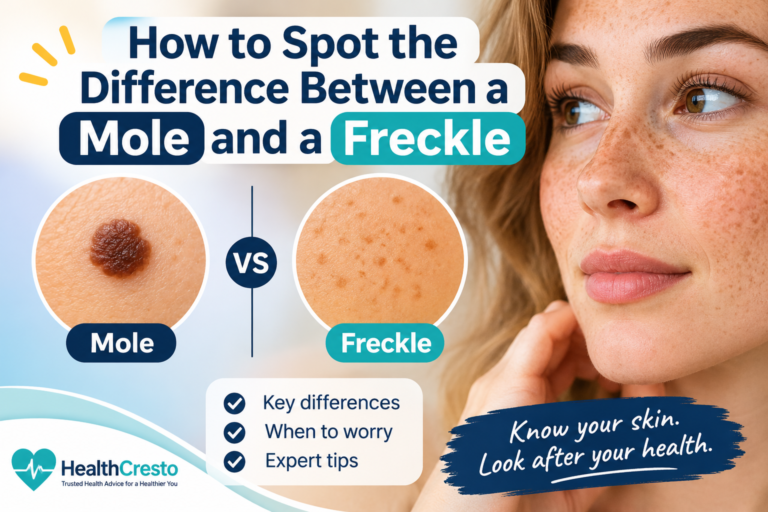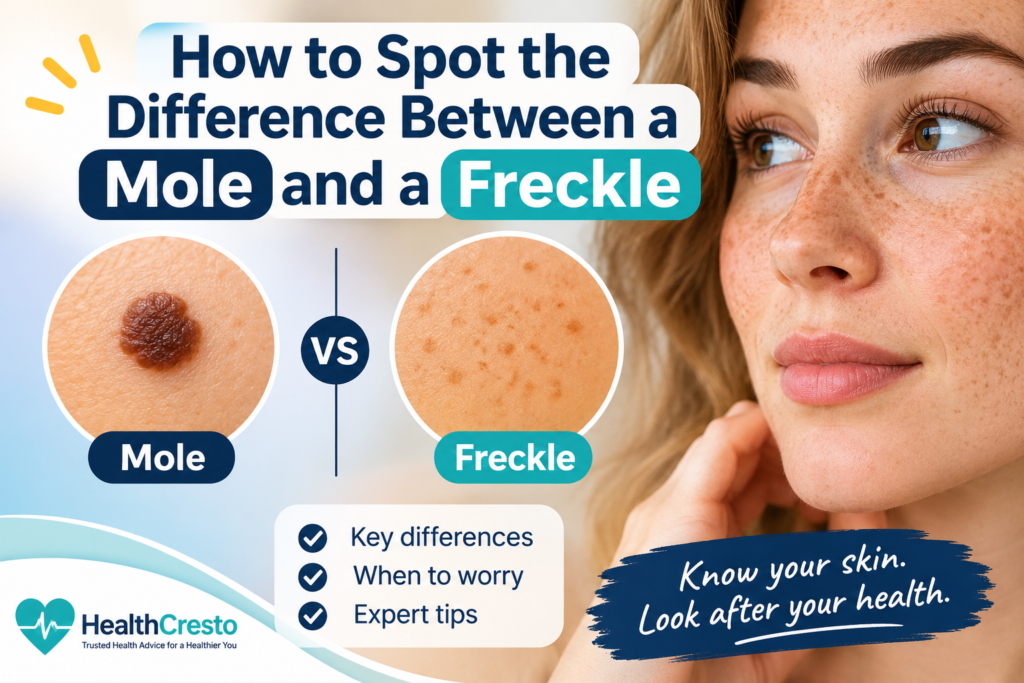

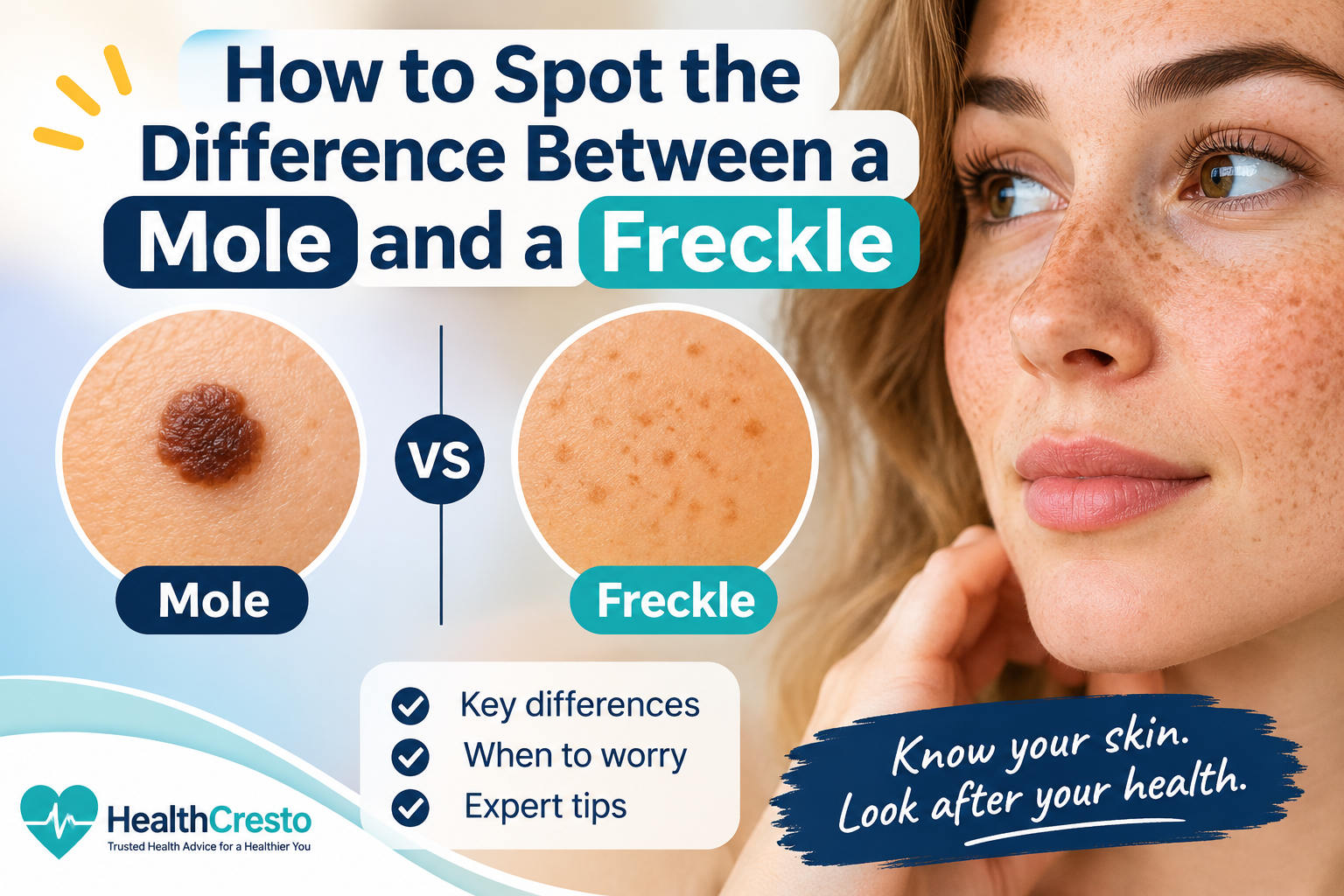
Knowing how to spot the difference between a mole and a freckle is important for understanding changes in your skin and recognising potential warning signs of skin cancer. Although both can appear as small brown, black or tan marks, they differ in their appearance, development, texture and behaviour over time.
Freckles are usually small, flat areas of pigmentation that become more noticeable after sun exposure. Moles, on the other hand, are collections of pigment-producing cells that can be flat or raised and may appear anywhere on the body. Most moles and freckles are harmless, but certain changes in a mole can indicate melanoma, a type of skin cancer.
In the UK, understanding the difference between a mole and a freckle can help you decide when to monitor a skin mark and when to seek medical advice. Knowing what is normal for your skin is particularly important if you have a history of sunburn, frequent UV exposure, many moles or a family history of melanoma.
This guide explains the key differences between moles and freckles, how to recognise suspicious changes, when to contact your GP and how to protect your skin.
Important: You cannot reliably diagnose skin cancer by appearance alone. If a mole or skin mark is new, changing, unusual or concerning, arrange an assessment with your GP.
Quick Answer: What Is the Difference Between a Mole and a Freckle?
A freckle is generally a small, flat patch of increased skin pigmentation that becomes darker with sunlight and may fade when UV exposure decreases. A mole is a cluster of pigment-producing cells that usually remains visible throughout the year and can be flat, raised, smooth or slightly textured.
The main difference is that freckles are usually influenced by sun exposure, while moles are more established skin growths that can change independently of seasonal sunlight.
1. Mole vs Freckle: Key Differences at a Glance
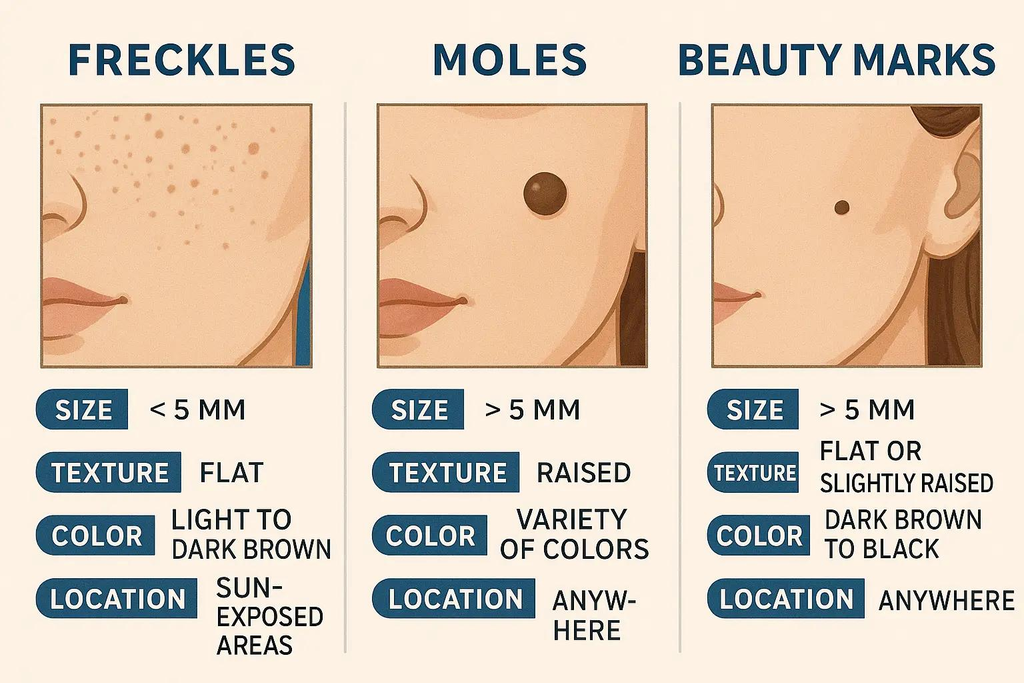
7
| Feature | Freckle | Mole |
|---|---|---|
| Appearance | Small, flat spots | Flat or raised spots |
| Colour | Usually light brown, tan or reddish-brown | Brown, black, pink, red or skin-coloured |
| Texture | Normally flat and smooth | Can be smooth, raised or slightly rough |
| Size | Usually small | Can vary in size |
| Sun exposure | Often becomes darker in sunlight | May be affected by UV exposure but does not simply fade seasonally |
| Seasonal changes | May become lighter in winter | Usually remains visible throughout the year |
| Development | Often appears during childhood | Can develop during childhood or adulthood |
| Cancer risk | Freckles themselves are generally harmless, but indicate UV exposure | Most are harmless, but some changing moles may indicate melanoma |
Understanding the difference between a mole and a freckle is easier when you look at how each mark develops and behaves over time.
A freckle is usually a flat area of pigmentation, whereas a mole forms when pigment-producing cells called melanocytes grow in clusters. Both can look similar, particularly when they are small and brown.
However, neither colour nor size alone can determine whether a mark is harmless.
2. What Is a Freckle?
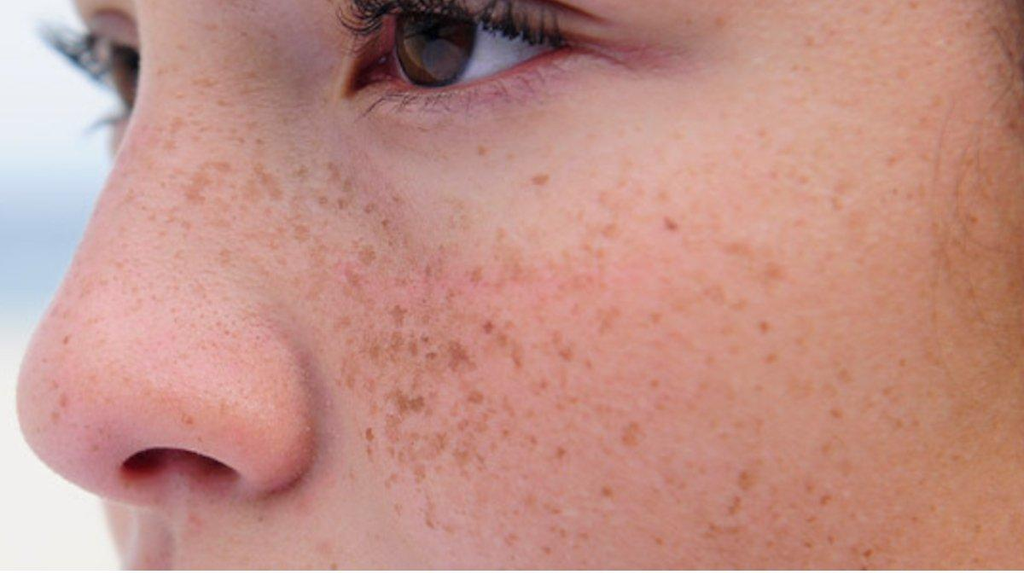
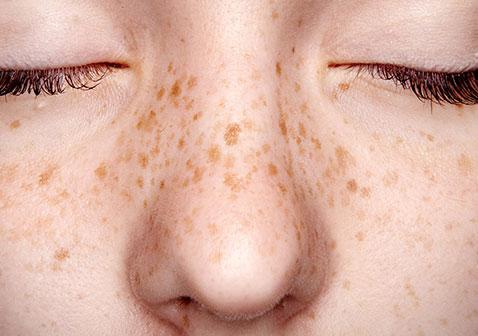
A freckle is a small, flat area of increased pigmentation that develops when the skin produces more melanin in certain areas.
Melanin is the natural pigment responsible for your skin, hair and eye colour. It also helps protect your skin against ultraviolet (UV) radiation.
Freckles are particularly common on areas regularly exposed to sunlight, including:
- The nose and cheeks.
- The forehead.
- The shoulders.
- The upper chest.
- The arms and hands.
Freckles can appear in different shades, including light brown, golden, tan and reddish-brown.
Why do freckles develop?
Freckles develop due to a combination of genetic factors and exposure to UV radiation.
People with fair skin, particularly those with lighter hair and eyes, may be more likely to develop freckles. However, freckles can occur in people with different skin tones.
Sun exposure stimulates melanin production, making existing freckles more noticeable and sometimes causing additional freckles to appear.
Common characteristics of freckles
Freckles generally have the following features:
- Flat appearance: They usually do not feel raised when you run your finger over them.
- Small size: Most freckles are only a few millimetres across.
- Sun-related changes: They often become darker during summer or after increased sun exposure.
- Seasonal fading: Some freckles become lighter during winter when UV exposure decreases.
- Multiple spots: They often appear in groups rather than as one isolated mark.
Are freckles dangerous?
Most ordinary freckles are harmless and do not turn into melanoma.
However, having numerous freckles can indicate that your skin has experienced significant UV exposure. People with many freckles, particularly alongside fair skin and a history of sunburn, may have a higher risk of skin cancer.
It is important to understand the difference between a mole and a freckle because a new pigmented mark should not automatically be dismissed as another freckle.
If a spot becomes raised, changes colour, develops an irregular border or starts bleeding, arrange a GP assessment.
3. What Is a Mole?
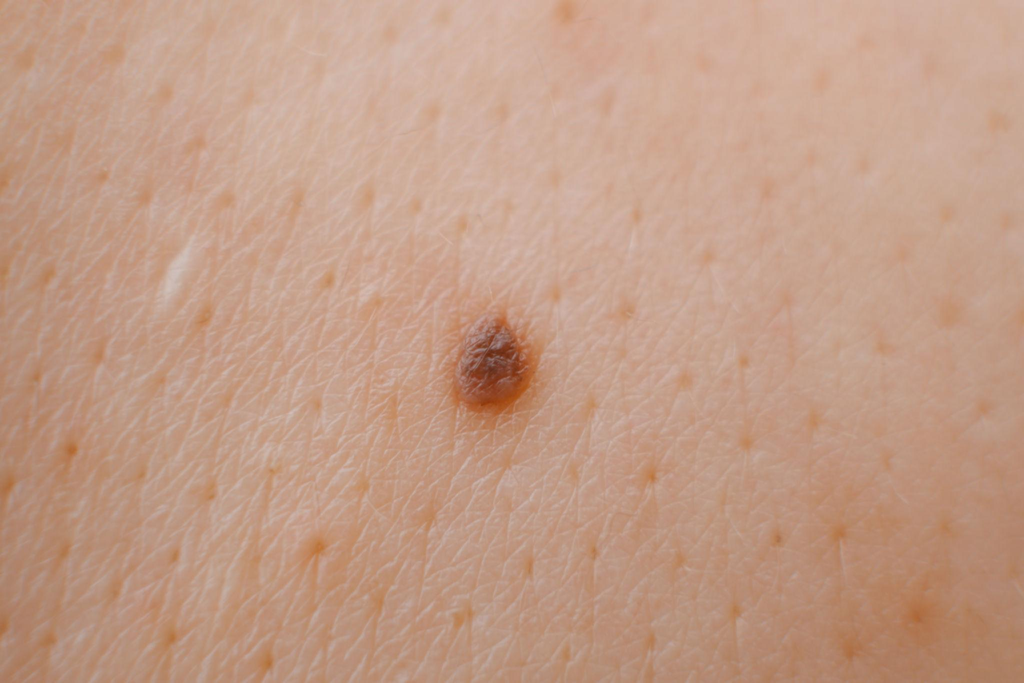
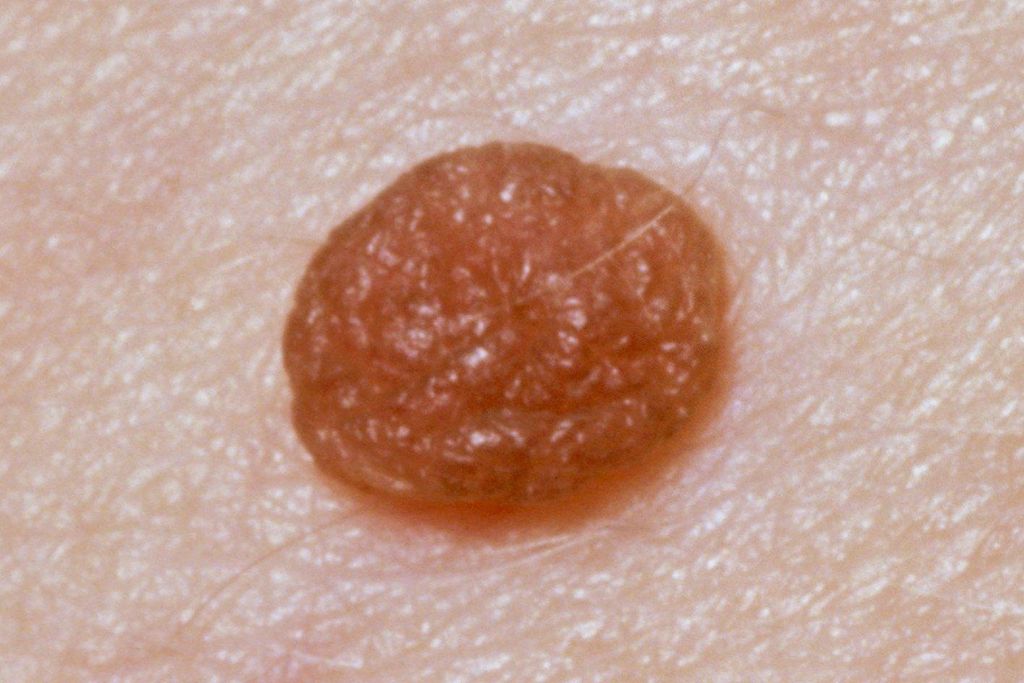
A mole, medically known as a melanocytic naevus, is a growth formed by a collection of pigment-producing cells called melanocytes.
Moles are common and can develop anywhere on the body. Some people have only a few, while others have dozens or even hundreds.
Most ordinary moles are harmless, although certain types and changes require medical assessment.
What do normal moles look like?
A typical harmless mole may have:
- A round or oval shape.
- A relatively smooth, even border.
- One consistent colour.
- A flat or slightly raised surface.
- A stable appearance over time.
Moles can be brown, dark brown, black, pink, red or close to your natural skin colour.
Some are present from birth, while others develop throughout childhood and adulthood.
Different types of moles
Understanding the different types of moles can help you recognise why their appearance varies.
1. Congenital moles
These are moles present at birth or appearing shortly afterwards. They can vary considerably in size and colour.
Larger congenital moles may require specialist monitoring because their melanoma risk can be higher than that of ordinary small moles.
2. Acquired moles
These develop during childhood, adolescence or adulthood. They are among the most common types of moles.
Most acquired moles are benign and remain relatively stable.
3. Atypical or dysplastic moles
These moles may have unusual features, such as irregular borders, uneven colouring or a larger diameter.
Having atypical moles can increase melanoma risk, particularly when there are multiple atypical moles or a family history of melanoma.
4. Raised moles
Some moles become slightly raised as the skin develops. They may feel smooth or soft and can be light brown, dark brown or skin-coloured.
A raised mole is not automatically dangerous. However, a newly raised or rapidly growing mark should be assessed.
Can a mole change naturally?
Yes. Moles can change gradually over time, particularly during childhood, adolescence and pregnancy.
Some may become slightly lighter, darker or raised as people age.
However, a new or noticeable change in an existing mole should not automatically be considered normal ageing.
If you are unsure about the difference between a mole and a freckle, pay attention to whether the mark changes independently of sun exposure.
The NHS guide to moles explains which changes should be checked by a GP. NHS+1
4. How to Spot the Difference Between a Mole and a Freckle
The most useful way to recognise the difference between a mole and a freckle is to examine its shape, texture, size, colour and behaviour over time.
Here are six important differences to consider.
1. Look at the shape
Freckles are usually small, flat and relatively uniform in appearance.
Moles can also be round and regular, but they may have different shapes depending on their type.
A mole that has become asymmetrical, with one half looking different from the other, needs medical attention.
2. Check the texture
Freckles are generally flat and smooth.
Moles may be completely flat, slightly raised or noticeably elevated.
A raised mole is not necessarily cancerous. However, a new growth that develops quickly or changes in appearance should be examined.
3. Compare the colours
Freckles usually have a relatively consistent light-brown, tan or reddish-brown appearance.
Moles can have a wider range of colours, including dark brown, black, pink and skin-coloured shades.
A mole with several different colours, particularly when these are unevenly distributed, may be concerning.
4. Observe the size
Freckles are typically small, often measuring only a few millimetres.
Moles can vary significantly in size. Some are tiny, while others are larger.
Remember that melanoma can develop in marks smaller than 6mm. Therefore, a small spot should not be ignored if it is changing.
5. Notice seasonal changes
Freckles often become darker following sun exposure and lighter during periods of reduced sunlight.
Ordinary moles generally remain visible throughout the year.
If a pigmented spot appears to change, do not assume it is a freckle simply because it becomes darker in summer.
6. Monitor changes over time
One of the most important aspects of understanding the difference between a mole and a freckle is recognising whether the mark is evolving.
A stable freckle may remain similar for years, although its pigmentation can fluctuate with sunlight.
A mole may also remain unchanged for many years. However, a new change in size, shape, colour or sensation should be investigated.
The NHS recommends seeing a GP if an existing mole changes or if an unusual skin mark does not disappear after a few weeks. NHS+1
5. The ABCDE Rule: How to Recognise a Potentially Dangerous Mole
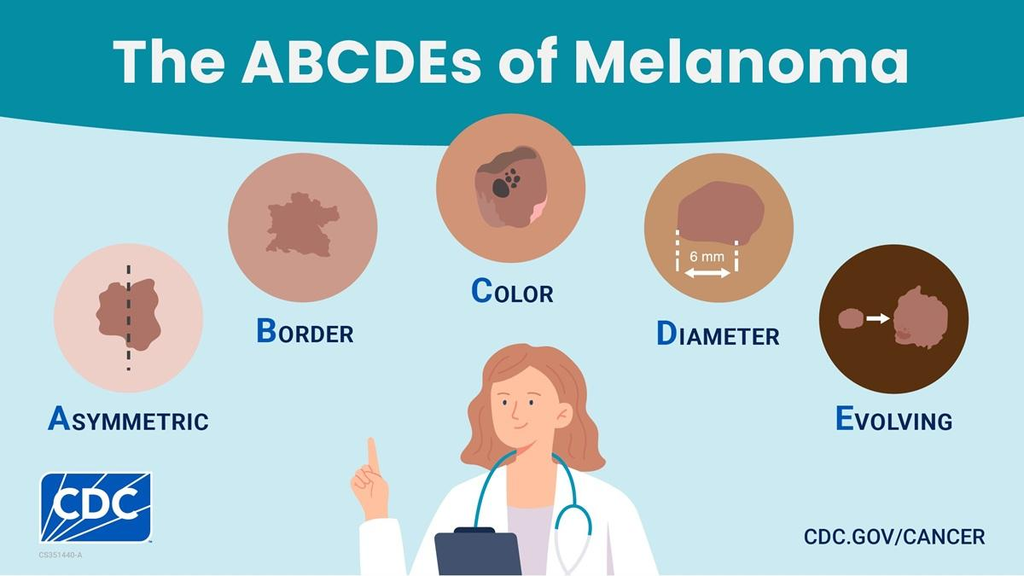
When assessing the difference between a mole and a freckle, healthcare professionals often consider the ABCDE checklist to identify suspicious changes associated with melanoma.
ABCDE stands for:
A – Asymmetry
A normal-looking mole is often reasonably symmetrical.
If you imagine drawing a line through the middle, both halves should look broadly similar.
A suspicious mark may have two noticeably different halves.
B – Border
Ordinary moles often have smooth, well-defined edges.
A potentially concerning mole may have:
- Jagged edges.
- Blurred borders.
- Uneven outlines.
- Irregular shapes.
C – Colour
A typical mole often has one consistent colour.
A suspicious mole may contain several different shades, including:
- Dark brown.
- Black.
- Red.
- Pink.
- White.
- Blue.
Uneven colouring is particularly important when it develops over time.
D – Diameter
Many melanomas are larger than 6mm across, approximately the width of a standard pencil eraser.
However, melanoma can be smaller when first detected.
Do not rely on diameter alone when assessing the difference between a mole and a freckle.
E – Evolving
This is one of the most important warning signs.
Evolving means that a mole or pigmented skin mark is changing in appearance.
Watch for:
- Increasing size.
- Changes in shape.
- New colours.
- Bleeding.
- Crusting.
- Persistent itching.
- Pain or unusual sensitivity.
Not every changing mole is melanoma, but it should be checked.
According to Cancer Research UK, melanomas can develop from existing moles or appear on previously normal skin. They can also look different from the person’s other moles. Cancer Research UK+1
For a more detailed explanation, read our guide on how to check moles for melanoma at home.
6. Can a Freckle Turn Into a Mole or Skin Cancer?
Freckles and moles are different types of pigmentation, so an ordinary freckle does not simply transform into a mole.
However, there are several reasons why a freckle-like mark may become concerning.
Firstly, increased UV exposure can cause freckles to become darker or more noticeable.
Secondly, sun-related pigmentation changes can sometimes resemble freckles.
Thirdly, certain skin cancers, including melanoma, can initially look like ordinary brown spots.
This is why recognising the difference between a mole and a freckle is useful, but visual identification should never replace medical assessment.
Can freckles indicate an increased risk of melanoma?
Freckles themselves are generally harmless. However, they can be associated with a skin type that is more sensitive to UV radiation.
People with fair skin, numerous freckles and a history of sunburn may have an increased risk of melanoma.
Other factors include:
- Having many moles.
- Having atypical moles.
- Previous melanoma or other skin cancer.
- A close family history of melanoma.
- Regular use of sunbeds.
- Significant exposure to UV radiation.
For additional information, see our article on melanoma risk factors: Am I at high risk?.
7. What Does Melanoma Look Like Compared With a Normal Mole?
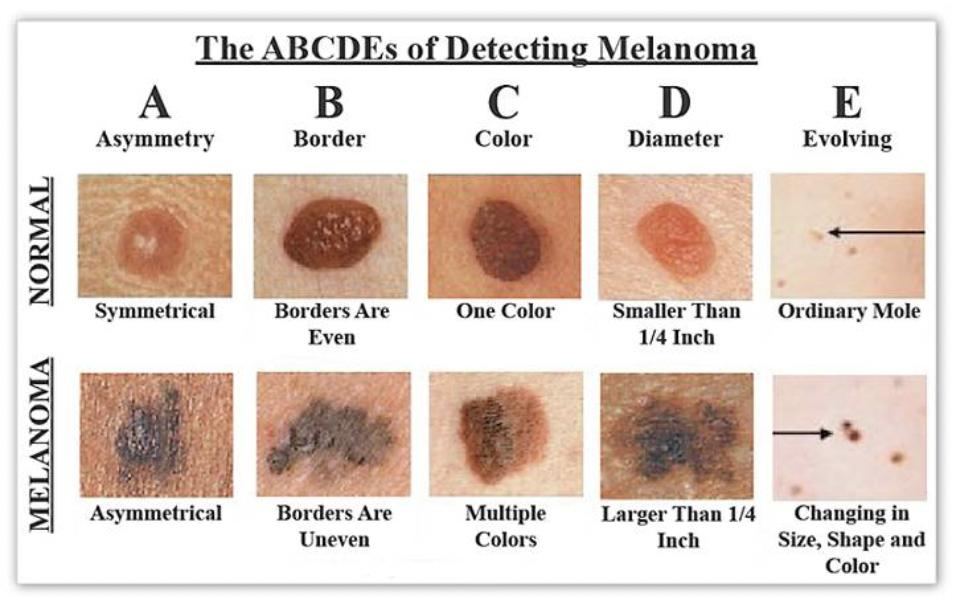
Melanoma is a type of skin cancer that develops from melanocytes, the cells responsible for producing skin pigment.
It can appear as a new pigmented mark or develop within an existing mole.
Unlike an ordinary stable mole, melanoma may develop noticeable changes in appearance.
Common warning signs
A suspicious mark may:
- Look different from your other moles.
- Develop an irregular shape.
- Have several colours.
- Increase in size.
- Develop an uneven border.
- Become itchy or painful.
- Bleed or develop a crust.
However, melanoma does not always follow the typical pattern.
Some melanomas can be pink, red or skin-coloured rather than dark brown or black.
Can melanoma look like a freckle?
Yes. Some early melanomas may resemble small brown or black spots.
This can make it difficult to distinguish between a mole, a freckle and a potentially concerning skin lesion.
A mark that looks different from your other spots deserves attention, particularly if it is new or changing.
What is the difference between a normal mole and melanoma?
| Normal mole | Potentially suspicious melanoma |
|---|---|
| Usually symmetrical | May be asymmetrical |
| Often smooth border | May have irregular edges |
| Usually consistent colour | May contain multiple colours |
| Often stable | May change over time |
| May be flat or raised | May be flat, raised or nodular |
| Usually harmless | Requires medical investigation |
It is important to remember that melanoma cannot be confirmed or excluded using photographs or a home examination alone.
For further information, visit the NHS melanoma symptoms guide.
8. How to Check Your Moles and Freckles at Home
Checking your skin can help you become familiar with your normal pigmentation and notice unusual changes.
You do not need specialist equipment to look for visible changes.
Step 1: Examine your face and neck
Look closely at your forehead, cheeks, nose, ears and neck.
Freckles are common in these areas, but you should also look for new or changing moles.
Step 2: Check your arms and hands
Examine your shoulders, upper arms, elbows, forearms, palms and fingers.
Pay attention to marks that have changed shape or colour.
Step 3: Examine your chest and stomach
Look at the front and sides of your torso.
A mirror can help you inspect areas that are difficult to see.
Step 4: Check your back and legs
Use a full-length mirror or ask someone you trust to help you examine your back.
Also check your thighs, knees, lower legs, ankles and feet.
Step 5: Inspect your feet and nails
Do not overlook your soles, between your toes or underneath your fingernails and toenails.
Melanoma can develop in areas that receive little sunlight, including the palms, soles and nail area.
Step 6: Take photographs of concerning marks
If you notice a mark that you want to monitor, take a clear photograph in good lighting.
You can record:
- The date.
- Its approximate size.
- Its location.
- Any changes in colour or shape.
- Symptoms such as itching or bleeding.
Photographs can help you explain changes to your GP, but they should not delay an appointment.
How often should you check your skin?
There is no single checking schedule that is appropriate for everyone. Becoming familiar with your skin and noticing new or changing marks is important.
The British Skin Foundation suggests checking your skin approximately once a month. British Skin Foundation+1
For further guidance, read our related article: How to check for skin cancer.
9. When Should You See a GP About a Mole or Freckle?
Knowing when to seek medical advice is more important than trying to identify every mark yourself.
Although most freckles and moles are harmless, certain symptoms should never be ignored.
Book a GP appointment if you notice:
- A mole changing in size, shape or colour.
- A new or unusual mark that persists for several weeks.
- A mole that becomes painful or persistently itchy.
- A mole that starts bleeding.
- A crusty or inflamed skin mark.
- A mark that looks noticeably different from your other moles.
- An unexplained dark line or mark underneath a nail.
The difference between a mole and a freckle may not always be obvious, even to an experienced observer. A healthcare professional can assess the appearance and decide whether further investigation is necessary.
The NHS recommends seeking GP advice about new or changing moles rather than waiting for symptoms to become severe. NHS+1
Is a changing mole an emergency?
A changing mole usually requires prompt medical assessment, but it is not generally a reason to attend A&E.
Contact your GP surgery and explain what you have noticed.
If your GP suspects melanoma, you may be referred through the urgent suspected cancer pathway.
Do not delay an appointment because a mark is painless. Melanoma does not always cause discomfort.
10. What Happens During a GP or Dermatologist Appointment in the UK?
If you are concerned about the difference between a mole and a freckle, your GP will usually begin by asking questions about the skin mark.
Medical history
Your GP may ask:
- When did you first notice the mark?
- Has it changed recently?
- Does it itch, hurt or bleed?
- Have you experienced frequent sunburn?
- Have you previously had skin cancer?
- Does anyone in your family have a history of melanoma?
These questions help assess your symptoms and possible risk factors.
Skin examination
Your GP will examine the affected area and may compare it with other moles or pigmented marks on your body.
They may use a dermatoscope, a handheld magnifying device that helps examine skin structures more closely.
Teledermatology
Some NHS services use teledermatology.
This involves taking photographs of a suspicious skin mark and sending them securely to a dermatologist for assessment.
It can help specialists decide whether you need an appointment or further investigation.
Referral to a dermatologist
If your GP suspects skin cancer, they may arrange an urgent referral to a specialist.
NICE guidance aims for people referred through the suspected cancer pathway for skin cancer to receive a diagnosis or have cancer ruled out within 28 days of referral. This is a pathway standard, not a guarantee of an individual appointment or treatment date. NICE+1
Skin biopsy
If melanoma is suspected, a specialist may recommend an excision biopsy.
This involves removing the suspicious mole or lesion, usually with a small area of surrounding skin, for laboratory examination.
The biopsy helps establish whether cancer cells are present.
You can read more about this process through Cancer Research UK’s melanoma diagnosis guide. Cancer Research UK+1
11. How to Protect Your Skin From Moles, Freckles and Sun Damage

Although you cannot prevent every mole or freckle from developing, protecting your skin from excessive UV exposure can reduce avoidable skin damage and help lower your risk of skin cancer.
1. Use broad-spectrum sunscreen
Choose sunscreen with at least SPF 30 and strong UVA protection.
Apply it generously to exposed skin and reapply regularly, particularly after swimming, sweating or towel drying.
2. Avoid excessive midday sunlight
In the UK, sunlight is generally strongest around the middle of the day during spring and summer.
Spend time in the shade when UV levels are high.
3. Wear protective clothing
Consider wearing:
- Long-sleeved clothing.
- A wide-brimmed hat.
- UV-protective sunglasses.
- Clothing that covers your shoulders.
4. Avoid sunbeds
Sunbeds expose your skin to artificial UV radiation and increase your risk of skin cancer.
Avoid using sunbeds or sunlamps for tanning.
5. Protect children from sunburn
Children’s skin needs particular protection.
Encourage shade, protective clothing and suitable sunscreen during periods of strong sunlight.
6. Check your skin after significant sun exposure
Pay attention to new marks and changes in existing moles.
Sun protection is important even when the weather is cloudy because UV radiation can still reach your skin.
The NHS recommends using at least SPF 30 sunscreen, seeking shade and covering exposed skin. NHS+1
For more advice, explore our guide to the best sunscreens for UK skin types.
12. Who Is More Likely to Develop Suspicious Moles or Melanoma?
Anyone can develop melanoma, regardless of skin tone, age or gender.
However, certain factors can increase the likelihood of developing skin cancer.
Fair skin
People with fair skin that burns easily may have increased sensitivity to UV radiation.
A large number of moles
Having many moles can increase melanoma risk.
This is particularly important for people who have numerous atypical moles.
Family history
Having a close relative who has had melanoma may increase your risk.
Previous sunburn
Repeated episodes of sunburn, particularly during childhood, can contribute to future skin cancer risk.
Sunbed use
Artificial UV radiation from sunbeds can damage skin cells and increase melanoma risk.
Previous skin cancer
People who have previously had melanoma or another type of skin cancer may require closer attention to new or changing skin marks.
It is worth understanding the difference between a mole and a freckle because having many pigmented marks can make it harder to notice an unusual new spot.
However, melanoma can also occur in people who have very few moles.
Does melanoma affect people with darker skin?
Yes. Melanoma can develop in people of all skin tones.
In people with brown or black skin, melanoma may be less noticeable and can appear on the palms, soles or underneath fingernails and toenails.
Some melanomas may also be pink or skin-coloured rather than dark.
Therefore, checking all areas of your skin is important, regardless of your natural skin tone. Cancer Research UK+1
13. Can You Remove Moles or Freckles?
Some people consider removing moles or freckles for cosmetic reasons.
However, it is important to establish whether a mark is medically harmless before considering removal.
Freckle removal
Freckles usually do not require treatment.
People who want to reduce their appearance may discuss options with a qualified dermatologist.
Possible cosmetic treatments include:
- Certain topical pigmentation treatments.
- Chemical peels.
- Laser treatments.
- Other dermatologist-supervised procedures.
These treatments may not permanently remove freckles, and pigmentation can return following further sun exposure.
Mole removal
Most harmless moles do not require removal.
If a mole looks suspicious, a dermatologist may recommend surgical removal and laboratory examination.
This is different from cosmetic mole removal because the priority is to establish an accurate diagnosis.
Avoid attempting to remove a mole yourself using cutting tools, acids, home remedies or unregulated products.
This can cause infection, scarring and delay the diagnosis of a potentially serious condition.
Can the NHS remove harmless moles?
Generally, the NHS does not routinely remove harmless moles for cosmetic reasons.
However, removal may be offered when there is a medical reason, such as suspected skin cancer or another clinically significant problem.
Your GP or specialist can explain the available options.
14. Common Mistakes People Make When Identifying Moles and Freckles
Even when you understand the difference between a mole and a freckle, some common misconceptions can lead to unnecessary worry or delayed medical attention.
Mistake 1: Assuming every dark spot is a mole
Not every brown or black mark is a mole.
Freckles, age spots and other pigmentation changes can look similar.
A professional assessment may be needed if a mark is unusual or changing.
Mistake 2: Thinking raised moles are always dangerous
Some ordinary moles are naturally raised.
Their shape, colour, development and changes over time are more important than elevation alone.
Mistake 3: Ignoring small marks
Melanoma does not always start as a large skin lesion.
A small mark that is changing deserves attention, even if it is less than 6mm.
Mistake 4: Believing freckles cannot indicate skin damage
Freckles themselves are usually harmless, but they can be associated with UV exposure.
People with numerous freckles should be particularly mindful of sun protection.
Mistake 5: Waiting until a mole becomes painful
Melanoma may not cause pain or itching.
Do not wait for discomfort before contacting your GP about a suspicious mark.
Mistake 6: Relying entirely on online photographs
Photographs can help explain what different skin marks look like, but they cannot provide a reliable diagnosis.
The appearance of skin lesions can vary between individuals and skin tones.
The safest approach is to seek professional advice about new or changing marks.
15. Mole vs Freckle: Important Facts to Remember
Here are the most important points to remember when identifying the difference between a mole and a freckle:
- Freckles are usually flat, small and associated with pigmentation changes.
- Moles are collections of melanocytes and can be flat or raised.
- Freckles often become darker after sun exposure.
- Moles usually remain visible throughout the year.
- Most moles and freckles are harmless.
- A new or changing skin mark should not automatically be dismissed.
- The ABCDE rule can help identify warning signs associated with melanoma.
- Melanoma can develop on previously normal skin.
- People of all skin tones can develop melanoma.
- A GP or dermatologist can assess suspicious skin marks.
Understanding the difference between a mole and a freckle is a useful part of looking after your skin, but it should never replace professional medical assessment.
16. Frequently Asked Questions (FAQs)
1. How can I tell the difference between a mole and a freckle?
A freckle is usually a small, flat, light-brown or reddish-brown mark that becomes darker with sunlight. A mole is a collection of pigment-producing cells and can be flat, raised or skin-coloured. Observing its texture, shape and behaviour over time can help distinguish them.
2. Are freckles more harmless than moles?
Ordinary freckles are generally harmless and do not turn into melanoma. Most moles are also harmless. However, people with many freckles or moles may have an increased risk of skin cancer, particularly when other risk factors are present.
3. Can a mole look like a freckle?
Yes. Some small, flat moles can resemble freckles because both may appear as brown spots. Their appearance alone may not be enough to distinguish them. A changing or unusual mark should be assessed by a healthcare professional.
4. Do freckles disappear during winter?
Freckles may become lighter during winter because of reduced UV exposure. However, they do not necessarily disappear completely. Their pigmentation can become more noticeable again when sunlight exposure increases.
5. Can a freckle become cancerous?
Ordinary freckles do not generally turn into melanoma. However, a melanoma can develop in previously normal skin and may resemble a freckle. A new, unusual or changing pigmented mark should be checked.
6. What does a cancerous mole look like?
A potentially cancerous mole may have an irregular shape, uneven edges, multiple colours or changes in size. It may also bleed, itch or develop crusting. These signs do not confirm cancer, but they warrant medical assessment.
7. Is a raised mole dangerous?
No. Many harmless moles are naturally raised. However, a mole that becomes newly raised, grows quickly or develops other unusual changes should be checked by a GP.
8. When should I worry about a mole?
You should arrange a GP appointment if a mole changes size, shape or colour, becomes painful or itchy, bleeds, develops crusting or looks noticeably different from your other moles.
9. Can melanoma develop without an existing mole?
Yes. Melanoma can develop on previously normal skin rather than starting in an existing mole. This is why it is important to notice new or unusual skin marks.
10. Can people with darker skin develop melanoma?
Yes. Melanoma can affect people of all skin tones. In people with darker skin, it may develop on the palms, soles or underneath nails and may not have the typical dark appearance.
11. Can I ask my NHS GP to check a suspicious mole?
Yes. Contact your GP surgery if you notice a new, unusual or changing mole or skin mark. Your GP can examine it and arrange a specialist referral if necessary.
12. Does the NHS remove harmless moles?
The NHS does not usually remove harmless moles for cosmetic reasons. However, removal may be offered when there is a medical reason, including suspected skin cancer.
17. Conclusion: Know Your Skin and Recognise Changes Early
Understanding the difference between a mole and a freckle can help you recognise normal pigmentation and identify skin changes that may need medical attention.
Freckles are generally flat, small and influenced by sunlight, whereas moles are collections of pigment-producing cells that can be flat or raised. Both are common, and most are harmless.
However, the difference between a mole and a freckle is not always obvious. Some melanomas can resemble ordinary freckles or small moles, making it important to pay attention to changes rather than relying on appearance alone.
Remember these practical points:
- Become familiar with your normal skin appearance.
- Look out for new or changing marks.
- Use the ABCDE rule to recognise potential melanoma warning signs.
- Protect your skin from excessive UV exposure.
- Contact your GP about suspicious or persistent skin changes.
The difference between a mole and a freckle is useful to understand, but no home examination can rule out skin cancer. Early medical assessment can make a significant difference if a suspicious mark does turn out to be melanoma