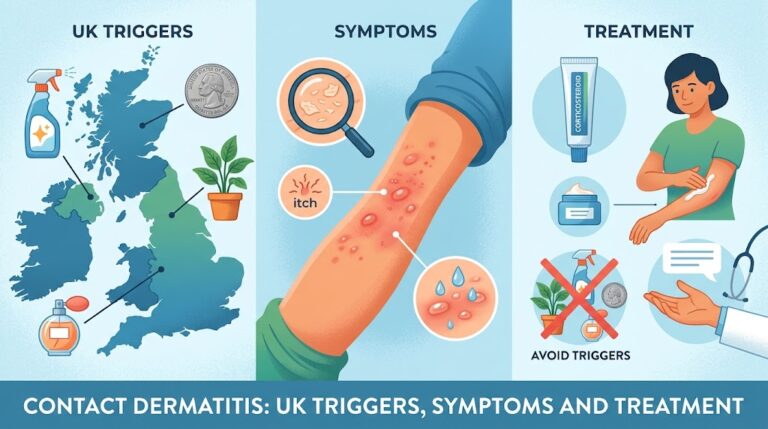

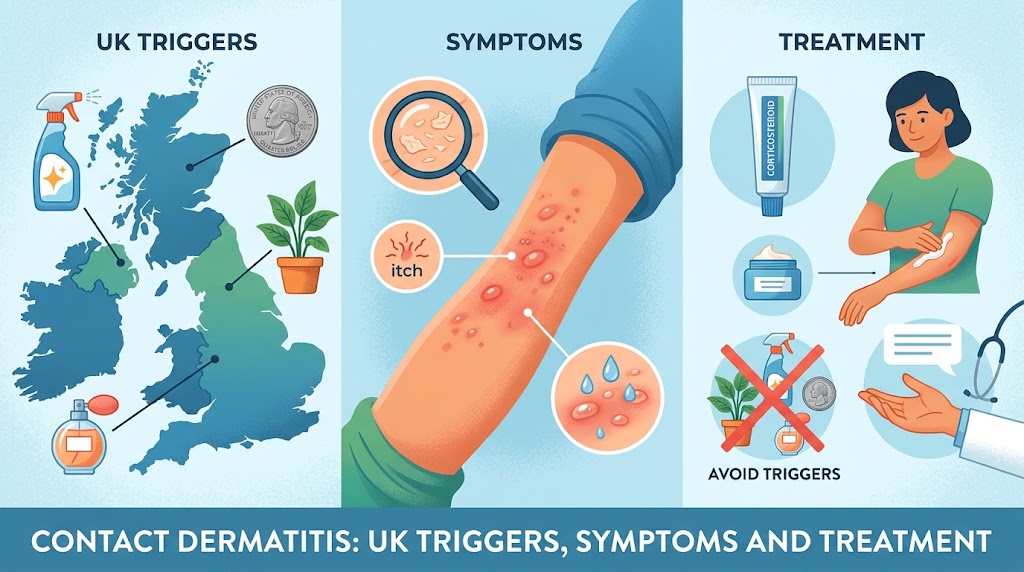
Contact dermatitis is a common skin condition that develops when the skin reacts to substances it comes into contact with. It can cause redness, itching, dryness, swelling, blisters and painful cracked skin. In the UK, everyday products such as soaps, cleaning chemicals, cosmetics, detergents and certain metals are among the common triggers.
Although contact dermatitis can be uncomfortable, it is usually manageable with the right treatment and by identifying the substance responsible for the reaction. Understanding the difference between irritant and allergic contact dermatitis is important because each type develops differently and may require a slightly different approach.
Whether you experience irritated hands after cleaning, a facial rash after using new skincare products or itching beneath jewellery, recognising the symptoms can help you take appropriate action.
This guide explains the common UK triggers, symptoms, diagnosis, NHS treatment options and practical prevention advice.
Quick Answer: What Is Contact Dermatitis?
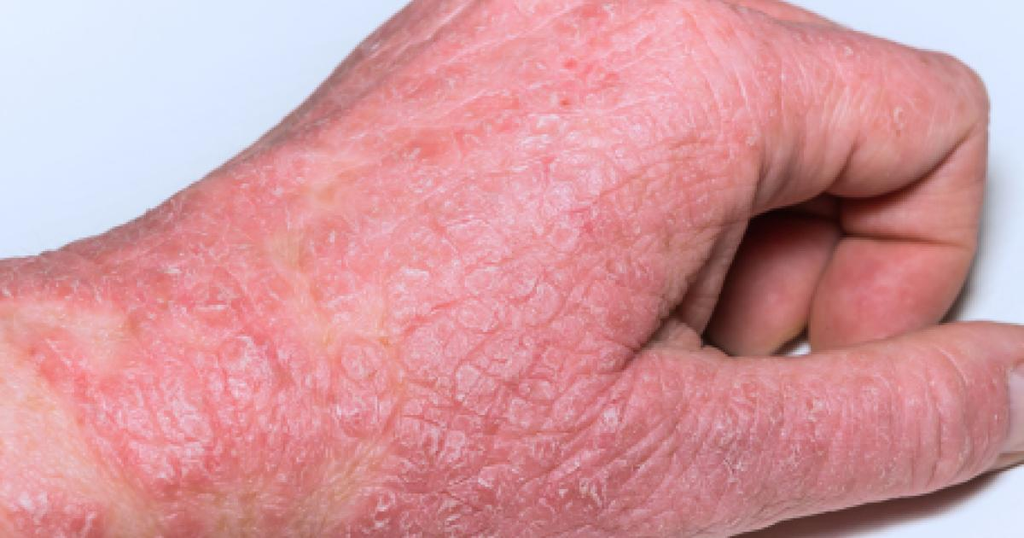
Contact dermatitis is inflammation of the skin caused by direct exposure to an irritating substance or an allergen.
There are two main types:
- Irritant contact dermatitis: Develops when substances such as detergents, soaps, cleaning products or chemicals damage the skin’s protective barrier.
- Allergic contact dermatitis: Develops when the immune system reacts to a particular substance, such as nickel, fragrance, hair dye or cosmetic ingredients.
Common symptoms include itching, redness, dryness, swelling, blistering and cracked skin.
Treatment usually involves avoiding the trigger, applying regular emollients and using prescribed topical corticosteroids when necessary.
According to the NHS, symptoms often improve once the substance responsible is identified and avoided.
1. What Is Contact Dermatitis?
Contact dermatitis is a type of eczema that occurs when the skin reacts to something it touches.
The condition can affect almost any part of the body, although the hands, face, wrists, neck and arms are particularly common areas.
The reaction may develop after a single exposure to a strong irritant or gradually after repeated contact with weaker substances.
For example, someone who regularly washes their hands using strong soap may gradually develop dry, irritated skin. Another person might develop an itchy rash after wearing jewellery containing nickel.
Contact dermatitis is not contagious. You cannot catch it from another person through physical contact.
The severity can vary considerably. Some people experience mild dryness and itching, while others develop painful inflammation, fluid-filled blisters and deep skin cracks.
How Does Contact Dermatitis Develop?
Your skin has a protective outer barrier that helps retain moisture and prevent harmful substances from entering.
When this barrier becomes damaged, irritants can penetrate more easily and cause inflammation.
In allergic reactions, the immune system becomes sensitised to a particular substance. When the skin encounters that allergen again, an inflammatory reaction develops.
Several factors influence the development of contact dermatitis, including:
- How frequently your skin encounters the substance.
- The strength and concentration of the irritant.
- How long the substance remains on your skin.
- Whether you already have eczema or damaged skin.
- Your individual sensitivity to particular allergens.
Understanding these differences can help identify the most appropriate treatment.
2. Two Main Types of Contact Dermatitis
Although both conditions can produce similar symptoms, irritant and allergic contact dermatitis have different underlying causes.
A. Irritant Contact Dermatitis
Irritant contact dermatitis develops when a substance directly damages the skin’s protective barrier.
It is the more common type and can affect anyone, particularly people who regularly handle cleaning products, detergents, chemicals or water.
Repeated exposure to relatively mild irritants can gradually damage the skin.
Common examples include:
- Washing hands frequently with soap.
- Using household cleaning products.
- Handling washing-up liquid and detergents.
- Working with industrial chemicals.
- Regular exposure to water.
- Using alcohol-based cleaning products.
- Handling cement or other building materials.
Symptoms may develop immediately or within approximately 48 hours of exposure.
The affected skin may feel sore, dry, tight, burning or stinging.
People with existing eczema may be more vulnerable because their skin barrier is already compromised.
B. Allergic Contact Dermatitis
Allergic contact dermatitis develops when the immune system reacts to a particular substance.
Unlike irritant reactions, an allergic reaction usually requires previous exposure that sensitises the immune system.
Once sensitised, a person may develop inflammation whenever they come into contact with the same allergen again.
Common allergens include:
- Nickel in jewellery and metal accessories.
- Fragrances in perfumes and cosmetics.
- Preservatives in skincare products.
- Hair dye ingredients.
- Rubber and latex chemicals.
- Nail polish and artificial nail ingredients.
- Certain topical medicines.
- Dyes and chemicals in clothing.
Symptoms often develop hours or days after exposure rather than immediately.
An itchy rash may appear around the area that touched the allergen, although it can sometimes spread beyond the original contact area.
Irritant vs Allergic Contact Dermatitis
| Feature | Irritant type | Allergic type |
|---|---|---|
| Main cause | Direct skin damage | Immune system reaction |
| Can affect anyone? | Yes | Only sensitised individuals |
| Common triggers | Soap, detergents, chemicals | Nickel, fragrance, hair dye |
| Typical sensation | Burning, soreness, itching | Often intense itching |
| Onset | Immediate or gradual | Often delayed |
| Main management | Avoid irritants and repair skin barrier | Identify and avoid allergens |
Both types can occur together, making professional assessment useful when symptoms persist.
3. Common UK Triggers of Contact Dermatitis

Everyday activities can expose your skin to substances that cause irritation or allergic reactions.
Identifying these triggers is one of the most important steps in managing contact dermatitis.
1. Soaps, Detergents and Cleaning Products
Household cleaning products are common causes of skin irritation.
Dishwashing liquids, laundry detergents, disinfectants and bleach can damage the protective skin barrier, especially with repeated exposure.
People who regularly wash dishes, clean bathrooms or handle laundry may notice symptoms developing on their hands.
What to do:
- Choose gentle, fragrance-free cleaning products where possible.
- Wear suitable protective gloves.
- Avoid prolonged contact with cleaning chemicals.
- Rinse your hands thoroughly after exposure.
- Apply an appropriate moisturiser regularly.
2. Cosmetics and Skincare Products
Some skincare and beauty products contain ingredients that trigger allergic contact dermatitis.
Potential triggers include fragrances, preservatives, essential oils and certain cosmetic ingredients.
Products that may cause reactions include:
- Facial cleansers.
- Moisturisers.
- Perfumes.
- Makeup and foundations.
- Sunscreens.
- Aftershaves.
- Hair styling products.
A rash that repeatedly develops after using a particular product may indicate sensitivity to one of its ingredients.
People experiencing irritation after sun protection products may also find our guide to best sunscreens for UK skin types helpful.
What to do:
Stop using the suspected product and check its ingredient list. Avoid introducing several new skincare products simultaneously because this makes identifying the responsible ingredient more difficult.
3. Nickel in Jewellery
Nickel is a recognised cause of allergic contact dermatitis.
It can be present in earrings, necklaces, bracelets, watches, belt buckles and other metal accessories.
A common sign is an itchy, red or dry rash beneath jewellery or around pierced ears.
Some people notice symptoms after wearing inexpensive earrings or metal accessories for several hours.
Prevention tips:
- Choose jewellery labelled nickel-free.
- Avoid accessories that repeatedly cause irritation.
- Keep affected skin clean and dry.
- Remove jewellery if a reaction develops.
4. Hair Dye and Hairdressing Products
Hair dyes can contain ingredients that cause allergic reactions.
One important example is para-phenylenediamine (PPD), which is used in many permanent and some semi-permanent hair dyes.
An allergic reaction may cause:
- Itching around the scalp.
- Redness behind the ears.
- Swelling around the hairline.
- Irritation on the neck.
- Facial swelling in more serious reactions.
Always follow the manufacturer’s safety instructions and allergy-alert testing guidance before using hair dye.
A previous uneventful use does not guarantee that you will not develop an allergy later.
5. Rubber Gloves and Latex Products
Rubber gloves can expose the skin to substances that cause irritation or allergic reactions.
This may include rubber-processing chemicals and, in some individuals, natural rubber latex.
People working in cleaning, healthcare, catering and other occupations involving frequent glove use may be particularly affected.
Sweating inside gloves can also worsen existing irritation.
What to do:
- Select gloves appropriate for the substance being handled.
- Consider alternative materials if rubber chemicals are suspected.
- Keep hands dry before putting gloves on.
- Change damp gloves promptly.
- Take suitable breaks when possible.
6. Clothing, Fabrics and Washing Products
Certain textiles, dyes, finishing chemicals and laundry products can trigger skin reactions.
Symptoms may appear around areas where clothing rubs against the body, including:
- The waist.
- Neck.
- Underarms.
- Wrists.
- Inner thighs.
Wearing freshly washed clothing may help reduce exposure to residual detergent, although some people also react to fabric dyes or finishing agents.
Choose comfortable fabrics and fragrance-free laundry products if you suspect a connection.
7. Workplace Chemicals
Work-related contact dermatitis is an important issue in the UK.
Some occupations involve frequent exposure to substances that irritate or sensitise the skin.
Higher-risk occupations include:
- Hairdressers and beauticians.
- Cleaners.
- Healthcare professionals.
- Construction workers.
- Mechanics.
- Agricultural workers.
- Food handlers.
- Catering professionals.
- Chemical industry workers.
For example, hairdressers may regularly encounter hair dyes and cleaning products, while construction workers may be exposed to wet cement and other chemicals.
If your symptoms improve during holidays or days away from work and return when you resume your duties, occupational exposure may be contributing.
The Health and Safety Executive provides guidance on preventing work-related skin disease.
Read its advice: HSE – Work-related contact dermatitis.
4. Contact Dermatitis Symptoms: What Does It Look Like?
Symptoms depend on the substance involved, the duration of exposure and whether the reaction is irritant or allergic.
The affected skin may look different depending on your natural skin tone.
On lighter skin, inflammation may appear red or pink. On darker skin, affected areas may look darker brown, purple, grey or ashy.
Common symptoms include:
- Itchy skin.
- Dryness and flaking.
- Redness or discolouration.
- Swelling.
- Burning or stinging sensations.
- Small fluid-filled blisters.
- Cracked or painful skin.
- Thickened skin following repeated inflammation.
- Weeping or crusting in more severe cases.
Symptoms may appear within hours or several days of exposure.
Common Areas Affected
Hands: Frequently affected because they come into contact with soaps, detergents, water and cleaning products.
Face: Reactions may occur after using cosmetics, moisturisers, perfumes or hair products.
Neck: Jewellery, fragrances and clothing materials may contribute to irritation.
Wrists: Watches, bracelets and metal accessories may trigger allergic reactions.
Eyelids: Cosmetics, skincare ingredients and substances transferred from the hands can cause irritation.
Arms and legs: Cleaning chemicals, plants, clothing and occupational substances may contribute to reactions.
If you experience recurring skin inflammation, it is worth considering whether your symptoms could be related to eczema. Our guide to eczema flare-ups explains common triggers and management options.
5. Contact Dermatitis vs Eczema: What Is the Difference?
Contact dermatitis is actually a type of eczema, so the conditions are closely related.
However, not all eczema is caused by direct contact with an irritating substance or allergen.
Atopic eczema, for example, is a longer-term inflammatory skin condition associated with a weakened skin barrier and genetic factors.
Contact dermatitis specifically develops following exposure to an irritant or allergen.
| Feature | Contact dermatitis | Atopic eczema |
|---|---|---|
| Main cause | Irritant or allergen exposure | Skin barrier and immune factors |
| Common locations | Hands, face, wrists | Flexures, hands and other areas |
| Trigger | Direct contact with substances | Multiple environmental and individual factors |
| Management | Trigger avoidance and skin treatment | Long-term skin care and inflammation control |
The conditions can also occur together. Someone with atopic eczema may be more vulnerable to irritant reactions.
Other skin conditions, including psoriasis and rosacea, can produce overlapping symptoms.
You can read our guides to psoriasis treatment in the UK and rosacea causes and treatment for further information.
6. How Is Contact Dermatitis Diagnosed in the UK?
A GP can often diagnose contact dermatitis by examining your skin and discussing your symptoms.
The appointment may involve questions about:
- When your symptoms first appeared.
- Which areas of your body are affected.
- Whether the rash is itchy, painful or burning.
- New skincare or household products.
- Jewellery and clothing materials.
- Your occupation and hobbies.
- Previous eczema or skin conditions.
- Whether symptoms improve when you avoid certain products.
Taking photographs of recurring rashes can help your GP understand how the condition develops over time.
What Is Patch Testing?
Patch testing is an important investigation for suspected allergic contact dermatitis.
It helps identify substances responsible for delayed allergic skin reactions.
During the procedure:
- Small amounts of suspected allergens are placed in special patches.
- The patches are attached to the skin, usually on your back.
- They are generally removed after approximately 48 hours.
- A healthcare professional examines the tested areas.
- Further examination usually takes place around 48 hours later because some reactions develop slowly.
If a reaction occurs, the dermatologist can identify the substance responsible and explain how to avoid it.
Patch testing is particularly useful when:
- The cause of a recurring rash is unclear.
- Symptoms continue despite treatment.
- A cosmetic or workplace allergy is suspected.
- Allergic contact dermatitis affects the hands or face.
Patch testing is different from a skin-prick test, which is generally used to investigate immediate allergic reactions.
The NHS provides further information about contact dermatitis diagnosis.
7. Contact Dermatitis Treatment: NHS Options
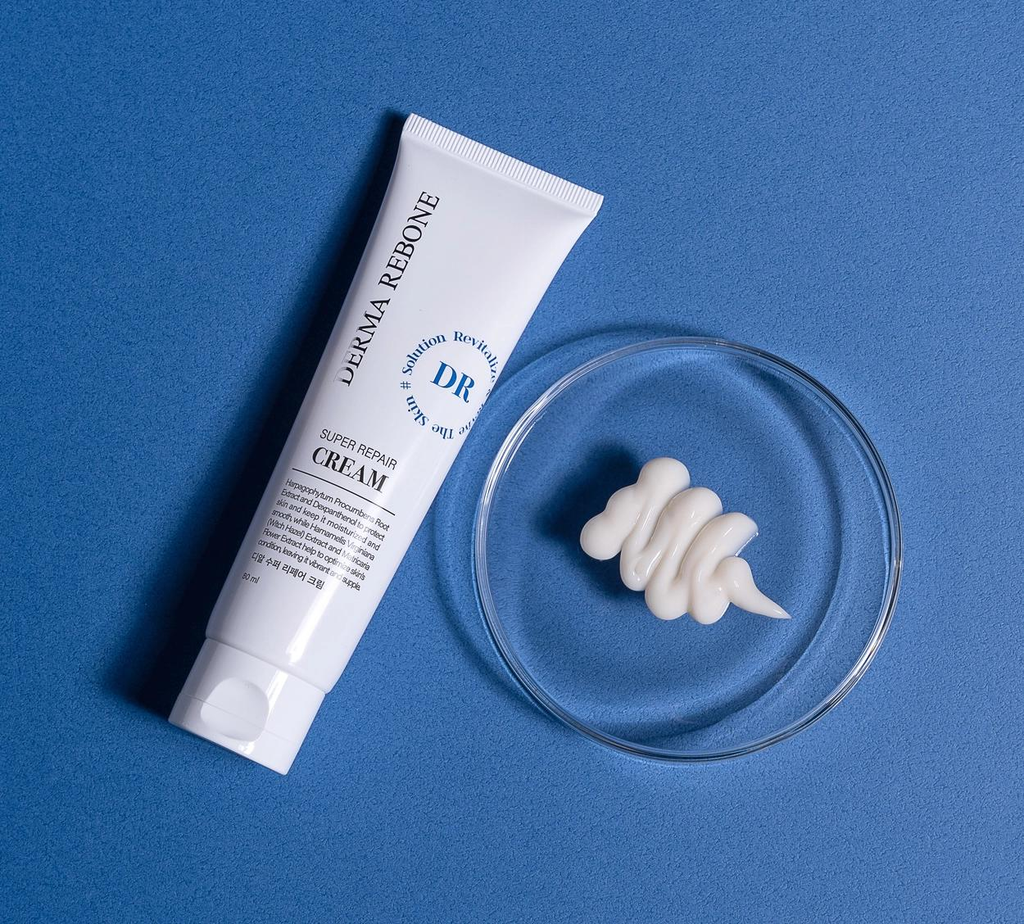
Treatment depends on the severity of the inflammation, the affected area and the substance causing the reaction.
The main objective is to reduce inflammation, repair the skin barrier and prevent further exposure.
1. Avoid the Trigger
Identifying and avoiding the responsible substance is the most important part of managing contact dermatitis.
For example:
- Stop using a cosmetic product that causes a reaction.
- Replace jewellery containing nickel.
- Reduce exposure to cleaning chemicals.
- Use appropriate protective gloves.
- Avoid products containing known allergens.
If you cannot completely avoid a substance because of your occupation, discuss protective measures with your employer.
2. Emollients and Moisturisers
Emollients help reduce moisture loss and support the skin’s protective barrier.
They are commonly recommended for people experiencing dry, cracked or irritated skin.
Different formulations are available:
| Type | Common use |
|---|---|
| Creams | General moisturising and inflamed skin |
| Ointments | Very dry and cracked skin |
| Lotions | Larger areas where lighter products are preferred |
| Soap substitutes | Washing without traditional soap |
Your pharmacist or GP can help you select a suitable product.
Apply emollients regularly, particularly after washing your hands or bathing.
If a moisturiser causes further irritation, stop using it and ask a pharmacist about alternatives.
Important: Some emollients increase the risk of fire because they can leave residue on clothing, bedding and dressings. Keep treated fabrics away from cigarettes, naked flames and other ignition sources.
3. Topical Corticosteroid Creams
Topical corticosteroids are commonly prescribed when inflammation is more significant.
They help reduce redness, swelling and itching.
Different strengths are available depending on:
- The severity of inflammation.
- The affected body area.
- The thickness of the skin.
- The patient’s age and other medical circumstances.
For example, a weaker preparation may be selected for sensitive areas such as the face, while thicker skin on the palms may require a different strength.
Use steroid creams exactly as directed by your healthcare professional.
Do not use stronger preparations or extend treatment without medical advice.
4. Antihistamines
Antihistamines may help some people manage itching, particularly when another allergic condition is present.
However, they do not treat the underlying skin inflammation responsible for contact dermatitis.
A pharmacist can advise whether an antihistamine is appropriate.
Some antihistamines cause drowsiness, so check the product information before driving or operating machinery.
5. Treatment for Severe Contact Dermatitis
Severe or widespread inflammation may require additional treatment.
A GP may consider a short course of oral corticosteroids in selected cases.
This is not usually necessary for routine contact dermatitis and requires medical supervision.
If symptoms do not improve with initial treatment, a dermatologist may recommend specialist options.
These may include:
- Further investigation and patch testing.
- More specialised topical treatments.
- Phototherapy in selected cases.
- Other prescription medicines for difficult-to-control disease.
The appropriate treatment depends on the diagnosis and individual circumstances.
For detailed treatment guidance, visit the NHS contact dermatitis treatment page.
8. How to Prevent Contact Dermatitis at Home
Prevention is often more effective than repeatedly treating skin inflammation after it develops.
Small changes to your daily routine can reduce exposure to common irritants and allergens.
Choose Gentle Skincare Products
Use fragrance-free products where possible, particularly if you have sensitive skin.
Avoid introducing multiple new products at once.
Check ingredient labels and discontinue products that repeatedly trigger symptoms.
Protect Your Hands
Household cleaning can expose your hands to several irritating substances.
Useful precautions include:
- Wearing suitable protective gloves.
- Avoiding prolonged exposure to washing-up liquid.
- Using gentle hand cleansers.
- Drying your hands carefully.
- Applying moisturiser regularly.
Do not wear gloves continuously if your hands become sweaty, as trapped moisture may worsen irritation.
Avoid Excessive Hand Washing
Frequent washing with harsh soaps can damage the skin barrier.
When appropriate, use a gentle cleanser or an emollient soap substitute.
After washing, rinse thoroughly and dry your hands carefully, including between your fingers.
Be Careful With Jewellery
If metal jewellery repeatedly causes a rash, stop wearing it until the cause has been assessed.
Nickel-free alternatives may help prevent further reactions.
Keep a Skin Trigger Diary
A trigger diary can help you identify patterns.
Record:
- Products used each day.
- Cleaning activities.
- Jewellery worn.
- Workplace exposures.
- When symptoms develop.
- Whether the rash improves after avoiding a substance.
This information may help your GP or dermatologist identify the underlying cause.
9. Contact Dermatitis and Workplace Exposure in the UK
Work-related contact dermatitis deserves particular attention because some occupations involve repeated skin exposure to irritants.
The condition can affect productivity, comfort and the ability to carry out everyday duties.
The Health and Safety Executive recommends reducing exposure to hazardous substances and introducing appropriate workplace controls.
What Should Employees Do?
If you suspect your job is contributing to contact dermatitis:
- Inform your manager or occupational health team.
- Explain which tasks appear to trigger symptoms.
- Ask whether safer products or alternative working methods are available.
- Use appropriate protective equipment.
- Follow recommended hand-care routines.
- Seek medical assessment if symptoms continue.
What Should Employers Do?
Employers have responsibilities to assess and control workplace risks.
Depending on the work involved, this may include:
- Identifying hazardous substances.
- Reducing unnecessary skin exposure.
- Providing appropriate protective equipment.
- Offering suitable handwashing facilities.
- Providing information and training.
- Introducing workplace health surveillance where appropriate.
Workers who regularly handle chemicals, water, detergents or cement should be particularly aware of early symptoms.
For further information, consult the HSE workplace skin disease guidance.
10. When Should You See a GP About Contact Dermatitis?
Mild irritation may improve after avoiding the suspected trigger and using appropriate moisturisers.
However, persistent or recurring symptoms should be assessed by a healthcare professional.
Arrange a GP appointment if:
- Your rash does not improve.
- Symptoms repeatedly return.
- Your skin becomes increasingly painful.
- The affected area becomes extensive.
- You experience significant swelling.
- The suspected trigger is unclear.
- Your hands become cracked or difficult to use.
- Over-the-counter treatments are not helping.
A GP can assess the condition, recommend suitable treatment and consider referral to a dermatologist.
When Do You Need Urgent Medical Advice?
Skin affected by contact dermatitis can sometimes become infected.
Look out for:
- Rapidly worsening symptoms.
- Increasing pain.
- Pus or unusual discharge.
- Spreading inflammation.
- Feeling generally unwell.
- Fever, chills or shivering.
Seek urgent medical advice if you suspect an infection. NHS 111 can help direct you to appropriate care.
If you experience sudden swelling of the lips, tongue or throat, difficulty breathing or other signs of a severe allergic reaction, call 999 immediately.
For help deciding which NHS service to contact, read our guide to NHS 111 vs A&E vs GP.
11. Can Contact Dermatitis Go Away Permanently?
Contact dermatitis can improve significantly and sometimes clear completely when the responsible trigger is identified and avoided.
However, whether it returns depends on the underlying cause and future exposure.
Irritant contact dermatitis may resolve when the skin barrier has recovered and repeated exposure is reduced.
Allergic contact dermatitis can remain a long-term sensitivity. Even after the rash disappears, exposure to the same allergen may trigger another reaction.
This is why identifying the exact allergen through patch testing can be valuable.
Some people may need to make permanent changes to their skincare routine, jewellery choices or workplace practices.
Regular moisturising and avoiding known triggers can help maintain healthier skin.
12. Is Contact Dermatitis Contagious?
No. Contact dermatitis is not contagious.
It develops because of direct skin irritation or an immune reaction to an allergen.
You cannot catch it through:
- Handshakes.
- Hugging.
- Sharing a room.
- Sitting beside someone.
- Ordinary physical contact.
However, broken skin can sometimes develop a secondary bacterial infection. Certain infections, such as impetigo, can spread between people.
If the affected skin develops crusting, discharge or rapidly worsening inflammation, seek medical advice.
13. Contact Dermatitis on the Face: What Should You Do?
Facial contact dermatitis can be particularly uncomfortable because the skin around the eyes, cheeks and mouth is sensitive.
Common triggers include:
- Facial cleansers.
- Moisturisers.
- Makeup.
- Sunscreens.
- Perfumes.
- Haircare products.
- Nail products transferred from the hands.
If you develop facial irritation:
- Stop using the suspected product.
- Gently wash the affected area with lukewarm water.
- Avoid scrubbing or exfoliating.
- Use a suitable fragrance-free moisturiser.
- Avoid introducing additional skincare ingredients.
- Seek medical advice if inflammation persists.
Do not apply strong steroid creams to your face without professional guidance.
The skin around the eyes is particularly delicate and requires careful treatment.
14. Contact Dermatitis on Hands: How to Manage It
Hand contact dermatitis is common among people who regularly wash their hands or work with cleaning products.
Symptoms may include dryness, itching, redness, painful cracks and small blisters.
To manage hand symptoms:
- Reduce unnecessary exposure to water.
- Use gentle handwashing products.
- Dry your hands thoroughly.
- Wear suitable protective gloves for cleaning tasks.
- Apply emollients regularly.
- Avoid harsh antibacterial soaps unless medically necessary.
- Follow prescribed treatment instructions.
If your hands remain inflamed despite these measures, speak to your GP.
Persistent hand dermatitis may require patch testing or specialist treatment.
15. Frequently Asked Questions About Contact Dermatitis
1. What is the most common cause of contact dermatitis?
Common causes include repeated exposure to soaps, detergents, cleaning products and water. Allergic reactions may be triggered by nickel, fragrances, preservatives, hair dyes and cosmetic ingredients.
2. How long does contact dermatitis take to clear?
Recovery depends on the cause and severity. Mild irritation may improve within days after avoiding the trigger, while more persistent inflammation can take several weeks or longer to settle.
3. Can stress cause contact dermatitis?
Stress is not a direct cause of contact dermatitis. However, it may worsen itching and make existing inflammatory skin conditions more difficult to manage.
4. Is contact dermatitis an allergy?
Not always. Irritant contact dermatitis develops through direct damage to the skin barrier. Allergic contact dermatitis involves an immune response to a particular substance.
5. Can washing-up liquid cause contact dermatitis?
Yes. Washing-up liquid contains cleansing ingredients that can remove natural skin oils. Repeated exposure may damage the skin barrier and cause irritation.
6. Can contact dermatitis spread to other parts of the body?
The rash may appear beyond the original contact area, particularly with allergic reactions. However, contact dermatitis itself is not contagious.
7. Does the NHS provide treatment for contact dermatitis?
Yes. A GP can assess symptoms, recommend emollients and prescribe topical corticosteroids when appropriate. Dermatology referral and patch testing may be considered for persistent or suspected allergic cases.
8. What is the difference between contact dermatitis and an allergic reaction?
Contact dermatitis describes skin inflammation following exposure to an irritant or allergen. Allergic contact dermatitis is specifically caused by an immune response to a sensitising substance.
9. Can contact dermatitis develop suddenly?
Yes. Irritant reactions may develop quickly after exposure to a strong substance. Allergic reactions may develop after previous sensitisation and can appear hours or days after contact.
10. Should I stop using skincare products if I develop a rash?
Stop using products you suspect are responsible, particularly newly introduced products. Seek advice from a pharmacist or GP if the rash persists, becomes painful or worsens.
11. Can contact dermatitis affect the scalp?
Yes. Hair dyes, shampoos, conditioners and styling products can cause allergic or irritant reactions affecting the scalp and surrounding skin.
12. Can contact dermatitis be cured permanently?
There is no guaranteed permanent cure for allergic contact dermatitis because sensitivity to an allergen may remain. However, avoiding the responsible substance can prevent further reactions and allow the skin to recover.
16. Conclusion: Managing Contact Dermatitis in Everyday Life
Contact dermatitis can affect everyday activities, from washing your hands and cleaning your home to wearing jewellery and using skincare products.
The most important step is identifying what is triggering the reaction. Irritant and allergic contact dermatitis require slightly different approaches, but both can often be managed through appropriate skin care, trigger avoidance and medical treatment when necessary.
If symptoms persist, become severe or repeatedly return, speak to your GP. Patch testing may help identify hidden allergens, while prescribed treatments can reduce inflammation and discomfort.
With the right diagnosis, preventative measures and consistent skin care, many people can manage contact dermatitis successfully and reduce the likelihood of future flare-ups.