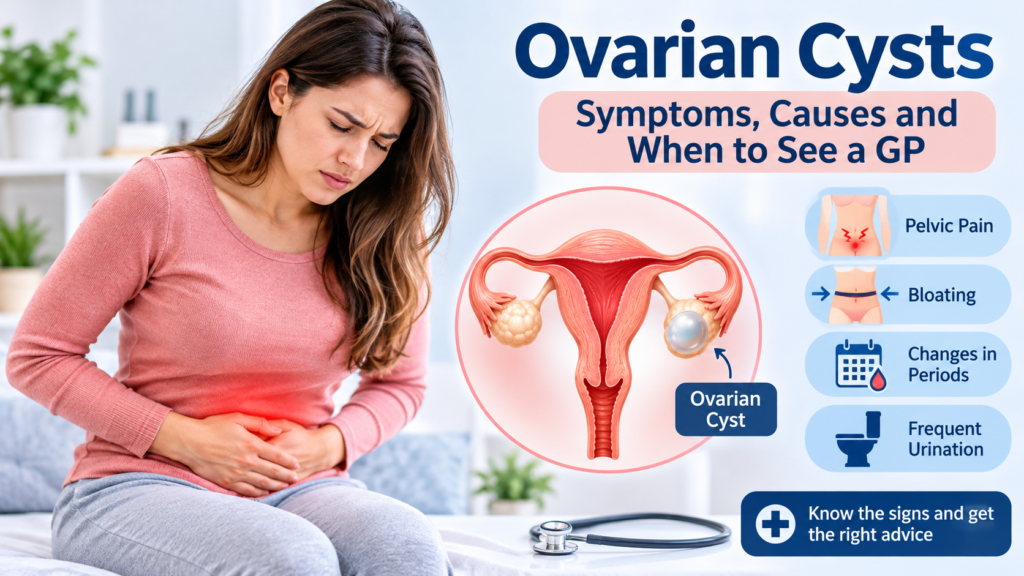

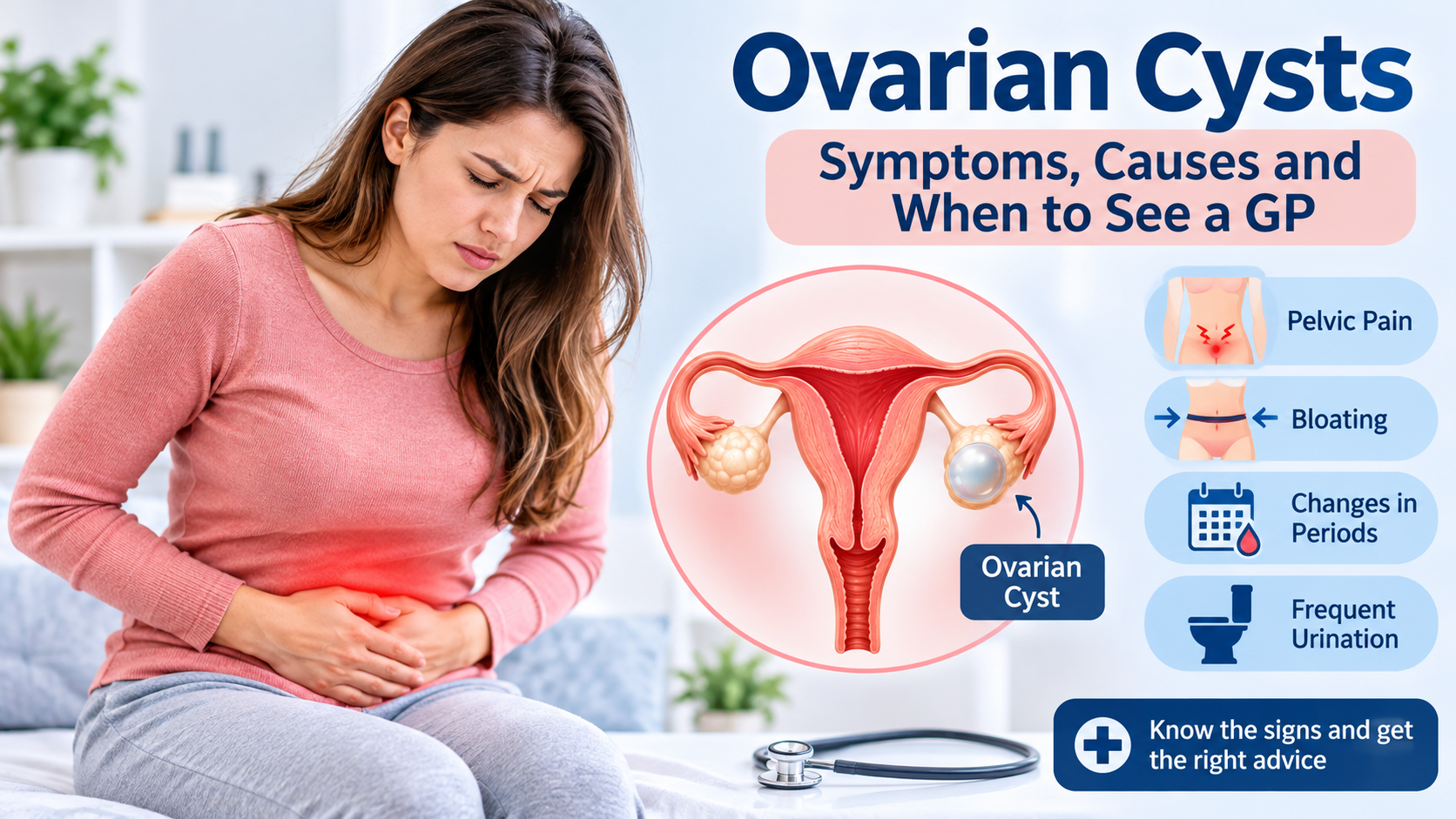
Ovarian cysts are common fluid-filled sacs that develop on or inside the ovaries. Most are harmless, cause no noticeable symptoms and disappear naturally within a few months. However, some ovarian cysts can become large, rupture or twist, leading to pelvic pain and complications that require urgent medical attention.
Understanding ovarian cysts can help you recognise unusual symptoms, know when to contact your GP and understand which NHS investigations and treatments may be recommended. Although many cysts are non-cancerous, persistent bloating, pelvic discomfort, changes in periods and unexplained abdominal swelling should not be ignored.
In the UK, your GP may arrange an ultrasound scan and, depending on your symptoms and medical history, refer you to a gynaecologist for further assessment.
This guide explains the different types of ovarian cysts, their causes, warning signs, diagnosis, NHS treatment options and their possible effects on fertility and pregnancy.
Medical information reviewed against NHS and Royal College of Obstetricians and Gynaecologists guidance available in November 2026. This article is educational and does not replace individual medical advice.
1. What are ovarian cysts?
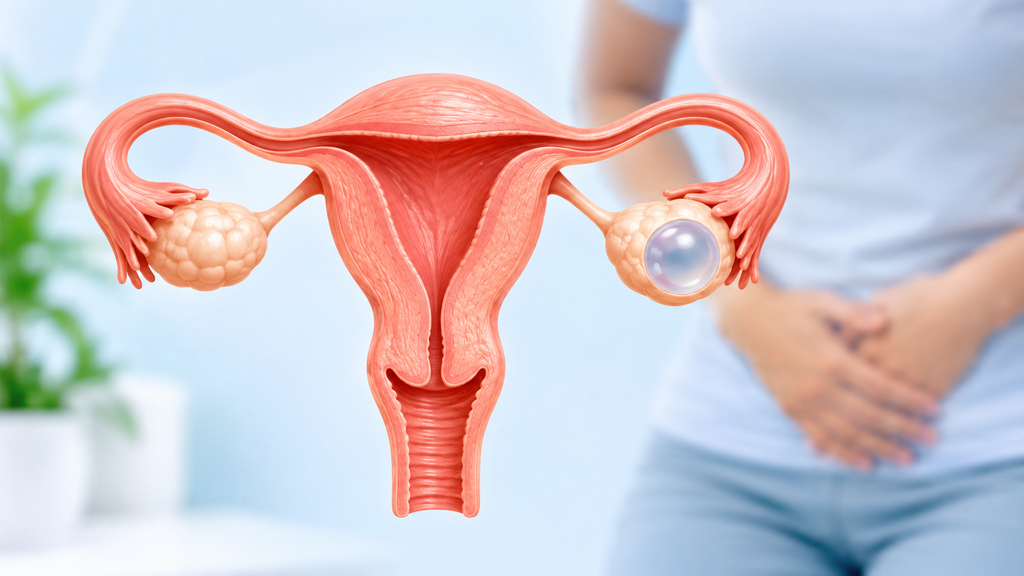
Ovarian cysts are fluid-filled sacs that develop on or inside one or both ovaries. The ovaries are two small reproductive organs located on either side of the uterus (womb).
They play an important role in the reproductive system by:
- Releasing eggs during the menstrual cycle.
- Producing hormones such as oestrogen and progesterone.
- Supporting menstrual health and fertility.
Most ovarian cysts develop naturally during the menstrual cycle. They are usually non-cancerous and disappear without medical treatment.
Some cysts, however, may grow larger, remain for several months or cause uncomfortable symptoms. Their significance depends on their size, appearance, symptoms, age and whether you have experienced menopause.
Are ovarian cysts common?
Yes. They are particularly common among women who have not yet experienced menopause.
Many people have ovarian cysts without knowing because they do not cause symptoms. They are sometimes discovered accidentally during an ultrasound scan performed for another medical reason.
The majority are benign (non-cancerous). However, any persistent or unusual symptoms should be assessed by a healthcare professional.
2. Common symptoms of ovarian cysts
Many people experience no symptoms. When symptoms develop, they can vary depending on the cyst’s size, position and whether complications occur.
The most commonly reported symptoms include:
Pelvic or lower abdominal pain
A dull, heavy or aching sensation in the lower abdomen is one possible sign. The discomfort may occur on one side, depending on which ovary is affected.
Pain can become more noticeable during physical activity, sexual intercourse or certain movements.
Bloating and abdominal swelling
Some people experience persistent bloating or a feeling of pressure in the abdomen.
If your stomach frequently feels swollen without an obvious explanation, particularly alongside pelvic discomfort, discuss it with your GP.
Changes in menstrual periods
Hormonal changes and certain underlying conditions may be associated with menstrual irregularities.
You might notice:
- Heavier or lighter periods.
- Irregular menstrual cycles.
- Periods that become more painful.
- Unexpected changes in your usual bleeding pattern.
For more information, read our guide to PMDD vs PMS.
Frequent urination
A larger cyst may press against the bladder, creating pressure or making you feel that you need to urinate more frequently.
You might also experience difficulty completely emptying your bladder.
Pain during sexual intercourse
Some people experience discomfort or deep pelvic pain during or after sex.
This may happen when pressure or movement affects the area surrounding the cyst.
Difficulty passing stools
A large cyst can sometimes put pressure on nearby organs, including the bowel.
This may cause constipation, discomfort or difficulty emptying your bowels.
Feeling full quickly
Some people notice that they feel unusually full after eating small amounts of food.
When this happens alongside persistent bloating or abdominal swelling, it is important to arrange a medical assessment.
Sudden or severe pelvic pain
Sudden, intense pelvic pain may indicate that a cyst has ruptured or caused ovarian torsion (twisting of the ovary).
This requires urgent medical attention, particularly when accompanied by nausea or vomiting.
According to the NHS, sudden severe pelvic pain or abdominal pain accompanied by nausea or vomiting should be assessed urgently. NHS+1
3. What causes ovarian cysts?
There are several possible causes, and the reason depends on the type of cyst.
The most common causes are associated with the normal menstrual cycle, but some develop because of hormonal conditions or abnormal cell growth.
1. Hormonal changes during the menstrual cycle
During each menstrual cycle, the ovaries develop follicles containing eggs.
Sometimes a follicle does not release an egg properly or does not shrink after releasing it. It can continue to fill with fluid and develop into a cyst.
These are called functional cysts.
2. Polycystic ovary syndrome (PCOS)
PCOS is a hormonal condition that affects how the ovaries function.
It can cause irregular periods, higher levels of certain hormones and problems with ovulation.
Despite its name, PCOS is not simply a condition involving ordinary ovarian cysts. The small follicles seen on an ultrasound are not the same as typical ovarian cysts.
Read our detailed guide to PCOS symptoms and treatments.
3. Endometriosis
Endometriosis occurs when tissue similar to the lining of the womb grows outside the uterus.
When this tissue affects an ovary, it can sometimes form a blood-filled cyst called an endometrioma or chocolate cyst.
Possible symptoms include painful periods, pelvic pain, pain during sex and fertility difficulties.
You can learn more in our guide to endometriosis diagnosis in the UK.
4. Pregnancy-related hormonal changes
Sometimes a cyst develops during early pregnancy.
A corpus luteum cyst can form after ovulation and help support early pregnancy by producing progesterone.
These cysts often disappear naturally as pregnancy progresses.
5. Abnormal cell growth
Some ovarian cysts develop because of unusual cell growth rather than the normal menstrual cycle.
These are known as pathological cysts.
Examples include dermoid cysts and cystadenomas. Although most are benign, some abnormal ovarian growths can be cancerous, particularly after menopause.
6. Previous ovarian cysts
Having had an ovarian cyst before may increase the likelihood of developing another one, depending on its underlying cause.
However, previous cysts do not automatically mean that future cysts will be dangerous.
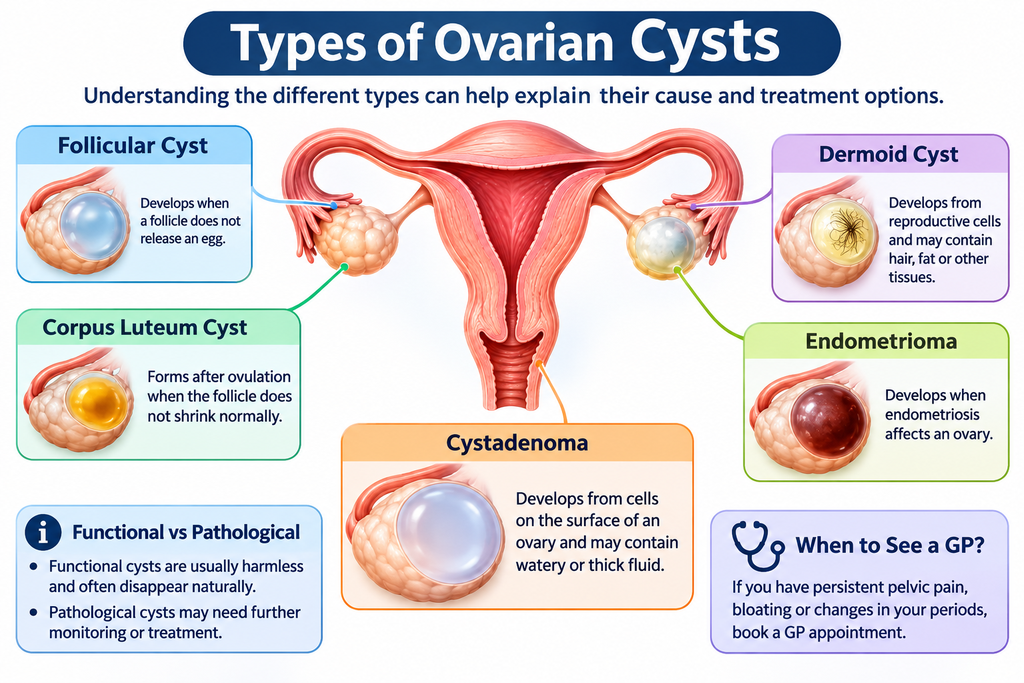
4. Different types of ovarian cysts
Understanding the type of cyst can help explain why it developed and whether treatment is necessary.
The main types include:
| Type | Description |
|---|---|
| Follicular cyst | Develops when a follicle does not release an egg. |
| Corpus luteum cyst | Forms after ovulation when the follicle does not shrink normally. |
| Dermoid cyst | Develops from reproductive cells and may contain hair, fat or other tissues. |
| Endometrioma | Develops when endometriosis affects an ovary. |
| Cystadenoma | Develops from cells on the surface of an ovary and may contain watery or thick fluid. |
Functional ovarian cysts
Functional cysts are the most common type and develop as part of the menstrual cycle.
They are usually harmless and often disappear within a few menstrual cycles.
Pathological ovarian cysts
Pathological cysts develop because of abnormal cell growth.
They may remain for longer and sometimes require monitoring or surgical assessment.
Importantly, pathological does not automatically mean cancerous. Many pathological cysts are also benign.
5. When should you see a GP about ovarian cysts?
Knowing when to seek medical advice is important because some symptoms can indicate complications or another underlying condition.
You should arrange a GP appointment if you experience:
- Persistent pelvic or lower abdominal pain.
- Frequent or unexplained bloating.
- A swollen abdomen that does not improve.
- Pain during sexual intercourse.
- Changes in your normal menstrual cycle.
- Frequent urination without an obvious explanation.
- Feeling full quickly after eating.
- Unexplained abdominal discomfort that keeps returning.
Do not assume these symptoms are simply caused by period pain, digestive problems or hormonal changes.
When is it an emergency?
Urgent medical attention
Seek urgent help if you experience:
- Sudden, severe pelvic or lower abdominal pain.
- Severe abdominal pain accompanied by nausea or vomiting.
- Sudden pain with dizziness, fainting or significant weakness.
- Severe pain accompanied by heavy bleeding or signs of collapse.
Contact NHS 111 for urgent assessment when appropriate. If you experience severe symptoms, collapse or a life-threatening emergency, call 999 or attend A&E.
Two important complications are ovarian torsion and cyst rupture.
Ovarian torsion: This happens when the ovary twists, potentially cutting off its blood supply. It can cause sudden severe pain and requires emergency hospital assessment.
Cyst rupture: This happens when a cyst breaks open. It may cause sudden pain and sometimes internal bleeding. Severe pain, dizziness or fainting requires emergency assessment.
Do not wait for a routine GP appointment if you have sudden severe symptoms. NHS+1
6. How are ovarian cysts diagnosed on the NHS?

If your GP suspects an ovarian cyst, they will ask about your symptoms, medical history and menstrual cycle.
The NHS may arrange several investigations depending on your circumstances.
1. Medical history and physical examination
Your GP may ask questions about:
- When your symptoms started.
- Whether your pain is constant or intermittent.
- Your menstrual cycle and recent changes.
- Previous pelvic conditions or operations.
- Pregnancy possibility.
- Family history of ovarian or breast cancer.
A physical examination may also be recommended.
2. Pelvic ultrasound scan
An ultrasound scan is one of the main investigations used to identify ovarian cysts.
It uses sound waves to produce images of the ovaries and surrounding reproductive organs.
There are two common approaches:
Transabdominal ultrasound: The sonographer moves a scanning device over your lower abdomen.
Transvaginal ultrasound: A small ultrasound probe is gently inserted into the vagina to obtain clearer images of the pelvic organs. This is usually offered when appropriate and with your consent.
The scan can help identify:
- Whether a cyst is present.
- Its size and location.
- Whether it contains fluid or solid areas.
- Whether it appears simple or complex.
- Whether further monitoring is required.
3. Blood tests
Your doctor may recommend blood tests if the ultrasound shows features that need further investigation.
One possible test measures CA125, a protein that can be raised in certain ovarian cancers.
However, raised CA125 levels do not automatically mean cancer is present. Conditions such as endometriosis, pelvic infections and menstruation can also increase this marker.
The result must be interpreted alongside your symptoms, age and ultrasound findings.
4. Further investigations
If the scan shows a large or complex cyst, your specialist may recommend additional imaging, such as an MRI.
Further investigations depend on the appearance of the cyst and your individual risk factors.
The NHS explains that ultrasound is commonly used to investigate suspected ovarian cysts, with blood tests and specialist referrals arranged when necessary. NHS+1
7. How are ovarian cysts treated?
Treatment depends on several factors, including the cyst’s size, appearance, symptoms, age and menopausal status.
Not everyone needs medication or surgery.
Watchful waiting
Many ovarian cysts disappear naturally without treatment.
Your healthcare professional may recommend monitoring rather than immediate intervention.
This approach can involve:
- Waiting for the cyst to resolve naturally.
- Repeating an ultrasound scan after a few weeks or months.
- Reviewing symptoms and changes in cyst size.
- Arranging further investigations if the cyst persists.
This is commonly recommended when the scan suggests a simple, low-risk cyst.
Medication and pain relief
If a cyst causes discomfort, your GP may recommend suitable pain relief depending on your medical history.
Medication can help manage symptoms, but it does not necessarily remove an existing cyst.
Hormonal contraception may be discussed in some circumstances to help manage menstrual symptoms or prevent future ovulation-related cysts.
However, the combined contraceptive pill does not make an existing simple functional cyst disappear more quickly.
Read our guide to contraception options in the UK.
Surgery to remove an ovarian cyst
Surgery may be recommended when a cyst:
- Is particularly large.
- Continues to grow.
- Does not disappear over time.
- Causes persistent or significant symptoms.
- Has an unusual or complex appearance.
- Raises concerns about possible cancer.
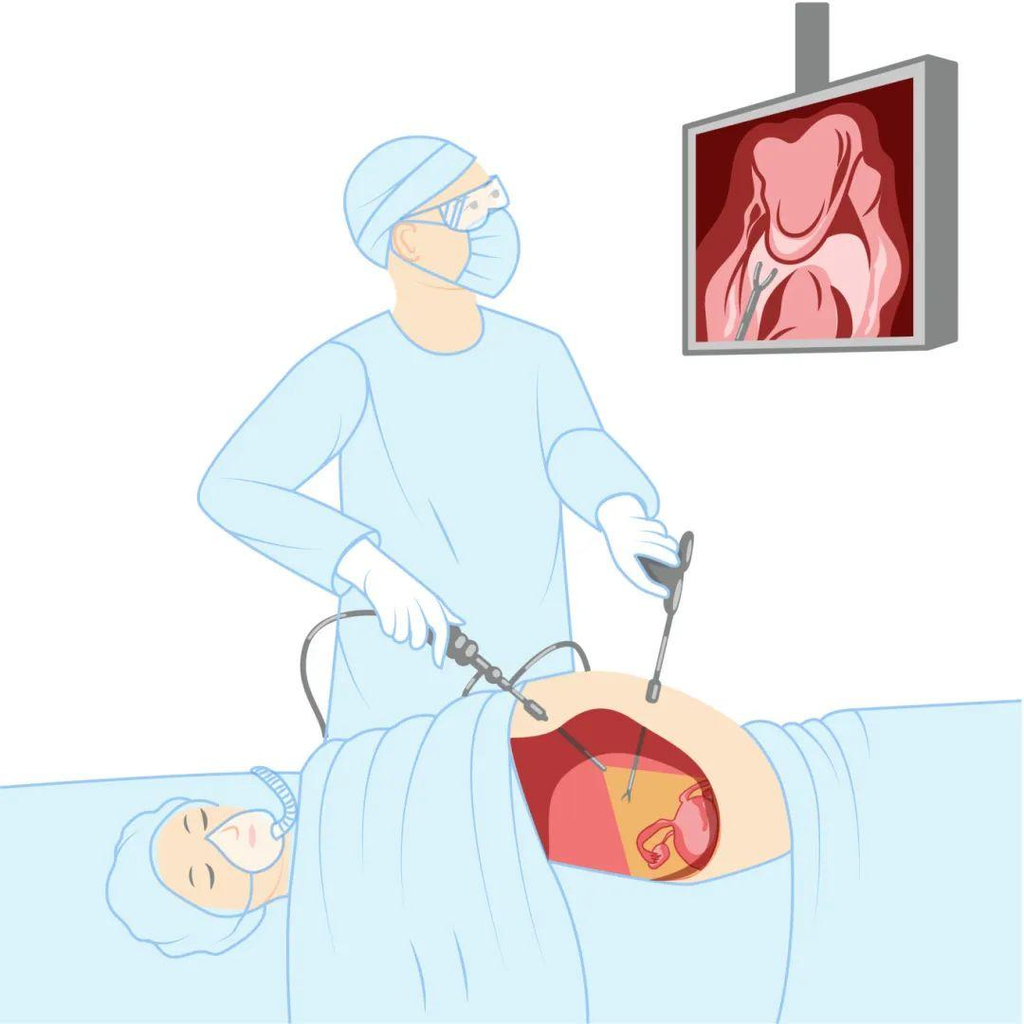
The most common surgical approaches include:
Laparoscopy (keyhole surgery)
This procedure involves making small cuts in the abdomen and using a camera and specialised instruments to remove the cyst.
It generally involves a shorter recovery period than open surgery.
Laparotomy (open surgery)
This involves a larger abdominal incision and may be recommended for very large cysts or when there is a concern about cancer.
Your surgeon will explain the most suitable approach based on your circumstances.
Will the entire ovary be removed?
Not necessarily.
In many cases, surgeons can remove the cyst while preserving the affected ovary. This is called an ovarian cystectomy.
However, removal of one ovary may be necessary if the cyst has severely damaged it or there is another clinical reason.
If fertility is important to you, discuss your future pregnancy plans with your surgeon before the operation.
The NHS recommends choosing treatment according to the cyst’s size, appearance, symptoms and menopausal status. NHS+1
8. Can ovarian cysts affect fertility?
Most ovarian cysts do not cause infertility.
Many people with simple functional cysts can conceive naturally without needing treatment.
However, certain underlying conditions associated with ovarian cysts may affect fertility.
For example:
- Endometriosis can affect the ovaries and surrounding reproductive organs.
- Large or complex cysts may sometimes interfere with normal ovarian function.
- Surgery involving ovarian tissue can occasionally affect ovarian reserve.
- Severe complications, such as ovarian torsion, may damage ovarian tissue if blood supply is interrupted.
If you are trying to conceive and have persistent pelvic pain or irregular periods, speak to your GP.
You can also read our guide to NHS fertility testing to understand the investigations that may be available.
Can you get pregnant with an ovarian cyst?
Yes. Pregnancy is usually possible with an ovarian cyst.
Many cysts are discovered during routine pregnancy ultrasound scans and do not require treatment.
However, a large or complex cyst may need additional monitoring throughout pregnancy.
Your healthcare team will consider the size, appearance and potential complications before recommending treatment.
9. Ovarian cysts after menopause: Should you be concerned?
Ovarian cysts can develop before and after menopause.
However, a new ovarian cyst after menopause generally requires careful assessment because the likelihood of ovarian cancer increases with age and menopausal status.
This does not mean that every postmenopausal cyst is cancerous.
In December 2025, the Royal College of Obstetricians and Gynaecologists updated its guidance to state that a simple, unilateral, unilocular ovarian cyst measuring 3cm or less in a postmenopausal woman does not require routine follow-up.
Larger cysts, complex appearances or symptoms may require further investigations.
Your specialist may recommend:
- Transvaginal ultrasound.
- CA125 blood testing.
- Repeat imaging where appropriate.
- Specialist gynaecological assessment.
If you have experienced menopause and develop persistent bloating, pelvic pain, unexplained weight loss or unusual vaginal bleeding, arrange a GP appointment.
For more information about hormonal changes, explore our guides to menopause symptoms in the UK and vaginal dryness after menopause.RCOG+1
10. Can ovarian cysts turn into cancer?
Most ovarian cysts are benign, meaning they are not cancerous.
However, some ovarian growths can be malignant, and the possibility needs to be assessed according to the individual’s circumstances.
The risk is generally higher after menopause than before it.
Features that may require closer investigation include:
- A complex cyst containing solid areas.
- An irregular appearance on ultrasound.
- A cyst that increases in size.
- Persistent abdominal or pelvic symptoms.
- Concerning blood test results.
- Relevant personal or family medical history.
A CA125 blood test can help assess risk, but it cannot diagnose ovarian cancer on its own.
Symptoms that should not be ignored
Ovarian cancer can sometimes cause symptoms similar to those associated with benign ovarian conditions.
These include:
- Persistent abdominal bloating.
- Pelvic or abdominal pain.
- Feeling full quickly.
- Needing to urinate more frequently.
- Unexplained weight loss.
- Changes in bowel habits.
- Unusual vaginal bleeding.
The NHS advises seeing a GP when these symptoms occur frequently, particularly if they are new, persistent or becoming worse. NHS+1
11. Can ovarian cysts be prevented?
Unfortunately, there is no guaranteed way to prevent all ovarian cysts.
Many develop naturally during the menstrual cycle and cannot be avoided.
However, some steps can help you manage reproductive health and identify problems earlier.
Consider the following:
- Attend recommended health appointments: Discuss persistent pelvic pain, unusual bleeding or menstrual changes with your GP.
- Understand your menstrual cycle: Keep track of unusual changes in your periods.
- Manage underlying conditions: Seek appropriate care for conditions such as endometriosis and PCOS.
- Follow medical advice: Attend recommended ultrasound scans and follow-up appointments.
- Avoid ignoring persistent symptoms: Repeated bloating or pelvic discomfort deserves medical assessment.
Remember that cervical screening does not detect ovarian cysts or act as an ovarian cancer screening test. It is designed to help prevent cervical cancer.
Read our UK cervical screening guide to understand what the NHS screening programme checks.
12. Living with ovarian cysts: Practical tips
Being diagnosed with ovarian cysts can feel worrying, especially if you have never experienced pelvic health problems before.
Fortunately, many people do not need surgery or extensive treatment.
These practical steps may help while following your healthcare professional’s advice:
- Keep a record of pelvic pain and when it occurs.
- Track menstrual changes using a period diary.
- Note any persistent bloating or abdominal discomfort.
- Follow your recommended ultrasound schedule.
- Take pain relief only as advised by a healthcare professional.
- Discuss fertility concerns before undergoing surgery.
- Seek urgent help if sudden or severe symptoms develop.
A healthy lifestyle can support general wellbeing, but no particular diet, supplement or exercise programme has been proven to dissolve existing cysts.
If symptoms affect your daily activities, sleep or emotional wellbeing, discuss this with your GP.
13. What to expect when discussing ovarian cysts with your GP
Some people feel uncomfortable discussing reproductive health symptoms, but your GP is there to help.
You can make your appointment more useful by preparing a few details beforehand.
Consider explaining:
- Where you experience pain.
- How long you have had symptoms.
- Whether the pain changes during your period.
- Whether you experience bloating or urinary symptoms.
- Whether your periods have changed.
- Whether you are trying to become pregnant.
- Whether you have experienced menopause.
You can also ask your GP:
- Could my symptoms be related to an ovarian cyst?
- Do I need an ultrasound scan?
- Will I need blood tests?
- Is monitoring sufficient, or do I need specialist treatment?
- Could this affect my fertility?
- When should I seek urgent medical attention?
If you are not registered with a GP, our guide explains how to register with a GP in the UK.
For urgent but non-life-threatening medical concerns, you can also read NHS 111 vs A&E vs GP.
14. Frequently asked questions about ovarian cysts
1. What are the first signs of ovarian cysts?
Many people have no symptoms. Early signs can include pelvic pain, lower abdominal discomfort, bloating, painful periods, frequent urination and feeling full quickly. Persistent or unusual symptoms should be discussed with a GP.
2. Do ovarian cysts go away on their own?
Yes. Most functional ovarian cysts disappear naturally within a few months without treatment. Your GP may recommend a repeat ultrasound scan if monitoring is necessary.
3. Are ovarian cysts dangerous?
Most are harmless and non-cancerous. However, large cysts or those that rupture or cause ovarian torsion can lead to complications. Sudden severe pelvic pain requires urgent medical assessment.
4. Can ovarian cysts cause irregular periods?
Some cysts are associated with changes in the menstrual cycle. However, irregular periods can also result from PCOS, hormonal changes, stress and other reproductive health conditions.
5. Can ovarian cysts affect pregnancy?
Most do not prevent pregnancy. However, some underlying conditions, particularly endometriosis, may affect fertility. Larger cysts may require monitoring during pregnancy.
6. How are ovarian cysts diagnosed?
An ultrasound scan is the main investigation used to identify and assess cysts. Depending on the findings, your doctor may also recommend CA125 blood tests or further imaging.
7. Do ovarian cysts always need surgery?
No. Most do not require surgery. Monitoring is often sufficient when the cyst is small, simple and not causing significant symptoms. Surgery may be considered for large, persistent, painful or suspicious cysts.
8. Can ovarian cysts become cancerous?
Most are benign. However, some ovarian growths are malignant, and the risk is higher after menopause. Ultrasound findings, symptoms and relevant blood tests help doctors assess the risk.
9. What size ovarian cyst needs surgery?
There is no single size that automatically means surgery is necessary. Doctors consider the cyst’s appearance, growth, symptoms, menopausal status and potential complications before recommending treatment.
10. When should I worry about ovarian cysts?
Seek medical advice for persistent pelvic pain, bloating, abdominal swelling or menstrual changes. Sudden severe pain, especially with nausea or vomiting, needs urgent assessment.
15. Conclusion
Ovarian cysts are a common reproductive health concern, and most are harmless and disappear naturally without treatment. However, understanding the symptoms and knowing when to seek medical advice can make an important difference to your health.
Persistent pelvic pain, bloating, changes in menstrual periods and frequent urination should not be ignored, particularly when these symptoms continue or become more noticeable.
The NHS offers investigations such as ultrasound scans and blood tests to help identify the type of cyst and determine whether monitoring or treatment is necessary.