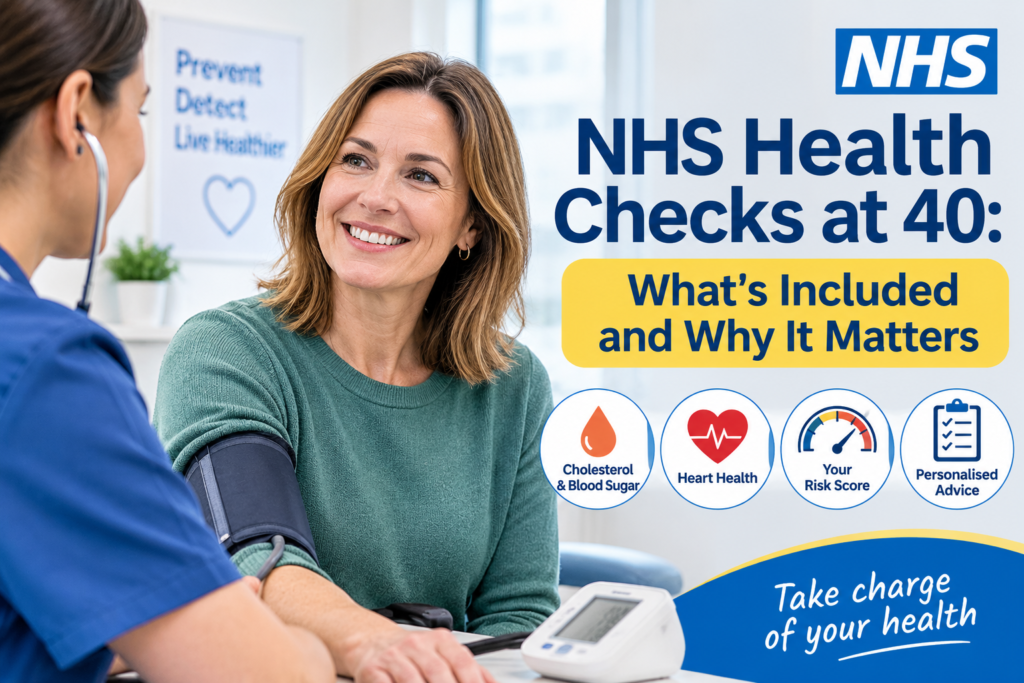

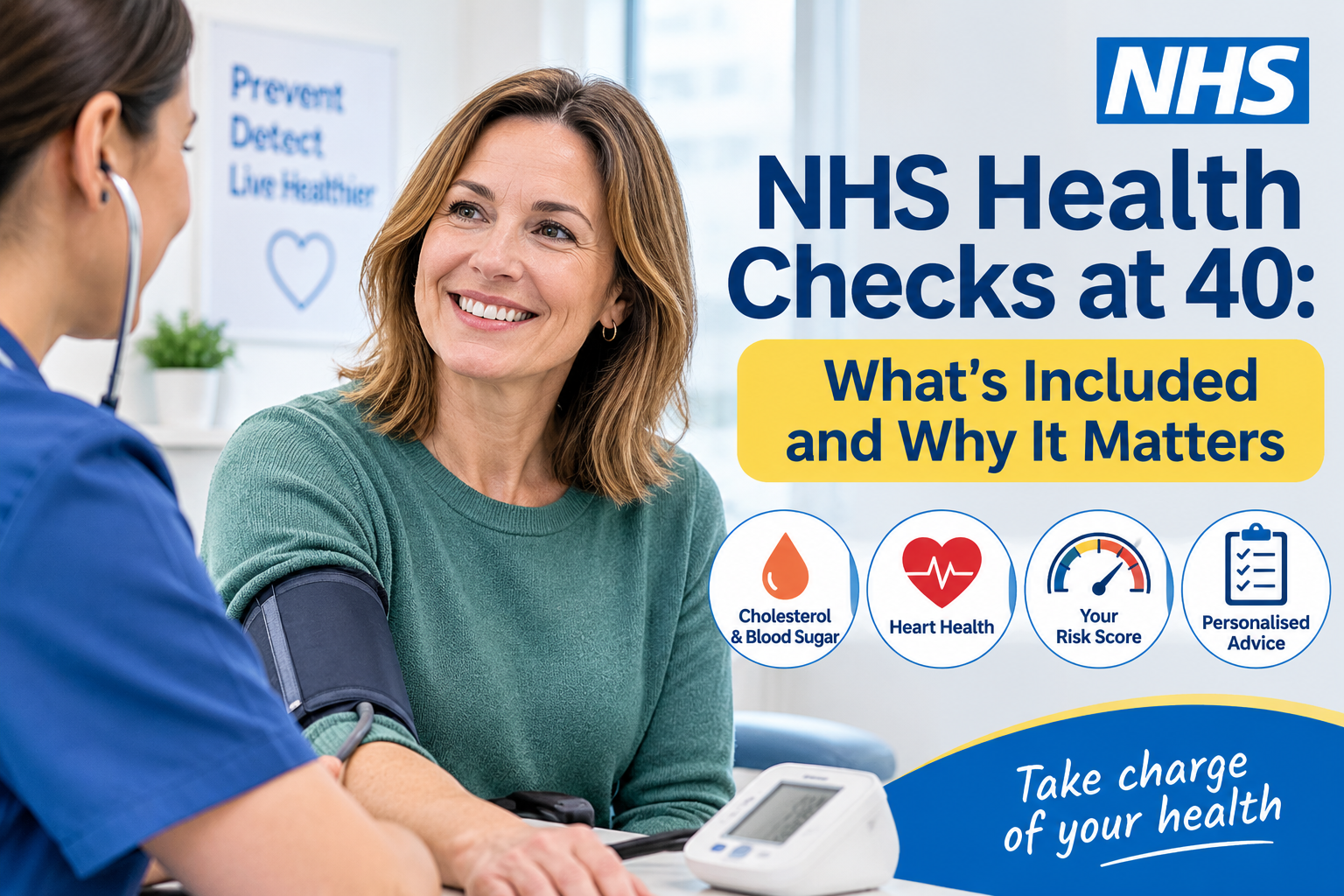
An NHS Health Check at 40 is an important opportunity to understand your health, identify potential risks early and take steps to prevent serious medical conditions later in life. Turning 40 does not automatically mean you are becoming unhealthy, but it is a useful time to pay closer attention to your heart health, blood pressure, cholesterol, weight and lifestyle habits.
The NHS Health Check programme in England is designed to help adults aged 40–74 understand their risk of developing cardiovascular disease, type 2 diabetes, kidney disease and stroke. It provides a personalised assessment, practical health advice and guidance on accessing further support where necessary.
Many health conditions develop gradually without obvious symptoms. High blood pressure and raised cholesterol, for example, can go unnoticed for years. An NHS Health Check at 40 can help identify these risk factors before they contribute to more serious complications.
Whether you have recently celebrated your 40th birthday or are approaching this milestone, understanding what happens during an NHS Health Check, which tests are included and how to arrange an appointment can help you make informed decisions about your long-term health.
This guide explains everything you need to know about NHS Health Checks at 40 in 2026, including eligibility, blood pressure and cholesterol tests, diabetes risk assessments, results, follow-up care and practical ways to improve your health.
1. What Is an NHS Health Check at 40?
An NHS Health Check is a free preventive health assessment designed to identify risk factors associated with serious long-term health conditions.
It focuses mainly on cardiovascular health, which includes the heart, blood vessels and circulation. The assessment also considers your risk of developing other conditions, particularly type 2 diabetes and kidney disease.
An NHS Health Check at 40 is particularly useful because several health risks can increase gradually during adulthood. Early identification gives you an opportunity to make changes before a condition becomes more difficult to manage.
The programme is not a general medical examination or a complete body scan. Instead, it uses specific measurements, health information and risk-assessment tools to estimate your likelihood of developing certain conditions.
The main objectives include:
- Identifying high blood pressure before symptoms develop.
- Detecting raised cholesterol levels.
- Assessing the risk of cardiovascular disease.
- Identifying people who may be at increased risk of type 2 diabetes.
- Reviewing weight, physical activity and lifestyle habits.
- Providing advice about smoking, alcohol and nutrition.
- Helping people access appropriate preventive healthcare.
The assessment usually takes around 20–30 minutes and is provided by a trained healthcare professional, such as a nurse, pharmacist or healthcare assistant. NHS+1
2. Who Is Eligible for an NHS Health Check at 40?
In England, the NHS Health Check programme is available to adults aged 40–74 who do not already have certain diagnosed health conditions.
This means your 40th birthday is generally the starting point for eligibility, rather than a requirement to wait until you are older.
Basic eligibility requirements
You may qualify if:
- You are aged between 40 and 74.
- You live in England.
- You do not have certain pre-existing medical conditions that exclude you from the programme.
- You have not already been identified as having a high cardiovascular risk requiring an established care pathway.
Eligible adults should generally be offered an NHS Health Check every five years.
Who may not qualify?
You may not be eligible for the standard NHS Health Check if you already have:
- Diagnosed heart disease.
- Chronic kidney disease.
- Type 2 diabetes.
- High blood pressure (hypertension).
- Atrial fibrillation.
- A transient ischaemic attack (TIA).
- Familial hypercholesterolaemia (inherited high cholesterol).
- Heart failure.
- Peripheral arterial disease.
- Previous stroke.
- A prescription for cholesterol-lowering medication, such as statins.
- A previously identified 10-year cardiovascular disease risk of 20% or higher.
These exclusions exist because people with established conditions should receive appropriate ongoing monitoring and treatment rather than relying on a general preventive assessment.
However, being excluded does not mean you cannot receive healthcare checks. Your GP or specialist team should arrange monitoring appropriate to your medical circumstances. NHS+1
Is an NHS Health Check available outside England?
An important distinction for UK readers is that the national NHS Health Check programme described in this article applies to England.
Scotland, Wales and Northern Ireland have separate health services and preventive healthcare arrangements. The same invitation process and five-year programme should not automatically be assumed to apply across all four nations.
If you live outside England, contact your local GP practice or health service to ask which preventive checks are available.
3. What’s Included in an NHS Health Check at 40?
One of the most common questions is what actually happens during an NHS Health Check at 40.
The appointment focuses on several important health measurements and lifestyle assessments. These help healthcare professionals build a picture of your current health and estimate your future risk.
Here are the main checks you can expect.
3.1 Blood Pressure Test
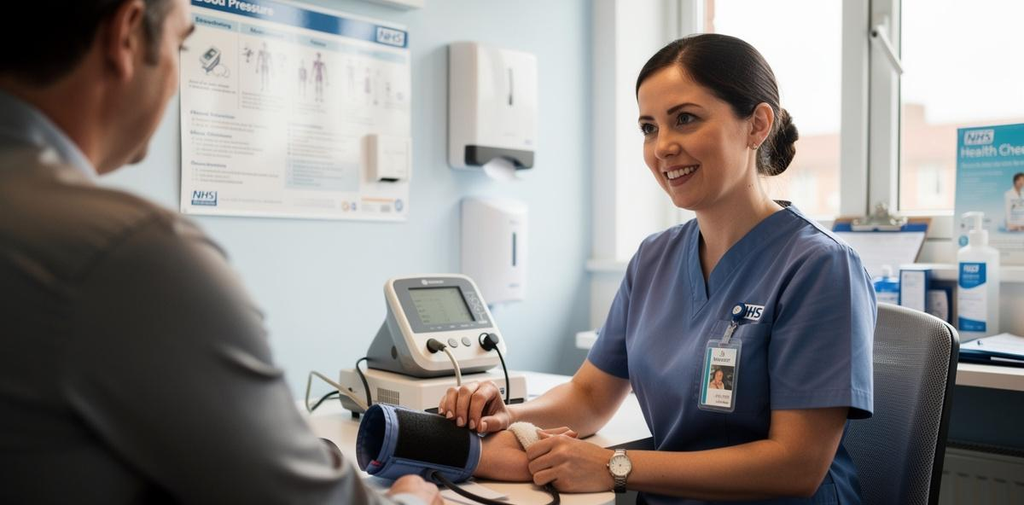
Blood pressure is one of the most important measurements included in an NHS Health Check at 40.
It measures the force of blood pushing against the walls of your arteries.
Your reading contains two numbers:
- Systolic pressure: The pressure when your heart contracts and pumps blood.
- Diastolic pressure: The pressure when your heart relaxes between beats.
For example, a reading of 120/80 mmHg represents a systolic pressure of 120 and a diastolic pressure of 80.
High blood pressure, also called hypertension, can increase your risk of:
- Heart attacks.
- Strokes.
- Heart failure.
- Kidney disease.
- Other cardiovascular complications.
The problem is that hypertension often develops without noticeable symptoms.
An NHS Health Check at 40 can identify a potentially raised reading and help determine whether further investigation is necessary.
If your blood pressure is higher than expected, your healthcare professional may recommend repeating the measurement or arranging ambulatory blood pressure monitoring.
For additional guidance, read our article: Normal Blood Pressure Reading by Age.
3.2 Cholesterol Blood Test
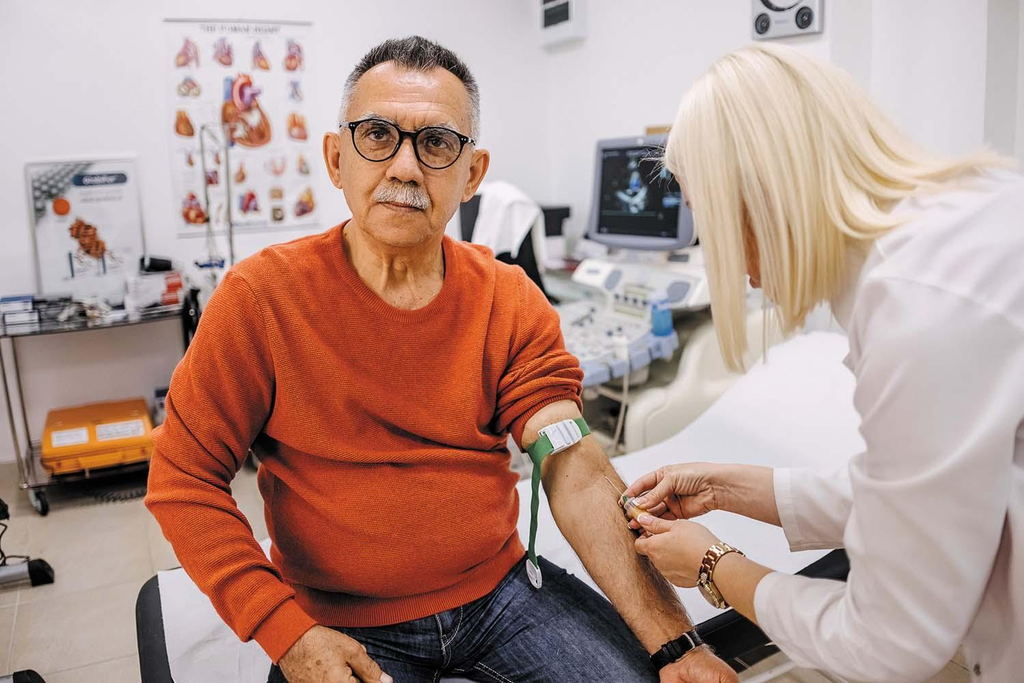
Cholesterol is a fatty substance naturally produced by your body. It is essential for several functions, but having too much of certain types can increase your risk of cardiovascular disease.
During an NHS Health Check at 40, a cholesterol test helps identify whether your blood lipid levels may increase your risk of heart disease or stroke.
The test may measure:
- Total cholesterol: The overall amount of cholesterol in your blood.
- HDL cholesterol: Often called good cholesterol because it helps remove cholesterol from your bloodstream.
- Non-HDL cholesterol: The cholesterol carried by particles associated with increased cardiovascular risk.
Your healthcare professional may also calculate a cholesterol ratio.
A total cholesterol level below 5 mmol/L is generally considered desirable for healthy adults, but your individual targets depend on your overall health and cardiovascular risk.
Importantly, cholesterol results should not be interpreted in isolation. Your age, blood pressure, smoking status and other risk factors also matter.
If your cholesterol is raised, your healthcare professional may recommend dietary changes, further assessment or medication where clinically appropriate.
You can learn more in our guide to type 2 diabetes remission in the UK and how metabolic health relates to long-term cardiovascular risk. NHS+1
3.3 Height, Weight and BMI Measurement
Your height and weight are usually recorded to calculate your body mass index (BMI).
BMI is a measurement that compares your weight with your height.
The standard adult BMI categories are:
| BMI | Classification |
|---|---|
| Below 18.5 | Underweight |
| 18.5–24.9 | Healthy weight |
| 25–29.9 | Overweight |
| 30 or above | Obesity |
BMI can help identify whether your weight may contribute to your risk of certain health conditions.
However, BMI does not directly measure body fat and may not accurately reflect health in every individual.
For example, people with higher muscle mass may have a higher BMI without having excess body fat.
Healthcare professionals may consider your ethnicity, waist measurement, medical history and other factors when interpreting the result.
If your BMI indicates that weight management could benefit your health, you may receive advice about nutrition, physical activity and available weight-management services.
Read our related guides:
- BMI Calculator and What the NHS Says in 2026
- Best NHS-Approved Weight Loss Programmes
- Protein Intake for Weight Loss.
3.4 Waist Measurement
An NHS Health Check at 40 may also include a measurement of your waist circumference.
This helps assess abdominal fat, which can be associated with an increased risk of:
- Type 2 diabetes.
- Heart disease.
- High blood pressure.
- Metabolic complications.
Excess fat around the abdomen can be particularly important because it is associated with increased metabolic and cardiovascular risk.
Your waist measurement is considered alongside your BMI and other health information rather than used as a standalone diagnosis.
3.5 Blood Sugar and Diabetes Risk Assessment
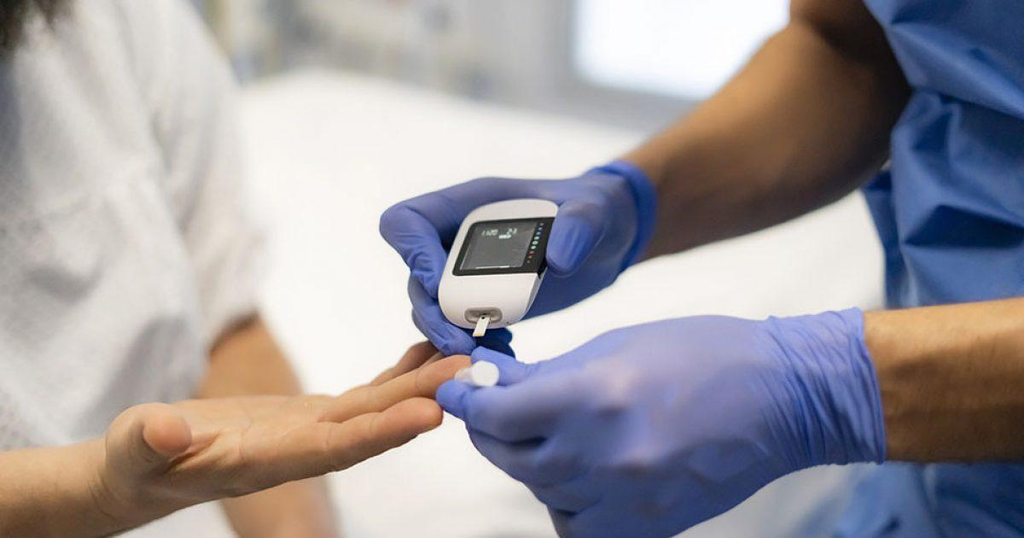
Another important part of an NHS Health Check at 40 is assessing your risk of developing type 2 diabetes.
Type 2 diabetes occurs when the body does not use insulin effectively or cannot produce enough insulin to maintain healthy blood glucose levels.
The condition can develop gradually, and some people may not notice symptoms during the early stages.
Your healthcare professional may assess diabetes risk using information such as:
- Age.
- Ethnicity.
- Family history.
- BMI.
- Waist circumference.
- Blood pressure.
- Lifestyle habits.
If the assessment suggests an increased risk, you may be offered a blood test to check your glucose levels.
Common tests include:
HbA1c test: Measures average blood glucose levels over approximately the previous two to three months.
Fasting plasma glucose test: Measures blood glucose after a period without eating.
An HbA1c result may help identify:
| HbA1c result | Interpretation |
|---|---|
| Below 42 mmol/mol | Usually below the diabetes threshold |
| 42–47 mmol/mol | High risk / non-diabetic hyperglycaemia |
| 48 mmol/mol or above | Diabetes range |
A result in the diabetes range generally requires appropriate clinical confirmation and assessment.
An NHS Health Check at 40 does not automatically mean everyone receives a diabetes blood test. Additional testing depends on the individual’s risk assessment and clinical circumstances.
If you are concerned about blood glucose, read our guide: What Is a Normal Blood Sugar Level?.
3.6 Smoking Assessment
Smoking is a major preventable risk factor for cardiovascular disease.
During your appointment, you may be asked:
- Whether you currently smoke.
- How many cigarettes you smoke each day.
- How long you have smoked.
- Whether you use other tobacco products.
Smoking damages blood vessels and increases the risk of heart disease, stroke and several cancers.
If you smoke, your healthcare professional can explain the benefits of quitting and discuss available support.
This may include NHS stop-smoking services, behavioural support and appropriate treatments.
Quitting smoking can improve your health at any age, including after 40.
3.7 Alcohol Consumption Assessment
Your alcohol intake may also be reviewed during an NHS Health Check at 40.
You may be asked how frequently you drink and approximately how much alcohol you consume.
Healthcare professionals may use a recognised questionnaire to identify potentially harmful drinking patterns.
Regularly drinking more alcohol than recommended can contribute to:
- High blood pressure.
- Liver disease.
- Weight gain.
- Certain cancers.
- Mental health difficulties.
The UK Chief Medical Officers advise adults who drink regularly to keep their intake within 14 units per week, spread over three or more days.
If you are concerned about your drinking habits, an NHS professional can explain suitable support options.
3.8 Physical Activity Assessment
Physical activity is another important factor in your long-term health.
Your healthcare professional may ask about:
- Exercise frequency.
- Walking and everyday movement.
- Time spent sitting.
- Physical activity at work.
- Strength-building activities.
Regular movement can improve cardiovascular fitness, support weight management and help regulate blood glucose.
Adults are generally advised to aim for at least 150 minutes of moderate-intensity activity or 75 minutes of vigorous-intensity activity each week, alongside muscle-strengthening activities on at least two days.
Your recommendations may be adjusted according to your fitness, existing medical conditions and physical abilities.
3.9 Family History and Personal Health Questions
Your family history can provide important information about inherited health risks.
During an NHS Health Check at 40, you may be asked whether close relatives have experienced:
- Heart disease.
- Stroke.
- High cholesterol.
- Type 2 diabetes.
- Other relevant medical conditions.
Your age, sex and ethnicity are also considered when calculating cardiovascular and diabetes risk.
These details help healthcare professionals interpret your measurements more accurately.
4. Why Does an NHS Health Check at 40 Matter?
Turning 40 is a useful opportunity to review your health because many preventable conditions can develop silently.
You might feel perfectly healthy while having raised blood pressure, high cholesterol or an increased risk of diabetes.
An NHS Health Check at 40 can help identify these issues and provide an opportunity to take action.
Early identification of cardiovascular disease risk
Heart disease and stroke remain important causes of illness and premature death.
An assessment can identify risk factors before they lead to serious complications.
Identifying high blood pressure
Hypertension frequently has no obvious warning signs.
Regular measurements can help detect elevated readings and identify people who need further assessment.
Preventing type 2 diabetes
Identifying people at increased risk creates an opportunity to access lifestyle support and diabetes prevention services.
Our article on Diabetes Diet Plans: Foods to Eat and Avoid explains how dietary choices can support better metabolic health.
Improving long-term weight management
Excess weight can increase the likelihood of developing several chronic conditions.
A health assessment can provide an opportunity to discuss sustainable weight management rather than relying on short-term diets.
Understanding your personal health risks
Your results provide a clearer picture of how your lifestyle, family history and medical measurements affect your future health.
The aim is not to create unnecessary worry. It is to help you understand which risks you can change and where professional support may help.
The NHS identifies early risk awareness and preventive action as central purposes of the programme. GOV.UK+2
5. What Is the Cardiovascular Risk Score?
One of the most useful outcomes of an NHS Health Check at 40 is your cardiovascular risk assessment.
This estimates your likelihood of experiencing a cardiovascular event, such as a heart attack or stroke, over the next 10 years.
Healthcare professionals may use the QRISK3 calculator as part of cardiovascular risk assessment, following NICE guidance.
How is your risk calculated?
The assessment considers several factors, including:
- Age.
- Sex.
- Ethnicity.
- Blood pressure.
- Cholesterol levels.
- Smoking status.
- BMI.
- Family history.
- Existing medical information and other relevant risk factors.
The result is expressed as a percentage.
For example, a 10% estimated 10-year cardiovascular risk means that, among people with similar calculated risk profiles, approximately 10 in 100 may experience a cardiovascular event over the next decade.
It does not predict with certainty what will happen to an individual.
Understanding your cardiovascular risk
| Risk score | General interpretation |
|---|---|
| Below 10% | Lower estimated 10-year risk |
| 10–19.9% | Increased estimated risk |
| 20% or above | High estimated risk |
These categories help explain risk, but treatment decisions require an individual clinical assessment.
NICE recommends using QRISK3 to estimate cardiovascular risk in eligible adults without established cardiovascular disease. A healthcare professional considers the result alongside your circumstances before recommending treatment. NICE+1
Can your cardiovascular risk change?
Yes. Some risk factors cannot be changed, but others can be improved.
For example:
- Stopping smoking can reduce cardiovascular risk.
- Improving your diet can help manage cholesterol.
- Regular physical activity supports heart health.
- Managing blood pressure can reduce complications.
- Maintaining a healthy weight can improve metabolic health.
Your NHS Health Check at 40 is an opportunity to understand these factors and develop realistic health goals.
6. What Happens After an NHS Health Check?
Your results will usually be discussed during your appointment or shortly afterwards.
The healthcare professional will explain your measurements, cardiovascular risk score and any areas that may require attention.
The next steps depend on your results.
If your results are within a healthy range
If your measurements and risk assessment are reassuring, you may simply receive general advice about maintaining your health.
This could include:
- Eating a balanced diet.
- Exercising regularly.
- Maintaining a healthy weight.
- Avoiding smoking.
- Keeping alcohol consumption within recommended limits.
- Attending future preventive checks.
You will generally be invited for another NHS Health Check after five years if you remain eligible.
If your blood pressure is high
A raised blood pressure reading does not automatically mean you have hypertension.
Your GP may recommend repeat measurements or a 24-hour ambulatory blood pressure monitor to confirm whether your blood pressure is consistently elevated.
If hypertension is diagnosed, treatment may involve lifestyle changes and medication.
Read our guide to Normal Blood Pressure Reading by Age.
If your cholesterol is elevated
Your healthcare professional may discuss:
- Changes to your diet.
- Increasing physical activity.
- Reducing saturated fat intake.
- Stopping smoking.
- Additional cardiovascular risk assessment.
- Cholesterol-lowering medication if appropriate.
Statins may be recommended depending on your overall cardiovascular risk and individual circumstances.
If you have an increased risk of diabetes
You may be offered additional blood tests and advice about preventing type 2 diabetes.
Depending on your assessment, you could be referred to a diabetes prevention programme.
Lifestyle support may include dietary advice, weight management and increasing physical activity.
If you have several risk factors
Sometimes more than one result requires attention.
For example, someone may have high blood pressure, raised cholesterol and excess abdominal weight.
Your healthcare professional can prioritise these issues and develop an appropriate follow-up plan.
An NHS Health Check at 40 is not the end of your preventive healthcare journey. It is a starting point for managing your health more effectively.
7. How to Book an NHS Health Check at 40
If you live in England and believe you qualify, arranging an NHS Health Check is generally straightforward.
You do not necessarily need to wait for symptoms or a medical problem to develop.
Step 1: Check your eligibility
Confirm that you are aged 40–74 and do not have one of the conditions that exclude you from the standard programme.
Step 2: Contact your GP surgery
Eligible adults should normally receive an invitation from their GP practice or local council.
If you have not received an invitation, contact your GP surgery and ask whether you are eligible.
Step 3: Contact your local council
If your GP practice does not provide NHS Health Checks, your local council can help you find an alternative service.
Depending on your area, appointments may be available through participating pharmacies or other community healthcare providers.
Step 4: Arrange your appointment
Follow the instructions in your invitation or ask the provider how to book.
Some areas also offer online appointments or alternative assessment arrangements.
Step 5: Attend your appointment
Your healthcare professional will complete the measurements, ask lifestyle questions and explain your results.
Can I request an NHS Health Check without an invitation?
Yes. If you are aged 40–74, live in England and believe you meet the eligibility requirements, you can contact your GP practice even if you have not received an invitation.
You can also contact your local council for information about available services.
If you need to register with a GP first, read our guide: How to Register with a GP in the UK.
Official information: NHS Health Check – Eligibility and Booking.
8. How Long Does an NHS Health Check Take?
An NHS Health Check usually takes approximately 20–30 minutes.
However, the total time may vary depending on the provider, whether blood tests are required and whether additional questions or measurements are necessary.
A typical appointment may involve:
| Activity | What happens |
|---|---|
| Initial discussion | Review of your health and family history |
| Measurements | Height, weight and waist circumference |
| Blood pressure | Measurement of systolic and diastolic pressure |
| Cholesterol | Blood sample or point-of-care test |
| Lifestyle assessment | Smoking, alcohol and physical activity |
| Risk calculation | Assessment of cardiovascular and diabetes risk |
| Advice | Recommendations and possible follow-up |
You may be asked to arrange a blood test before or after your main appointment.
Your provider will explain whether any preparation is needed.
9. Does an NHS Health Check at 40 Include Cancer Screening?
This is an important question because some people assume that an NHS Health Check is a complete screening programme.
It is not.
The standard NHS Health Check focuses primarily on cardiovascular health and selected metabolic risk factors. It does not automatically include cancer screening tests such as:
- Breast cancer screening.
- Cervical screening.
- Bowel cancer screening.
- Lung cancer screening.
- Prostate cancer screening.
Cancer screening programmes have their own eligibility criteria, invitations and testing arrangements.
For example, the NHS breast screening programme in England routinely invites eligible women aged 50–71 every three years.
Cervical screening is offered to eligible people with a cervix according to the relevant age-based screening programme.
Bowel cancer screening also has a separate invitation system.
If you are approaching 40, it is still sensible to understand which screening programmes apply to you and whether you have any symptoms requiring medical assessment.
Explore our related articles:
- Breast Cancer Screening in the UK
- Cervical Screening in the UK
- How to Check Moles for Melanoma at Home
- Melanoma Risk Factors: Am I at High Risk?.
Remember that you should not wait for a screening invitation if you notice a new lump, unexplained bleeding, unusual skin changes or another concerning symptom. Contact your GP for appropriate assessment.
10. What Should You Do Before Your NHS Health Check?
Preparing for your NHS Health Check at 40 can help you make the most of your appointment.
You do not generally need extensive preparation, but having some information available can make the discussion more useful.
Know your family medical history
Try to find out whether close relatives have experienced heart disease, strokes, diabetes or high cholesterol.
Mentioning these conditions can help your healthcare professional understand your risk.
Prepare a list of medicines
Make a note of any prescribed medicines, supplements or treatments you currently use.
This is particularly important if you take medication for blood pressure, cholesterol or another long-term condition.
Be honest about your lifestyle
Your answers about smoking, drinking and physical activity help create a more accurate risk assessment.
There is no benefit in hiding habits you may feel uncomfortable discussing.
Your healthcare professional needs accurate information to provide suitable advice.
Ask about fasting requirements
An NHS Health Check does not always require fasting.
However, if a separate blood test is arranged, your provider will tell you whether you need to avoid food or drink beforehand.
Do not fast unnecessarily.
Prepare your questions
Consider asking:
- Is my blood pressure within a healthy range?
- What do my cholesterol results mean?
- What is my 10-year cardiovascular risk?
- Do I need additional diabetes testing?
- Should I make any lifestyle changes?
- When should I arrange my next health check?
These questions can help you leave the appointment with a clearer understanding of your health.
11. Lifestyle Changes That Can Improve Your Health After 40
An NHS Health Check at 40 is most valuable when you use the results to make practical improvements.
You do not need to change everything overnight. Small, consistent habits can make a meaningful difference over time.

11.1 Eat a Balanced Diet
A balanced diet supports cardiovascular health, blood glucose regulation and weight management.
Try to include:
- Plenty of fruit and vegetables.
- Wholegrain bread, rice and cereals.
- Beans, lentils and other sources of fibre.
- Fish and lean protein.
- Unsaturated fats in appropriate amounts.
- Reduced amounts of salt, added sugar and saturated fat.
If you have raised cholesterol, reducing saturated fat can be particularly helpful.
11.2 Exercise Regularly
Physical activity supports your heart, muscles, bones and mental wellbeing.
Adults should generally aim for:
- At least 150 minutes of moderate-intensity activity each week.
- Muscle-strengthening activities on at least two days.
- Less prolonged sitting.
- Regular movement throughout the day.
Walking, cycling, swimming and dancing are examples of activities that can improve fitness.
Start gradually if you have been inactive for a long time.
11.3 Maintain a Healthy Weight
Excess weight can increase the likelihood of developing high blood pressure, type 2 diabetes and cardiovascular disease.
If weight management is recommended following your NHS Health Check at 40, focus on sustainable changes.
Avoid extreme diets or unregulated weight-loss products.
Read our guides:
- How Many Calories Should I Eat to Lose Weight?
- Low-Calorie vs Low-Carb Diets in the UK
- Weight Loss Plateau: Why It Happens.
11.4 Stop Smoking
Stopping smoking is one of the most effective ways to improve your long-term health.
It can reduce your risk of heart disease, stroke, respiratory illness and several cancers.
Ask your GP or local stop-smoking service about available support.
11.5 Reduce Alcohol Consumption
Reducing alcohol intake can support better blood pressure, sleep, liver health and weight management.
If you regularly drink more than 14 units per week, consider reducing your consumption and seeking professional advice if you find it difficult to do so.
11.6 Look After Your Mental Health
Your health is not only about physical measurements.
Stress, anxiety and poor sleep can affect your daily habits and overall wellbeing.
Try to maintain a regular sleep routine, make time for enjoyable activities and seek support if emotional difficulties persist.
Our related guides include:
12. NHS Health Check at 40 vs a Private Health Check
Some people consider private health assessments because they want additional tests or a more extensive medical examination.
However, a private health check and an NHS Health Check have different purposes.
| Feature | NHS Health Check | Private health check |
|---|---|---|
| Cost | Free for eligible people in England | Usually paid |
| Main purpose | Preventive cardiovascular risk assessment | Depends on the provider |
| Blood pressure | Included | Usually available |
| Cholesterol | Included | Usually available |
| BMI | Included | Usually available |
| Lifestyle assessment | Included | Depends on package |
| Additional investigations | When clinically appropriate | Depends on package |
| Eligibility | Generally ages 40–74 in England | Depends on provider |
A private assessment may offer additional investigations, but more tests do not automatically mean better healthcare.
Unnecessary testing can sometimes identify abnormalities that require further investigation without providing a meaningful health benefit.
An NHS Health Check at 40 is a useful starting point for eligible people who want to understand their cardiovascular risk.
If you are considering private healthcare, read our guide to Private Health Insurance in the UK.
13. Common Myths About NHS Health Checks at 40
There are several misunderstandings about preventive health assessments.
Let’s clarify some of the most common ones.
Myth 1: You only need an NHS Health Check if you feel unwell.
Fact: The programme is designed to identify health risks even when you feel healthy.
Myth 2: Turning 40 automatically means you have to undergo every medical test.
Fact: The standard assessment focuses on specific risk factors. Additional investigations depend on your individual circumstances.
Myth 3: A normal blood pressure reading means you cannot develop heart disease.
Fact: Cardiovascular risk depends on several factors, including cholesterol, smoking, diabetes and family history.
Myth 4: An NHS Health Check diagnoses every serious medical condition.
Fact: It is a preventive risk assessment, not a complete diagnostic examination.
Myth 5: You cannot have another health check for five years.
Fact: The routine programme is generally offered every five years, but you can contact your GP sooner if you develop symptoms or have concerns.
Myth 6: Only people who are overweight need an NHS Health Check.
Fact: Eligible adults can benefit regardless of their body weight.
Myth 7: If you have a family history of heart disease, there is nothing you can do.
Fact: Family history is a risk factor, but lifestyle changes and appropriate medical care can help manage overall risk.
14. When Should You Contact Your GP Instead of Waiting for a Health Check?
An NHS Health Check at 40 is preventive care. It should never replace a medical appointment when you have symptoms.
Contact your GP if you experience:
- Persistent unexplained tiredness.
- Unusual thirst or frequent urination.
- Repeated headaches alongside concerns about blood pressure.
- Unexplained weight changes.
- Persistent dizziness.
- New or worsening symptoms that concern you.
Some symptoms require urgent assessment.
For example, sudden chest pain, severe breathing difficulty or signs of a stroke require emergency medical attention.
Call 999 for suspected heart attack or stroke symptoms.
If you are unsure whether you need urgent help, read our guide: NHS 111 vs A&E vs GP.
Do not wait until your next routine assessment to seek help.
15. Frequently Asked Questions About NHS Health Checks at 40
1. Can I get an NHS Health Check when I turn 40?
Yes. In England, eligible adults can receive an NHS Health Check from age 40. The programme generally covers people aged 40–74 who do not have certain pre-existing conditions.
2. Is an NHS Health Check free?
Yes. The NHS Health Check is free for eligible people in England. It is provided through services commissioned by local authorities, commonly through GP practices and other participating providers.
3. How often should I have an NHS Health Check?
Eligible adults should generally be offered an NHS Health Check every five years between the ages of 40 and 74.
4. What blood tests are included in an NHS Health Check at 40?
A cholesterol test is usually included, and a blood glucose test may be offered depending on your diabetes risk assessment. Additional tests may be arranged when clinically necessary.
5. Do I need to fast before an NHS Health Check?
Usually, fasting is not required for the standard appointment. However, some additional blood tests may have specific preparation requirements. Follow the instructions provided by your healthcare professional.
6. Can I request an NHS Health Check without an invitation?
Yes. If you believe you are eligible but have not received an invitation, contact your GP practice or local council to ask about booking.
7. Does an NHS Health Check test for diabetes?
It assesses your risk of developing type 2 diabetes. If your assessment indicates an increased risk, you may be offered an HbA1c or fasting blood glucose test.
8. Does an NHS Health Check include cancer screening?
No. The standard programme is primarily concerned with cardiovascular health and selected metabolic risks. Breast, cervical and bowel cancer screening are separate NHS programmes.
9. Can I get an NHS Health Check if I already have high blood pressure?
People with diagnosed hypertension are generally excluded from the standard NHS Health Check programme. However, they should receive appropriate blood pressure monitoring and treatment through their usual healthcare team.
10. What happens if my NHS Health Check results are abnormal?
Your healthcare professional may recommend further tests, lifestyle changes, medication or referral to an appropriate service, depending on the results.
11. Is an NHS Health Check available in Scotland, Wales and Northern Ireland?
The national NHS Health Check programme discussed here applies to England. Scotland, Wales and Northern Ireland operate separate healthcare arrangements, so check with your local GP or health service.
12. Can an NHS Health Check detect heart disease?
It can identify cardiovascular risk factors and estimate your likelihood of developing heart disease or experiencing a stroke. However, it is not designed to diagnose every existing heart condition.
13. Can I have an NHS Health Check if I feel healthy?
Yes. In fact, the purpose of the programme is to identify certain health risks before symptoms develop.
14. Does an NHS Health Check include a kidney function test?
Kidney disease risk is considered as part of the programme. However, everyone does not automatically receive a kidney function blood test. Further testing may be arranged when indicated by your results.
15. Is an NHS Health Check at 40 worth having?
For eligible adults, it can be a valuable opportunity to identify previously unnoticed risk factors, understand cardiovascular health and receive advice on preventing future illness.
16.Conclusion: Make Your Health a Priority at 40
Turning 40 is an excellent opportunity to take a more proactive approach to your health. Although reaching this age does not automatically mean you will develop medical problems, it is important to understand the risk factors that can affect your future wellbeing.
An NHS Health Check at 40 provides an opportunity to review your blood pressure, cholesterol, weight, diabetes risk and lifestyle habits. These assessments can help identify potential problems before they become more serious.
The most important benefit of an NHS Health Check at 40 is the opportunity to take action early. Whether your results are reassuring or identify areas that need attention, understanding your health gives you a better foundation for making informed decisions.
If you are eligible in England, do not ignore your invitation. Contact your GP practice or local council if you have not received one.
Remember, looking after your health should not begin when symptoms appear. Prevention, regular monitoring and healthy lifestyle choices can make a meaningful difference to your quality of life.