
Table of Contents
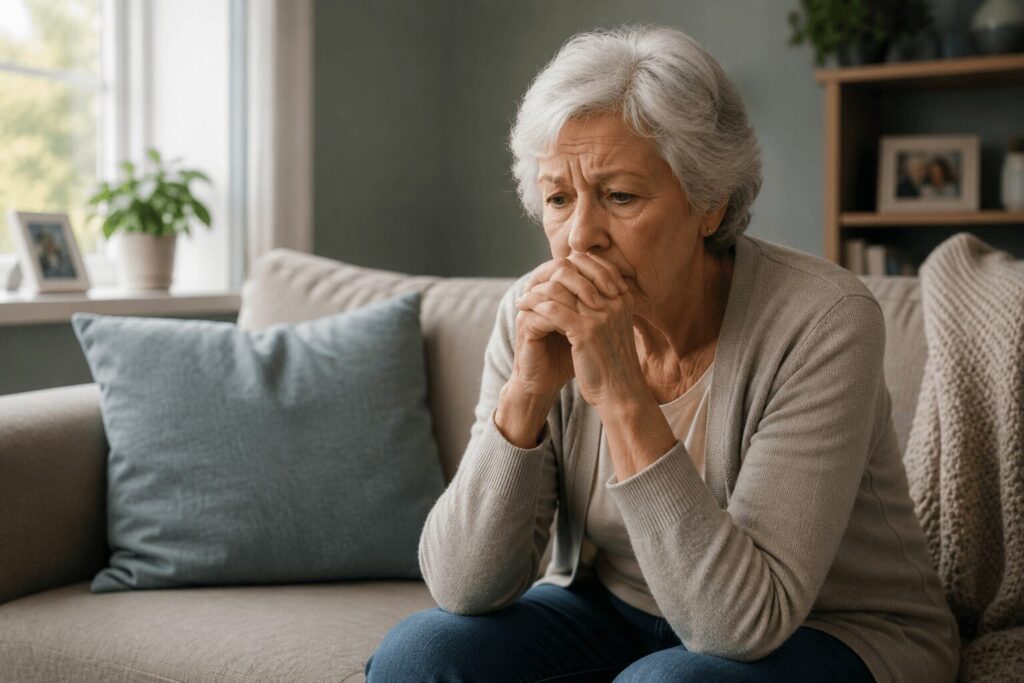
ToggleAnxiety in older adults is common, but it is not always recognised as an anxiety problem. In later life, symptoms such as poor sleep, tiredness, dizziness, chest discomfort, breathlessness, digestive problems, difficulty concentrating or changes in behaviour may be attributed to ageing or an existing physical illness.
That can make anxiety in older adults particularly difficult to identify. Physical health conditions, medicines, bereavement, retirement, loneliness, caring responsibilities and major life changes can all contribute to anxiety. At the same time, anxiety itself can produce physical symptoms that may resemble other medical problems.
The NHS explains that anxiety can cause physical symptoms including a noticeable or irregular heartbeat, dizziness, chest pain, breathlessness, sweating, shaking and nausea, as well as psychological symptoms such as persistent worry, difficulty relaxing, poor sleep and problems concentrating.
This UK guide explains anxiety in older people, common causes, symptoms that can be mistaken for other conditions, how anxiety is assessed, NHS treatment options and when to seek urgent help.
Important: New or severe physical symptoms should not automatically be assumed to be anxiety. Chest pain, severe breathlessness, sudden confusion, fainting or other potentially serious symptoms require appropriate medical assessment.
Anxiety is a normal response to stress, uncertainty or perceived danger. It becomes more concerning when worry or fear becomes persistent, difficult to control and begins interfering with everyday life.
Older adults can experience the same anxiety disorders as younger adults, including:
The NHS describes GAD as a condition in which a person frequently feels anxious about many different things, with worry that affects everyday life and can be difficult to control.
Age does not mean someone should simply accept persistent anxiety as a normal part of getting older.
NHS England states that older adults with functional mental health needs, including anxiety and depression, should have access to appropriate mental health care based on need rather than age.
Anxiety can affect people at any age, including later life. However, it can sometimes be overlooked in older adults because physical health problems, medication effects and major life changes may make the symptoms more complicated.
Someone experiencing anxiety may not describe themselves as “anxious”. Instead, they might report:
This is one reason it is important to consider both physical and psychological causes when symptoms develop.
Anxiety can affect the body, thoughts, emotions and behaviour.
Possible physical symptoms include:
The NHS confirms that anxiety can cause many of these physical symptoms.
An older person with anxiety may experience:
Anxiety may also change someone’s behaviour.
For example, an older adult may:
The NHS notes that anxiety can lead to avoiding places and situations, difficulty maintaining relationships and difficulty looking after yourself.
There is rarely one explanation for anxiety in later life. Several factors may occur together.
Losing a partner, relative or close friend can cause profound emotional distress.
Grief is a normal response to loss, but some people may develop persistent anxiety or depression that begins to interfere with daily functioning.
Older adults may also experience multiple losses over a relatively short period, including changes in friendships, health, independence or social roles.
Retirement can be positive, but it can also bring uncertainty.
Changes may include:
These changes can contribute to anxiety for some people.
Loneliness can affect mental wellbeing at any age.
For older adults, reduced mobility, living alone, hearing difficulties, bereavement or reduced access to transport can make maintaining social connections harder.
Social isolation does not automatically cause an anxiety disorder, but it can contribute to worry, low mood and withdrawal.
Some older adults provide care for a spouse, relative or another person with long-term health needs.
Long-term caring responsibilities can create:
These pressures can contribute to anxiety and may overlap with burnout.
Living with a chronic illness can understandably increase concerns about health.
Conditions such as diabetes, heart disease, respiratory disease, arthritis and other long-term conditions may affect quality of life and create uncertainty about the future.
For example, someone managing diabetes may experience anxiety about symptoms, medication or complications. HealthCresto’s guide to a diabetes diet plan and foods to eat and avoid provides related information about living with diabetes.
NHS England highlights that older adults are more likely to live with multiple long-term conditions, making integrated physical and mental healthcare particularly important.
Financial worries can become particularly significant after retirement.
Concerns about:
can contribute to persistent worry.
Health concerns are understandable, particularly when someone has existing medical conditions.
However, excessive health-related worry can become a problem in its own right.
The NHS describes health anxiety as excessive worry about being ill or becoming ill, sometimes involving repeated checking of the body, seeking reassurance or repeatedly researching symptoms.
Anxiety can also be associated with stressful or traumatic experiences.
These might include:
The NHS identifies stressful or traumatic experiences as potential risk factors for GAD.
One of the biggest challenges is that anxiety symptoms can overlap with physical health conditions.
For example:
Anxiety → racing heart → interpreted as heart disease → increased fear → more anxiety.
This can create a cycle in which physical sensations increase worry, and worry increases physical sensations.
At the same time, the reverse problem is also possible: a genuine physical illness may be incorrectly attributed to anxiety.
That is why proper assessment matters.
Anxiety can cause:
But these symptoms can also occur with physical illnesses.
For example, sudden chest pain should not simply be labelled anxiety.
HealthCresto’s guide on panic attacks vs heart attack explains why overlapping symptoms require caution.
If someone develops sudden chest pain that is severe, persistent or associated with symptoms such as significant breathlessness, sweating, nausea or pain spreading to the arm, neck or jaw, urgent medical assessment is important.
Yes, some medicines or changes in medication can contribute to symptoms such as:
Older adults may take several medicines for different health conditions, so medication reviews can be particularly important.
Do not stop prescribed medication without speaking to a healthcare professional.
If you think a medicine may be contributing to anxiety or other symptoms, discuss it with your GP, pharmacist or prescribing clinician.
Anxiety and depression can occur together.
Someone experiencing depression may also have:
Similarly, long-term anxiety can contribute to low mood and social withdrawal.
Our guide to depression vs anxiety explains how the two conditions overlap and differ.
You may also find our articles on depression symptoms in men vs women and key differences in depression symptoms useful for understanding related mental health symptoms.
Anxiety can sometimes escalate into a panic attack.
A panic attack can cause:
The NHS states that panic attacks usually last around 5 to 20 minutes and can be frightening, although they are not dangerous in themselves.
For practical information, see HealthCresto’s guide on how to stop a panic attack.
Everyone worries occasionally.
Worry may be a normal response to:
The difference is often the intensity, persistence and impact.
Anxiety becomes more concerning when worry:
For GAD, the NHS says symptoms typically involve anxiety affecting everyday life, difficulty controlling worry and anxiety present much of the time for at least six months.
There is no single blood test that confirms an anxiety disorder.
A GP or other healthcare professional will usually consider the person’s symptoms, history and overall health.
Assessment may include questions about:
For suspected GAD, the NHS says a GP may ask about worries and physical symptoms and assess how anxiety affects everyday life.
In older adults, healthcare professionals may need to consider whether symptoms have an underlying physical cause.
Depending on symptoms, a clinician may consider:
The exact assessment depends on the person’s symptoms and medical history.
This approach helps avoid both overdiagnosing anxiety and missing an underlying medical problem.
If anxiety is affecting everyday life, a GP appointment is one possible starting point.
However, NHS Talking Therapies services can also allow adults to self-refer for anxiety and depression in many areas.
The NHS currently states that adults can refer themselves directly to an NHS Talking Therapies service without first speaking to a GP.
For a detailed explanation of the process, read our guide on how to get a mental health diagnosis on the NHS in 2026.
Treatment depends on the type and severity of anxiety, other health conditions, medication and personal circumstances.
Common options include:
NHS England states that older adults should have access to mental health services based on need rather than age, with reasonable adjustments where required.
Cognitive behavioural therapy (CBT) is a commonly used psychological treatment for anxiety.
It focuses on the relationship between:
Thoughts → feelings → physical sensations → behaviours
CBT can help someone recognise unhelpful thought patterns and develop different ways of responding to anxiety.
NICE recommends psychological treatments as part of evidence-based care for adults with GAD and panic disorder.
For older adults, treatment may need to be adapted around communication, mobility, cognitive or physical health needs.
NHS England specifically states that services should make reasonable adjustments where necessary to support older adults’ access to treatment.
NHS Talking Therapies provides psychological support for conditions including anxiety and depression.
Older age should not automatically prevent someone from accessing appropriate therapy.
NHS England states that local services should address the needs of older people and improve access to NHS Talking Therapies for anxiety and depression.
Depending on the area and individual circumstances, treatment may involve:
If you are wondering about waiting times, our guide explains how long it can take to get NHS therapy.
Medication may be considered when appropriate, particularly when symptoms are persistent or significantly affecting everyday life.
For GAD, NHS guidance lists SSRIs among medicines that may be used.
However, medication decisions can be more complex in older adults because of:
A GP or prescribing clinician should assess the person’s individual circumstances.
If antidepressants are prescribed, it is important to understand that they may take time to have their full effect. See our guide on how long antidepressants take to work.
Someone experiencing anxiety may already be taking several medicines.
A medication review can help identify whether:
Never change or stop medication independently.
Professional support is important when anxiety is persistent, but everyday habits can also help.
A predictable daily routine can provide structure.
Try to maintain regular times for:
Regular physical activity can support mental wellbeing.
Suitable activities may include:
The NHS recommends regular exercise as one way to help with anxiety.
The appropriate activity level should take account of physical health and mobility.
Regular contact with friends, relatives, neighbours or community groups can help reduce isolation.
Even small interactions can provide structure and social connection.
Poor sleep can make anxiety harder to manage.
Helpful habits can include:
Slow, controlled breathing may help reduce the physical intensity of anxiety.
The NHS recommends calming breathing exercises as one strategy for managing anxiety.
Alcohol may temporarily make someone feel more relaxed but can negatively affect sleep and mental health.
The NHS advises against using alcohol, cigarettes, gambling or drugs as ways to relieve anxiety.
Health concerns can become a major source of anxiety.
Someone with health anxiety may:
The NHS recommends speaking with a GP if health worries are preventing normal life or self-help is not working.
Treatment may include CBT or medication depending on the individual situation.
Anxiety can produce physical symptoms, but some symptoms require urgent assessment.
Do not assume that new symptoms are anxiety if someone has:
For example, a heart attack can produce anxiety, breathlessness, sweating, nausea and dizziness as well as chest discomfort.
Read our detailed guide to panic attacks vs heart attack for more information about overlapping symptoms.
If you believe someone may be experiencing a medical emergency, seek emergency medical help rather than attempting to diagnose the cause yourself.
Consider speaking to a GP when:
The NHS recommends seeking GP advice when anxiety is difficult to cope with or self-help measures are not helping.
Family members may notice anxiety before the person recognises it themselves.
Possible signs include:
Helpful responses include:
The goal should be to support the person without taking away their independence.
Anxiety and cognitive problems can sometimes overlap.
An older adult with memory problems may become anxious because they are struggling with unfamiliar situations or changes in their environment.
Conversely, severe anxiety can make concentration and memory feel worse.
New or rapidly changing cognitive symptoms should be assessed by a healthcare professional rather than assumed to be anxiety.
NHS England emphasises the importance of integrated mental and physical healthcare for older adults, including people with cognitive impairment and complex health needs.
Breathlessness can be particularly frightening for someone with asthma or another respiratory condition.
Anxiety can itself cause breathlessness, but respiratory disease can also produce similar symptoms.
This makes it important not to assume every episode of breathlessness is psychological.
HealthCresto’s guides on whether your inhaler technique is wrong and creating an asthma action plan provide additional information about managing respiratory health.
Although menopause usually occurs earlier than the older-adult age group, hormonal changes around perimenopause and menopause can contribute to anxiety, sleep problems and emotional changes.
Our guides on menopause symptoms in the UK and what age menopause starts in the UK cover these topics in more detail.
For anyone experiencing new symptoms later in life, however, it is important to consider the full clinical picture rather than assuming hormones are responsible.
There is no single treatment that works for every older adult.
A suitable plan may depend on:
NHS England states that older adults should receive care based on need rather than age and that services should make appropriate adjustments where necessary.
Yes. Anxiety can affect older adults, although it may sometimes be overlooked because its symptoms overlap with physical health conditions, medication effects and major life changes.
Potential contributors include bereavement, loneliness, retirement, financial concerns, caring responsibilities, long-term illness, previous trauma, medication effects and worries about health.
Yes. Anxiety can cause palpitations, dizziness, chest discomfort, breathlessness, sweating, nausea, headaches, stomach problems and shaking.
Yes. Anxiety can cause chest discomfort, breathlessness, sweating and a noticeable heartbeat. However, heart problems can cause some of the same symptoms, so new or concerning chest symptoms should not automatically be attributed to anxiety.
Yes. Anxiety can develop at any age. New anxiety in later life should be assessed, particularly when symptoms are unexplained or accompanied by physical changes.
Occasional worry is normal, but persistent anxiety that affects daily life should not simply be dismissed as a normal part of ageing. Older adults should have access to appropriate mental health care based on need.
Yes. CBT is an established psychological treatment for anxiety, and NHS mental health services should provide access based on clinical need. NICE includes psychological treatments among evidence-based treatment options for adult anxiety disorders.
In many areas, adults can self-refer directly to NHS Talking Therapies for anxiety and depression without first seeing a GP.
They can be considered for some anxiety disorders. For GAD, NHS guidance lists SSRIs among possible medicines. The choice should take account of other medicines, medical conditions and potential side effects.
Speak to a GP when anxiety is persistent, difficult to control, affecting everyday activities, disrupting sleep or causing significant distress. New or unexplained physical symptoms should also be assessed.
Anxiety is generally dominated by fear, worry and anticipation of danger, while depression commonly involves persistent low mood, loss of interest and reduced motivation. However, they can occur together. See our Depression vs Anxiety UK guide for a detailed comparison.
Anxiety in older adults is treatable and should not simply be dismissed as part of ageing.
Later life can bring significant changes, including retirement, bereavement, loneliness, financial concerns, caring responsibilities and long-term health conditions. These factors can contribute to persistent anxiety.
At the same time, anxiety can produce physical symptoms that resemble other illnesses. This makes accurate assessment particularly important. New chest pain, severe breathlessness, sudden confusion or other serious symptoms should never automatically be attributed to anxiety.
For persistent anxiety, a GP, NHS Talking Therapies service or another appropriate healthcare professional can help identify the problem and discuss treatment options.
NHS England’s current approach emphasises that older adults should receive mental health care according to need rather than age, with services adapting treatment and access where physical, cognitive or communication difficulties require it.
For related information, explore HealthCresto’s mental health guide for the UK and our early signs of anxiety guide.
Medical disclaimer: This article provides general health information and does not replace an assessment by a GP, mental health professional or other qualified healthcare provider. Do not stop or change prescribed medication based solely on information in this article. If symptoms are severe, sudden or potentially life-threatening, seek urgent medical help.
We use cookies to improve your experience on our site. By using our site, you consent to cookies.
Manage your cookie preferences below:
Essential cookies enable basic functions and are necessary for the proper function of the website.
These cookies are needed for adding comments on this website.
Google Tag Manager simplifies the management of marketing tags on your website without code changes.
Statistics cookies collect information anonymously. This information helps us understand how visitors use our website.
Google Analytics is a powerful tool that tracks and analyzes website traffic for informed marketing decisions.
Service URL: policies.google.com (opens in a new window)