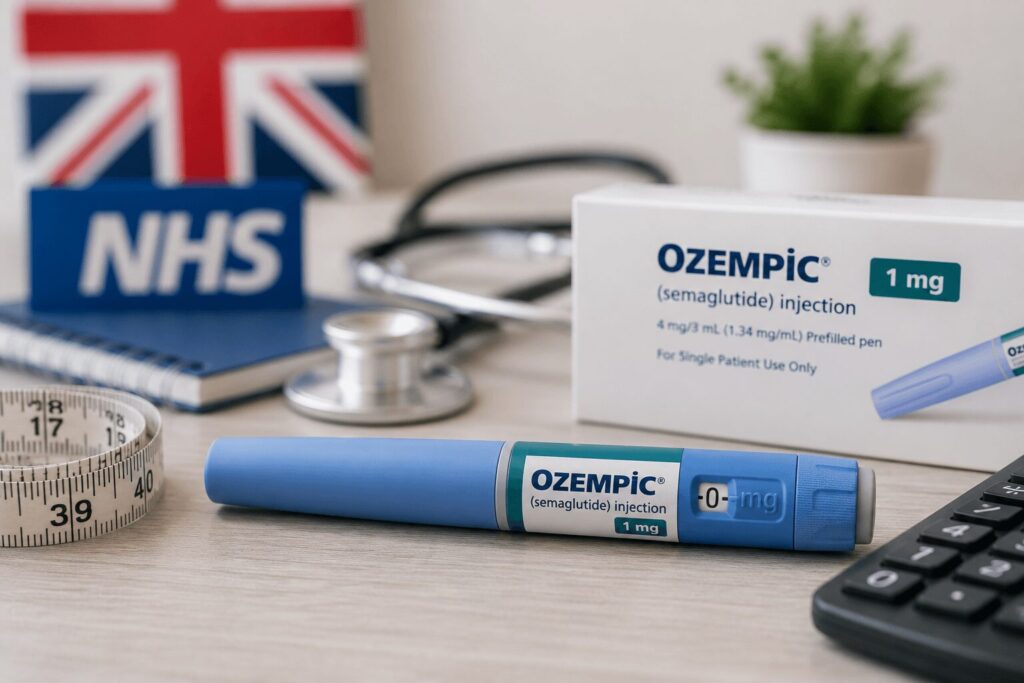
Ozempic is one of the most searched weight-loss terms in the UK, but there’s a widely repeated misunderstanding at the centre of it: Ozempic is not licensed in the UK for weight loss, and the NHS does not prescribe it for that purpose. Here’s what Ozempic actually is, how it works, what it costs, and what your real NHS options are in 2026.
What Ozempic Actually Is
Ozempic is a brand name for semaglutide, a GLP-1 receptor agonist originally developed to manage type 2 diabetes. In the UK, Ozempic is licensed specifically for type 2 diabetes management, not obesity. The confusion arises because Wegovy — a higher-dose version of the same active ingredient, semaglutide — is the medication actually licensed and NHS-approved for weight management.
How Semaglutide Works in the Body
Semaglutide mimics a naturally occurring gut hormone called GLP-1, which regulates blood sugar and appetite. It slows stomach emptying, increases feelings of fullness after eating, and reduces hunger signals in the brain, which is why it produces weight loss as a side effect in people taking it for diabetes — the observation that led to Wegovy’s development.
Ozempic vs Wegovy: The Distinction That Matters
- Ozempic — semaglutide, licensed in the UK for type 2 diabetes; not approved or funded for weight loss
- Wegovy — semaglutide at a higher maintenance dose, licensed specifically for chronic weight management and available through NHS specialist services for eligible patients
- Mounjaro — tirzepatide, a related but different GLP-1/GIP medication, also NHS-approved for weight management and increasingly prescribed through GPs as the rollout expands
Asking a UK GP for ‘Ozempic for weight loss’ will typically be declined, because prescribing it off-label for that purpose sits outside its UK licence and NHS commissioning rules. Anyone using Ozempic for weight loss in the UK is almost always doing so through a private prescription, off-label.
Ozempic Cost in the UK
Because it isn’t NHS-funded for weight loss, anyone accessing semaglutide for that purpose privately should expect to pay for the medication out of pocket on an ongoing monthly basis, with pricing that varies by provider, dose, and whether the service includes clinical support such as dietitian input or monitoring. Wegovy, prescribed privately for weight loss rather than diabetes, typically falls in a broadly similar monthly price bracket.
NHS Eligibility in 2026 — Why It Applies to Wegovy, Not Ozempic
NHS-funded semaglutide for weight loss means Wegovy, prescribed through specialist (tier 3) weight management services rather than directly by a GP. As of 2026, general eligibility follows NICE guidance: a BMI of 35 or above with at least one weight-related health condition, or a BMI of 32.5 or above for people of South Asian, Chinese, Middle Eastern, Black African, or African-Caribbean background, reflecting the higher health risk these groups face at lower BMIs. Treatment is typically funded for up to two years and reviewed at six months, continuing only if at least 5% of starting body weight has been lost.
For the full breakdown of the referral pathway, the phased NHS rollout, and how Wegovy compares with Mounjaro, see our companion guide: How to Get Weight Loss Injections on the NHS.
Safety Considerations
Semaglutide is not suitable for everyone. It’s not recommended during pregnancy or breastfeeding, and it isn’t appropriate for people with a personal or family history of medullary thyroid carcinoma or Multiple Endocrine Neoplasia type 2. Common side effects are gastrointestinal — nausea, diarrhoea, constipation — and tend to be most noticeable during the initial dose-escalation period. Any prescription, private or NHS, should follow a proper clinical assessment rather than an online form alone.
How to Access Semaglutide Legitimately
For diabetes management, Ozempic is prescribed by a GP or diabetes specialist in the normal way. For weight loss, the legitimate routes are an NHS referral to a specialist weight management service if you meet NICE criteria for Wegovy, or a private prescription from a CQC-regulated provider with a proper clinical assessment. Buying semaglutide from unregulated online sellers carries real safety risks, including counterfeit or incorrectly dosed pens.
For a fuller picture of how weight-loss medication fits alongside diet, see our guide on how many calories you should eat to lose weight, which explains why GLP-1 medications work best alongside — not instead of — a sensible calorie approach.
For the current official position on NHS-funded weight management medicines, see NHS England’s guidance on weight management injections.
Frequently Asked Questions
Can I get Ozempic on the NHS for weight loss?
No. Ozempic is licensed in the UK for type 2 diabetes only. The NHS-funded weight-loss option using the same active ingredient is Wegovy, prescribed through specialist weight management services for people who meet NICE eligibility criteria.
Is Ozempic and Wegovy the same drug?
They contain the same active ingredient, semaglutide, but are licensed for different purposes and dosed differently. Ozempic is licensed for type 2 diabetes; Wegovy is licensed specifically for chronic weight management.
How much does Ozempic cost privately in the UK?
Private semaglutide prescriptions are billed monthly and prices vary by provider, dose, and included clinical support, so it’s worth comparing CQC-regulated providers directly rather than relying on a single quoted figure.
Is it safe to buy Ozempic online without a prescription?
No. Buying semaglutide outside a proper clinical assessment carries a real risk of counterfeit or incorrectly dosed medication, and it bypasses the health checks needed to confirm it’s safe for you specifically.