
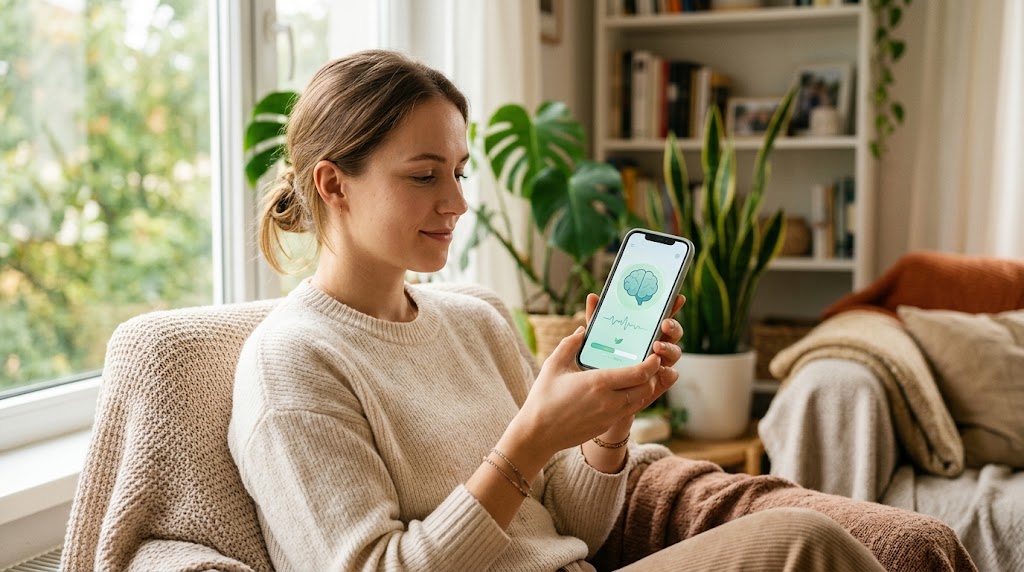
Anxiety can affect your thoughts, sleep, concentration, relationships and everyday activities. While professional support is important when anxiety is persistent or severe, some people also find mental health apps useful for learning coping techniques, tracking moods, practising breathing exercises and managing everyday worries.
In the UK, the NHS App Library and NHS-linked health services have featured a range of digital mental health tools designed to support people with anxiety, stress, low mood and related concerns. However, app availability, pricing and NHS recommendations can change, so it is sensible to check the current NHS or provider information before downloading an app. NHS-linked services currently reference tools such as Catch It, Chill Panda, My Possible Self and Be Mindful for mental wellbeing.
If you are searching for the best free anxiety apps in the UK in 2026, this guide explains which options may be worth considering, what they do and when you should seek professional help.
Quick Answer: What Are the Best Free Anxiety Apps in 2026?
Some useful free or free-to-download anxiety and wellbeing apps and digital tools include:
- Catch It – helps users understand and manage difficult thoughts and feelings using CBT-based techniques.
- Chill Panda – uses breathing exercises and activities to help people manage worries and relax.
- My Possible Self – provides tools for managing anxiety, stress, low mood and unhelpful thinking.
- Be Mindful – focuses on mindfulness and mindfulness-based cognitive therapy techniques.
- WorryTree – helps users record and work through worries.
- MindShift CBT – offers anxiety-management techniques, including tools for worry, panic and social anxiety.
Not every app is completely free in every circumstance. Some apps may have optional paid features, subscriptions or different availability depending on age, location or NHS service. For example, NHS-linked services list My Possible Self as a tool for anxiety, stress and low mood, while NHS mental health resources also continue to reference Catch It and Chill Panda.
What Is the NHS App Library?
The NHS App Library was created to help people find digital health and wellbeing tools. NHS England previously described its Mental Health Apps Library as a directory of digital services designed to support conditions including anxiety and depression.
The library has historically included apps and digital services covering areas such as:
- Anxiety
- Stress
- Depression
- Sleep
- Mindfulness
- Emotional wellbeing
- Self-management
- CBT-based support
The NHS has also explained that its digital health resources can help people find trusted information and support, although an app should not automatically be considered a replacement for assessment or treatment from a healthcare professional.
1. Catch It
Catch It is one of the better-known mental health apps associated with NHS resources.
The app uses principles from Cognitive Behavioural Therapy (CBT) to help users look at difficult thoughts and feelings differently. NHS-linked mental health services describe it as useful for feelings such as anxiety and depression.
What can Catch It help with?
The app can encourage you to:
- Record your mood
- Think about what is causing difficult feelings
- Examine unhelpful thoughts
- Consider alternative ways of responding
- Develop better awareness of emotional patterns
It may be particularly useful if you want a simple tool for understanding what happens when anxiety appears.
If you want to understand anxiety symptoms more generally, read our guide to the early signs of anxiety.
2. Chill Panda
Chill Panda is designed to help people relax and manage worries through breathing exercises and other activities.
NHS-linked resources describe Chill Panda as an app that can use heart-rate information and suggest activities such as breathing techniques and light exercise. It has also been referenced by NHS services for children, young people and adults.
Why might Chill Panda help anxiety?
When anxiety increases, physical symptoms can include:
- Faster breathing
- Increased heart rate
- Muscle tension
- Restlessness
- Difficulty relaxing
Breathing and relaxation exercises can help some people manage these physical sensations.
If you experience sudden intense episodes of fear, learn more about how to stop a panic attack.
3. My Possible Self
My Possible Self is a digital mental health tool designed to support people with issues such as anxiety, stress, low mood and unhelpful thinking.
NHS-linked health services describe the app as helping users manage anxiety, tackle depression, reduce stress and improve sleep.
It can be useful for people who want to:
- Monitor their mood
- Identify patterns
- Understand emotional triggers
- Practise coping strategies
- Work on healthier behaviours
It is important to remember that an app can support self-management but does not provide a diagnosis.
4. Be Mindful
Be Mindful focuses on mindfulness and mindfulness-based cognitive therapy techniques.
NHS-linked resources describe it as an online course aimed at reducing stress, depression and anxiety through mindfulness-based cognitive therapy.
Mindfulness encourages you to pay attention to your thoughts, feelings and surroundings without immediately reacting to them.
It may be useful if your anxiety is closely connected with:
- Constant worrying
- Stress
- Difficulty switching off
- Racing thoughts
- Problems relaxing
Mindfulness is not suitable as the only treatment for severe anxiety, but it can be one part of a wider self-care or treatment plan.
5. WorryTree
WorryTree is designed around managing and organising worries.
Rather than allowing every worry to continue circulating in your mind, a worry-management tool can encourage you to identify the concern and decide whether there is something practical you can do about it.
This type of approach may be helpful for people who experience:
- Repetitive worrying
- Overthinking
- Uncertainty
- Future-focused anxiety
- Difficulty switching off at night
NHS mental health services include WorryTree among self-help apps and websites used for anxiety and emotional wellbeing.
6. MindShift CBT
MindShift CBT is another anxiety-focused app that uses CBT-style techniques.
NHS-linked mental health resources describe it as helping users learn to relax, develop more helpful ways of thinking and take practical steps to manage anxiety. It includes tools addressing areas such as worry, panic, social anxiety, perfectionism and performance anxiety.
This can make it particularly interesting for people whose anxiety is connected to specific situations.
Which Free Anxiety App Is Best for You?
The best app depends on what you want help with.
| Your main concern | App/tool to consider |
|---|---|
| Understanding negative thoughts | Catch It |
| Breathing and relaxation | Chill Panda |
| Anxiety and stress management | My Possible Self |
| Mindfulness | Be Mindful |
| Repetitive worrying | WorryTree |
| CBT-style anxiety techniques | MindShift CBT |
There is no single anxiety app that works for everyone. You may need to try different approaches to find one that fits your routine and symptoms.
Can Anxiety Apps Replace NHS Therapy?
No. Anxiety apps should not be considered a replacement for professional assessment or treatment when you need clinical support.
An app may provide self-help exercises, mood tracking or relaxation techniques, but it cannot necessarily determine why you are experiencing anxiety or whether you have an anxiety disorder.
If anxiety is affecting your work, relationships, sleep or ability to carry out normal activities, consider speaking with your GP or an appropriate NHS mental health service.
You can also read our guide on how to get CBT on the NHS without a long waiting list.
For people waiting for therapy, our guide to how long it can take to get NHS therapy may also be useful.
Anxiety Apps vs NHS CBT
An anxiety app and NHS CBT are not the same thing.
Anxiety apps may offer:
- Self-guided exercises
- Breathing techniques
- Mood tracking
- Relaxation exercises
- Journalling
- Educational information
CBT with a trained professional can involve:
- A personalised assessment
- Identifying specific thought patterns
- Structured treatment
- Behavioural techniques
- Regular progress reviews
- Support tailored to your symptoms
CBT is an established psychological treatment for several anxiety-related conditions. If you are unsure whether you need professional treatment, speaking with a healthcare professional can help you decide.
How Do Anxiety Apps Help With Panic Attacks?
Some anxiety apps provide breathing, grounding, relaxation or thought-management exercises that may help you cope when anxiety rises.
However, panic symptoms can sometimes feel similar to symptoms of other medical problems.
If you experience chest pain, severe breathing difficulty, fainting or symptoms that could indicate a medical emergency, do not rely on an app for assessment.
You can learn more about the difference between panic symptoms and cardiac symptoms in our guide to panic attacks vs heart attacks.
When Should You Speak to Your GP About Anxiety?
Consider seeking professional help if anxiety:
- Continues for several weeks
- Is becoming more difficult to control
- Interferes with work or education
- Affects your relationships
- Causes significant sleep problems
- Leads you to avoid everyday activities
- Causes frequent panic attacks
- Is affecting your physical health
- Makes you feel unable to cope
You can also learn about the difference between anxiety and stress and read our guide to high-functioning anxiety.
For a broader overview, see our UK mental health guide for 2026.
Anxiety, Depression and Low Mood
Anxiety and depression can occur together. Some people experience excessive worry, while also having low motivation, sadness, tiredness or loss of interest in activities.
Understanding the difference can help you recognise when additional support may be appropriate.
Read our guide on depression vs anxiety to learn more about how the symptoms can overlap and differ.
You can also read about signs of depression in men and depression symptoms in men vs women.
Anxiety in Older Adults
Anxiety can affect people at any age, including later in life.
Older adults may experience anxiety alongside physical health conditions, medication changes, bereavement, loneliness or major life changes.
If you are supporting an older family member, our guide to anxiety in older adults provides more information about symptoms and support.
Anxiety During Pregnancy and After Birth
Mental health can also change during pregnancy and after having a baby.
Postnatal depression is different from ordinary short-term emotional changes after childbirth, although anxiety can occur alongside depression.
Read our guide to postnatal depression in the UK for more information.
If anxiety or traumatic experiences are affecting you after childbirth, discuss your symptoms with a GP, midwife, health visitor or appropriate NHS service.
How to Choose a Safe Mental Health App
Before downloading an anxiety app, consider:
1. Check who developed it
Look for information about the organisation or healthcare professionals involved in creating the app.
2. Look at privacy information
Mental health information can be sensitive. Read the app’s privacy policy and understand what information it collects.
3. Check whether it is genuinely free
Some apps are free to download but charge for certain features or subscriptions.
4. Consider the evidence
Look for information about the techniques used and whether the app has been evaluated.
5. Do not use an app instead of urgent care
If you are experiencing a mental health crisis or immediate danger, seek urgent professional help rather than relying on an app.
Are Free Anxiety Apps Worth Trying in 2026?
For some people, yes.
Free anxiety apps can provide convenient access to breathing exercises, mindfulness, CBT-based techniques, mood tracking and other self-management tools. NHS-linked organisations continue to provide information about several such apps, including Catch It, Chill Panda and My Possible Self.
However, the important point is how you use them.
An app can be a useful starting point for mild or occasional anxiety, a way to practise techniques between therapy sessions, or an additional tool while waiting for professional support. It should not be treated as a diagnosis or a substitute for appropriate NHS care.
Frequently Asked Questions
What is the best free anxiety app in the UK?
There is no single best app for everyone. Catch It, Chill Panda, My Possible Self, Be Mindful, WorryTree and MindShift CBT are examples of digital tools referenced by NHS or NHS-linked services for anxiety, stress or mental wellbeing.
Is there a free NHS anxiety app?
The NHS has provided and referenced different digital mental health resources over time rather than one single universal NHS anxiety app. Availability and recommendations can change, so check the current NHS website or your local NHS service.
Can an anxiety app diagnose anxiety?
No. An app should not be used to diagnose an anxiety disorder. A GP or qualified mental health professional can assess your symptoms and discuss appropriate treatment.
Can I use an anxiety app while waiting for NHS therapy?
Potentially. Self-help apps can provide exercises and coping strategies while you are waiting, but they should complement rather than replace professional care when treatment is needed.
Are NHS anxiety apps free?
Some NHS-linked apps are free to download or use, while others may have paid features, subscriptions or eligibility requirements. Always check the current app information before signing up.
What should I do if my anxiety is getting worse?
Speak with your GP or an appropriate NHS mental health service. If you feel unable to keep yourself safe or believe you are experiencing an emergency, seek urgent help.
Final Thoughts
The best free anxiety apps available through NHS-linked resources in 2026 can offer practical tools for managing worries, practising relaxation, understanding thoughts and improving emotional wellbeing.
Apps such as Catch It, Chill Panda, My Possible Self, Be Mindful, WorryTree and MindShift CBT may be useful depending on your individual needs. NHS-linked mental health services continue to reference several of these tools for anxiety, stress and emotional wellbeing.
But remember: an anxiety app is a self-help tool, not a replacement for professional healthcare. If anxiety is persistent, severe or interfering with your everyday life, speak with a GP or qualified mental health professional.
For more evidence-informed UK health information, visit the HealthCresto health blog.