
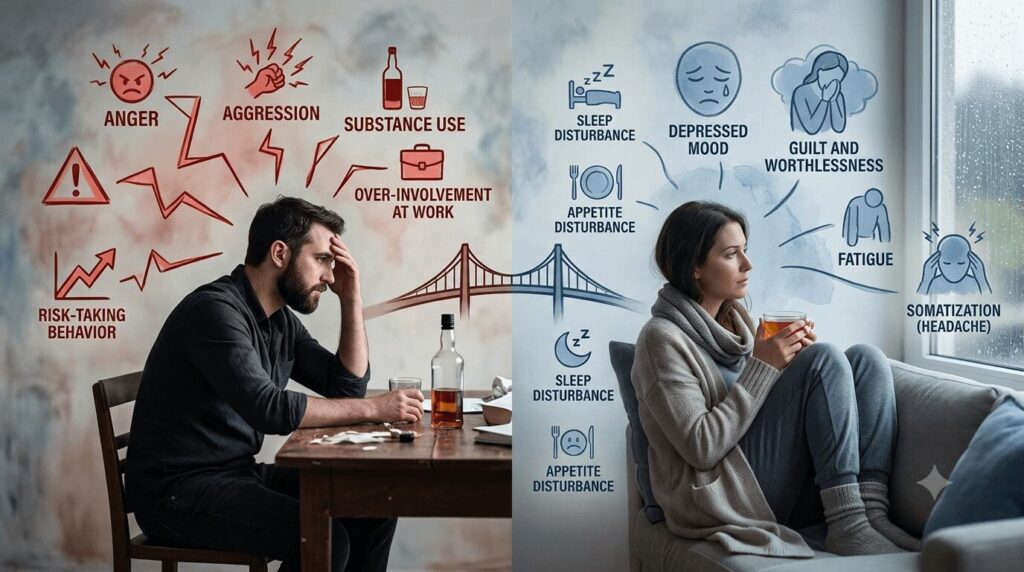
Depression is often described as a single, uniform condition, but it doesn’t show up the same way in everyone. Research consistently shows that men and women tend to report and display different clusters of symptoms — a gap that contributes to depression being under-recognised in men in particular. Understanding these differences matters because it changes what you’re looking for, in yourself or in someone you’re worried about.
What Depression Looks Like in General
Clinically, depression usually involves a persistently low mood or loss of interest in activities lasting two weeks or more, alongside symptoms such as changes in sleep, appetite, energy, concentration, and self-worth. These core features apply across genders — the differences show up more in how the condition is expressed and communicated.
How Depression Often Presents in Men
- Irritability, anger, or a short temper rather than visible sadness
- Increased risk-taking — reckless driving, gambling, or substance use
- Physical complaints such as headaches, digestive problems, or chronic pain with no clear medical cause
- Withdrawal into work, hobbies, or isolation rather than talking about feelings
- Difficulty naming symptoms as ‘depression’ — framed instead as stress, tiredness, or being ‘fine’
This presentation matters because standard screening questions often centre on sadness and tearfulness, which many men don’t report even when other depressive symptoms are clearly present. As a result, depression in men is frequently missed or misattributed to stress, and men are statistically less likely to seek treatment despite having a higher rate of death by suicide.
How Depression Often Presents in Women
- Persistent sadness, tearfulness, or a sense of hopelessness
- Significant changes in appetite or weight, in either direction
- Sleep disturbances, including early waking or difficulty falling asleep
- Higher rates of co-occurring anxiety alongside depressive symptoms
- Symptoms that can fluctuate with hormonal changes — premenstrually, postpartum, or during perimenopause
Women are diagnosed with depression roughly twice as often as men, though this partly reflects differences in help-seeking and symptom expression rather than a true difference in prevalence. Hormonal transitions are a genuine additional risk factor and are worth flagging to a GP specifically, since treatment approaches can differ during these periods.
Why the Symptom Gap Exists
Part of the explanation is biological — hormonal fluctuations across the menstrual cycle, pregnancy, and menopause are linked to mood changes in ways that don’t have a male equivalent. Part of it is social: men are often socialised to suppress sadness and express distress as anger or withdrawal instead, while clinical screening tools were historically built around symptom patterns more commonly reported by women. Both factors combine to leave a meaningful number of men undiagnosed.
Overlapping Symptoms to Watch For in Anyone
- Loss of interest in things you used to enjoy
- Fatigue that doesn’t improve with rest
- Difficulty concentrating or making decisions
- Feelings of worthlessness or excessive guilt
- Thoughts of death or self-harm — always treat this as urgent
When Work Stress or Burnout Crosses Into Depression
Depression and burnout can look similar on the surface — low energy, poor concentration, reduced motivation — which makes it easy to misread one for the other, especially in high-pressure jobs. The key distinguishing feature is scope: burnout is generally tied to the work context, while depression tends to affect mood and interest across every area of life, not just at your desk.
If exhaustion and low motivation are showing up mainly around work, our guide on how to recover from burnout while still working walks through a practical recovery plan and explains when it’s time to look beyond burnout toward a depression assessment.
Getting an Accurate Diagnosis
A GP appointment is the right starting point for either gender. Being specific about symptoms — including irritability, physical complaints, or risk-taking behaviour, not just sadness — helps clinicians recognise depression that doesn’t fit the ‘classic’ presentation. Treatment options typically include talking therapies, medication, or a combination, tailored to symptom severity and personal circumstances.
The NHS’s overview of depression symptoms in adults is a reliable, clinically reviewed reference if you want to compare your own symptoms against a recognised checklist before speaking to a GP.
Frequently Asked Questions
Do men and women get depression for different reasons?
The underlying condition is the same, but risk factors differ somewhat — hormonal changes are a distinct risk factor for women, while social pressure to suppress emotional expression is a distinct risk factor that shapes how depression shows up in men.
Why is depression under-diagnosed in men?
Men more often report irritability, physical symptoms, or withdrawal rather than sadness, and standard screening tools were historically built around symptoms more commonly reported by women, so a proportion of male depression goes unrecognised or is misread as stress.
Can depression symptoms change over time in the same person?
Yes. Symptoms can shift with life stage, stress levels, and — for women — hormonal transitions such as pregnancy, postpartum, or perimenopause, so a symptom checklist is a starting point rather than a fixed picture.
Is anger a symptom of depression?
It can be. Irritability and anger are recognised, if less publicised, symptoms of depression, particularly in men, and are often mistaken for a personality trait or stress rather than a mood disorder.